Market Landscape
The Critical Crossroads: Choosing Your Competitive Advantage
Entering the beverage market in 2026 is no longer a matter of simply filling bottles. It is an engineering challenge where the smallest margin determines survival. For a startup, the machine selection represents the largest single piece of machinery capital expenditure. It is the heart of the plant layout.
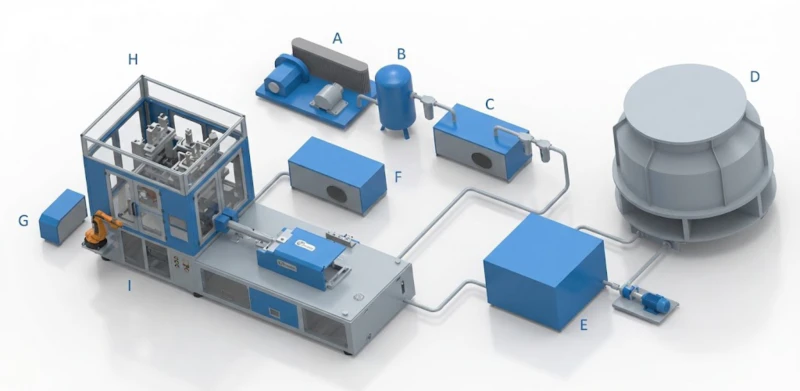
Diagram 1: A professional plant layout utilizing One-Step ISBM technology to minimize logistical friction and maximize space efficiency.
Entrepreneurs are often tempted by the low entry barrier of semi-automatic machines. However, a high-yield, low-touch environment powered by integrated automation is what allows a brand to scale. You must evaluate your five-year growth plan and your local labor stability before committing to a manual setup.
The Manual Path
Semi-Automatic Blow Molding: Low Capex, High Operational Friction
Semi-automatic machines are often marketed as a budget starter kit. While they require a smaller initial investment, they come with high operational friction. In this setup, you are purchasing preforms from a third-party supplier, which adds a 20 percent markup to your raw material costs. You are also at the mercy of their delivery schedules and fluctuating quality standards.
The Technical Hurdles of Manual Blowing:
- Thermal Inconsistency: Manual loading means the time between preform removal from the heater and placement in the mold varies. This causes cold spots and thin walls.
- High Rejection Rates: In manual plants, rejection rates of 5 percent to 10 percent are common due to human fatigue. This is pure wasted capital.
- Sanitation Risks: Manual handling of preforms increases microbial risks, which can lead to shelf-life issues and costly brand recalls.
The Automated Advantage
One-Step Fully Automatic ISBM: Engineering Sovereignty
The Fully Automatic One-Step system represents a shift from purchasing components to manufacturing solutions. By feeding raw resin pellets into the machine and receiving finished bottles, you gain complete supply chain sovereignty. This architecture eliminates the massive overhead of shipping air-filled tubes from preform suppliers.
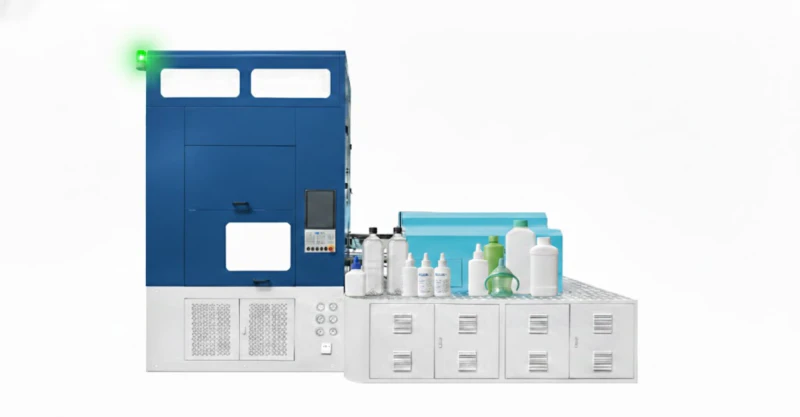
Fig 2: A modern 4-station automated ISBM machine, providing the precision required for premium water bottling.
Latent Heat Recovery
Automatic machines utilize the residual heat from the injection stage to perform the blow stage. This cuts energy costs by up to 30 percent compared to cooling and then reheating preforms.
Pristine Surface Quality
Because the preform is handled by a precision indexing turret rather than a conveyor belt, the bottle surface remains crystal clear and free of micro-scratches.
Human Capital
The Labor Variable: Quantifying Training and Turnover
A common mistake in financial planning is underestimating the compounding cost of manual labor. In a manual plant, the operator is a single point of failure. Automation doesn’t just replace people; it replaces risk. One supervisor in an automated plant can manage four machines, whereas a manual plant requires one person per station, per shift.
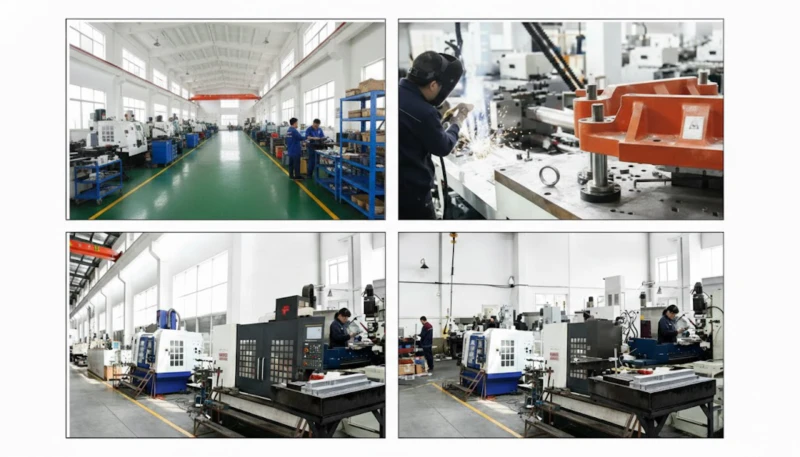
Fig 3: A professional production floor utilizing high-performance automation to reduce labor overhead and increase safety.
Material Strategy
Thermodynamics: The Key to Lightweighting Profit
Resin costs account for roughly 70 percent of the total cost of a bottle. One-Step machines allow for extreme lightweighting because the machine uses a conditioning station to perfectly balance preform heat. You can stretch plastic thinner without compromising strength, saving 2 to 3 grams of resin per bottle compared to manual setups.
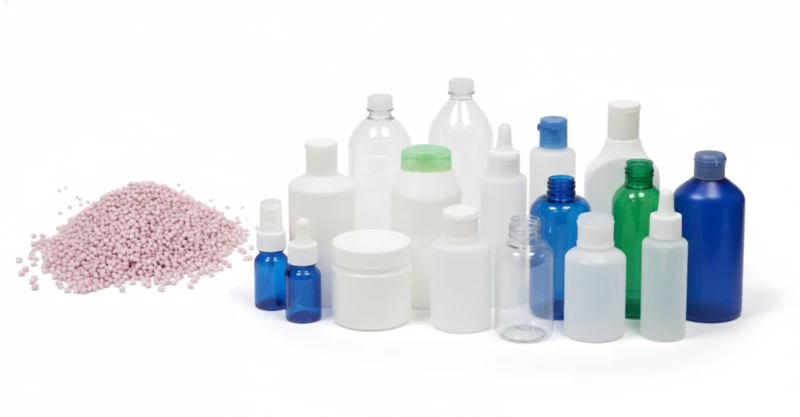
Fig 4: Consistent quality and weight reduction achieved through precision-engineered automated blowing.
ROI Analysis
Financial Modeling: The 36-Month Roadmap
The following data-set represents an average factory output of 10 million units per year. It contrasts the manual path with the automated one-step path across four critical metrics.
| Operational Metric | Semi-Automatic Path | Fully Automatic Path |
|---|---|---|
| Direct Labor Cost | High (3 Full-time Staff) | Low (Shared Supervisor) |
| Supply Chain Sovereignty | None (Vendor Dependent) | Full (Resin Control) |
| Yield & Rejection Rate | Variable (5-8 percent loss) | Stable (less than 0.5 percent) |
| Net Profit Margin | Benchmark | +15 percent Higher |
Executive Verdict: Architecting Your Growth
The Strategic Conclusion for 2026:
If you intend to build a regional or national water brand, Fully Automatic One-Step ISBM is the only logical choice. It protects your brand reputation through consistency, secures your margins through labor reduction, and allows you to manufacture bottles for significantly less than manual competitors. Automation is the only path to a sustainable and scalable production model in the modern economy.
At injectionstretchblowmolding.com, we specialize in bridging the gap for new water plants. We provide high-performance ISBM machines compatible with Japanese Nissei ASB and Aoki mold standards, delivering Tier-1 engineering at factory-direct prices. Backed by over 20 years of manufacturing history, we help you launch with confidence.
One-Step ISBM Deployment Experts
We help beverage startups worldwide navigate the complexities of machine procurement. From turnkey factory design to local maintenance support, we ensure your investment delivers the lowest unit cost and the highest possible container quality.
Ready for a Professional ROI Analysis?
Our consultants will compare local labor rates and machine yields in your specific country to recommend the ideal machine setup. Contact us today.