
Engineering Guide • Machinery Procurement Series
A definitive, engineering-grade selection guide for pharmaceutical, cosmetic, and food packaging manufacturers. We break down the mathematical, mechanical, and economic formulas required to size the ideal Injection Blow Molding (IBM) machine—from 40-ton entry units to 135-ton apex flagships.
Selecting the correct machine tonnage for an Injection Blow Molding (IBM) production line is one of the most critical capital expenditure decisions a packaging facility will make. Choose a tonnage that is too small, and you risk continuous parting-line flash, tool damage, and elevated scrap rates caused by mold deflection. Choose a tonnage that is excessively large, and you saddle your operation with inflated capital costs, higher baseline electrical consumption, and unnecessarily large cleanroom footprints.
In the past, sizing an IBM machine was often reduced to simple rules of thumb based solely on bottle size. Today, modern high-cavitation tooling, complex hot runner manifolds, and advanced resin formulations demand a far more rigorous engineering approach. Tonnage selection is a delicate equilibrium between projected parting-line area, maximum shot weight capacity, platen aspect ratio, and total recovery time.
This comprehensive guide provides procurement officers, plant managers, and tool engineers with a structured decision-making framework. By examining the complete spectrum of the ZQ Series—spanning from the compact ZQ40 (400 kN) to the enterprise-class ZQ135 (1,350 kN) flagship—we analyze how bottle volume, cavitation targets, resin viscosity, and utility planning intersect to dictate your ideal machine choice.
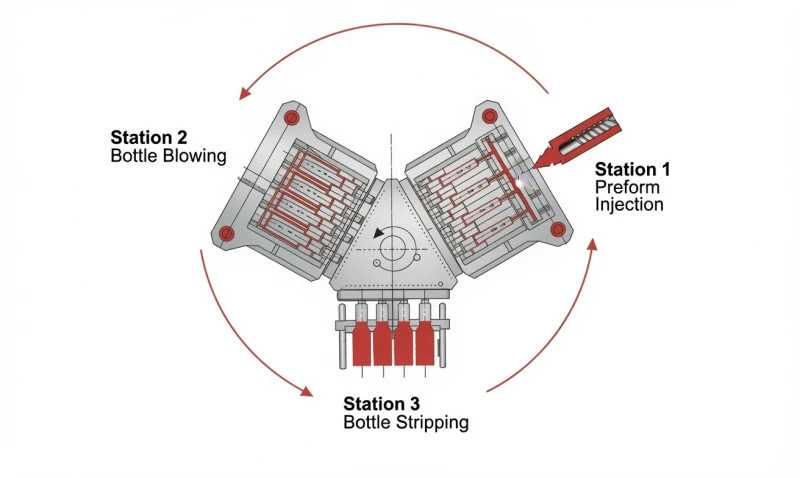
Figure 1: The core three-station IBM process (Inject, Blow, Strip). Machine tonnage primarily dictates the clamping security at Station 1 during high-pressure parison injection.
1. The Physics of IBM Tonnage: What Does “Tonnage” Actually Mean?
In injection blow molding, a machine’s rating (e.g., 40T, 60T, 80T, 110T, 135T) refers specifically to the maximum hydraulic or mechanical force the injection clamping unit can exert to keep the injection mold closed during Station 1 (Parison Injection).
Unlike Extrusion Blow Molding (EBM) where plastic is extruded as an unpressurized tube into an open mold, IBM begins by injection molding a high-density, precise preform (parison) over a steel core rod. During this injection stage, molten polymer is forced into the mold cavities under hydraulic pressures ranging from 30 MPa to over 80 MPa.
📐 The Clamping Force Formula
The theoretical clamping force required to hold an injection mold closed is calculated as:
- $A_{projected}$: The total combined projected surface area ($cm^2$) of all mold cavities, hot runner drops, and runner channels at the parting line.
- $P_{injection}$: The peak cavity pressure ($bar$ or $MPa$) required to fill and pack the preform walls before gate freeze.
- $S_{safety}$: A safety multiplier (typically 1.15 to 1.25) to account for pressure spikes and thermal expansion.
If $F_{clamp}$ is insufficient to overcome the internal cavity pressure, the mold halves will separate by fractions of a millimeter. This causes severe parting-line flash on the preform neck threads and body, destroys wall thickness uniformity, damages precision core rods, and invalidates cleanroom quality standards.
2. The ZQ Series Portfolio Matrix: 40T to 135T Side-by-Side
To understand how machine capacity scales across the ZQ Series, review the comprehensive specification table below. Each tier represents a distinct operational sweet spot designed for specific bottle sizes, cavitation levels, and plant footprint requirements.
| Model | Clamping Force | Screw Dia. | Max Shot Wt. | Platen Size (L×W) | Height | Primary Target Sector |
|---|---|---|---|---|---|---|
| ZQ40 | 400 kN (40T) | 40 / 45 mm | 190 / 260 g | 480 × 340 mm | 1.7 m | Pharma Eye-Droppers, Oral Liquid Vials (1–250ml) |
| ZQ60 | 600 kN (60T) | 45 / 50 / 60 mm | 260 / 383 g | 600 × 390 mm | 1.8 m | Pharma Bottles, Cosmetic Samples, Supplements (1–500ml) |
| ZQ80 | 800 kN (80T) | 55 / 60 / 65 mm | 420 / 620 g | 720 × 480 mm | 1.95 m | Nutraceutical Packers, Cosmetic Jars, Roll-ons (10–1000ml) |
| ZQ110 | 1,100 kN (110T) | 65 / 75 mm | 950 / 1,280 g | 900 × 550 mm | 2.2 m | High-Cavitation Pharma, 1L–2.5L Bulk Packers (10–2500ml) |
| ZQ135 | 1,350 kN (135T) | 75 / 85 mm | 1,280 / 1,650 g | 1,000 × 650 mm | 2.3 m | Apex High-Volume Lines, 32-Cavity Micro-Vials, 3L Packers |
Note: For comprehensive technical datasheets, full parameter tables, and mold layout templates across all models, visit our complete Injection Blow Molding Machine Series Catalog.
3. Detailed Sizing Guide: Model-by-Model Analysis
ZQ40 (400 kN / 40-Ton Class) — Compact Precision Workhorse
Entry-Level Dedicated Lines
The ZQ40 is engineered for small-format bottle manufacturing where cleanroom floor space is at a premium. Standing just 1.7 meters tall, it integrates effortlessly into facilities with lower ceiling heights (under 3 meters) without overhead crane clearance issues.
- Optimal Volume Range: 1 ml to 250 ml containers
- Typical Cavitation: 2 to 9 cavities (e.g., 8-cavity 10ml, 6-cavity 30ml, 4-cavity 100ml)
- Max Shot Capacity: Up to 260g (with 45mm screw option)
- Landscape Platen: 480 × 340 mm layout accommodates wide horizontal multi-cavity arrays.
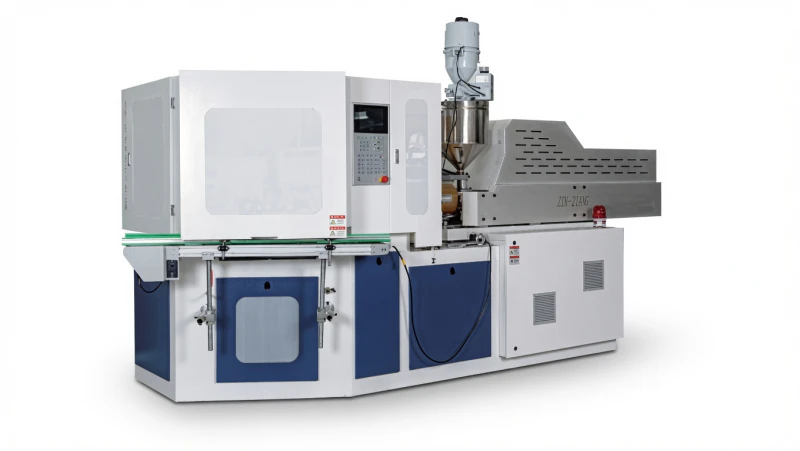
Best Suited For: Pharmaceutical manufacturing startups, eye-dropper liquid lines, nasal spray housing, and high-end cosmetic trial/travel bottles where ultra-low power consumption (20 kW installed) drastically reduces initial operating overhead.
ZQ60 (600 kN / 60-Ton Class) — The High-Flexibility Industry Benchmark
Most Popular Mid-Range
The ZQ60 is widely regarded as the most versatile machine tier in contract packaging. Delivering 600 kN of clamping force and a wider 600 × 390 mm platen, it strikes an optimal balance between high cavitation for small bottles and sufficient shot weight for medium containers.
- Optimal Volume Range: 1 ml to 500 ml containers
- Typical Cavitation: 3 to 14 cavities (e.g., 12-cavity 10ml, 8-cavity 30ml, 6-cavity 100ml, 3-cavity 250ml)
- Max Shot Capacity: Up to 383g (with 60mm screw option)
- Height Profile: 1.8 meters total structural height.
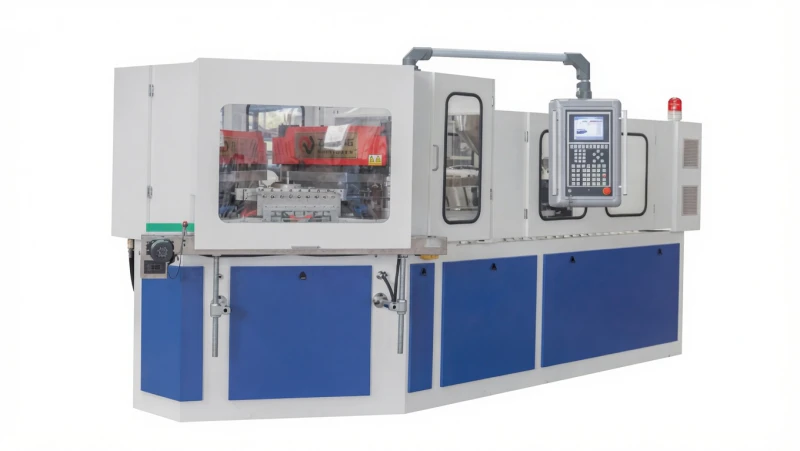
Best Suited For: Commercial contract packagers running frequent mold changeovers between oral liquid pharmaceuticals, tablet containers, personal care lotions, and food supplement bottles.
ZQ80 (800 kN / 80-Ton Class) — Heavy-Duty Multi-Cavity Master
High-Output Workhorse
When high-volume packaging requirements cross into millions of units per month, the ZQ80 provides the necessary mechanical rigidity. Its 800 kN clamp eliminates parting-line flash even when running dense 16-cavity tools or large-diameter 1,000ml vitamin packer bottles.
- Optimal Volume Range: 10 ml to 1,000 ml containers
- Typical Cavitation: 4 to 18 cavities (e.g., 16-cavity 10ml, 12-cavity 30ml, 8-cavity 100ml, 4-cavity 500ml)
- Max Shot Capacity: Up to 620g (with 65mm screw option)
- Platen Area: 720 × 480 mm landscape layout.
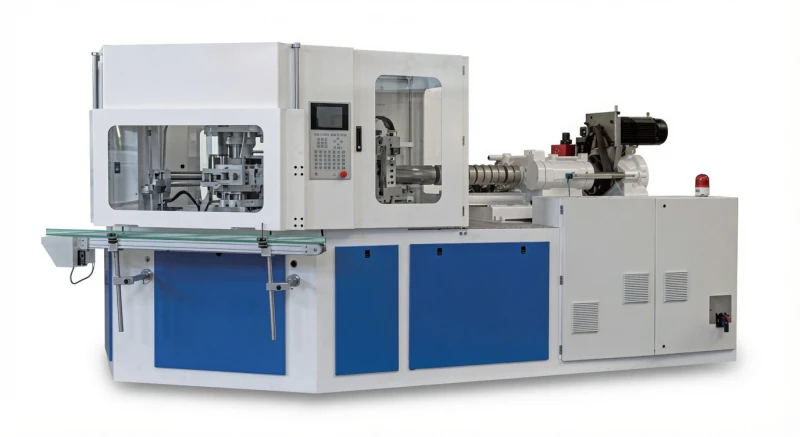
Best Suited For: Dedicated nutraceutical pill bottle lines, high-cavity pharmaceutical cough syrup containers, and thick-walled PCTG/ABS cosmetic cream jars requiring heavy packing pressure.
ZQ110 (1,100 kN / 110-Ton Class) — Ultra-High Output & Large Container Specialist
Enterprise High-Yield
The ZQ110 bridges the gap between mid-range production and ultra-heavy enterprise output. Boasting a massive 900 × 550 mm platen and up to 1,280g shot capacity, it is engineered for operations running 20+ cavity layouts or large-format 2,500ml containers.
- Optimal Volume Range: 10 ml to 2,500 ml containers
- Typical Cavitation: 6 to 24 cavities (e.g., 20-cavity 10ml, 14-cavity 30ml, 10-cavity 100ml, 6-cavity 500ml, 3-cavity 1000ml)
- Max Shot Capacity: Up to 1,280g (with 75mm screw option)
- Low Profile Architecture: Keeps machine height at 2.2 meters despite heavy tonnage.
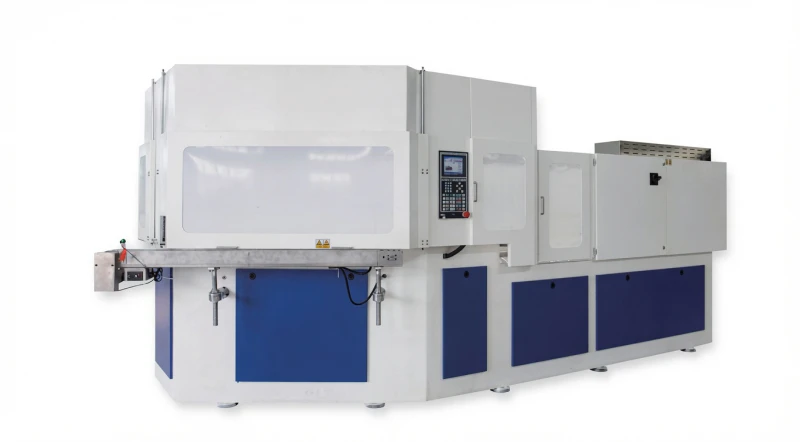
Best Suited For: Multinational pharmaceutical manufacturing plants, high-volume bulk supplement packaging, and facilities replacing taller, energy-inefficient legacy 135-US-ton vertical plastifier machines.
ZQ135 (1,350 kN / 135-Ton Class) — Apex Flagship Platform
Maximum Tonnage Tier
As the flagship model of the ZQ series, the ZQ135 represents the pinnacle of high-speed, mega-cavitation injection blow molding. It delivers a colossal 1,350 kN of clamping force and a 1,000 × 650 mm landscape platen capable of hosting 32-cavity micro-vial tooling or 3,000ml wide-mouth packers.
- Optimal Volume Range: 10 ml to 3,000 ml containers
- Typical Cavitation: 8 to 32 cavities (e.g., 32-cavity 10ml, 22-cavity 30ml, 14-cavity 100ml, 8-cavity 500ml, 4-cavity 1000ml)
- Max Shot Capacity: Up to 1,650g (with 85mm screw option)
- Servo Efficiency: 75 kW installed power rating provides unprecedented kinetic efficiency for an apex-tier platform.
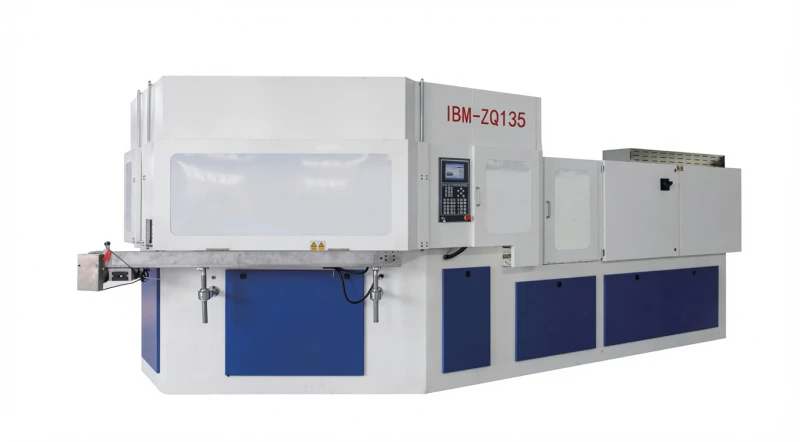
Best Suited For: Mega-scale packaging operations requiring maximum units-per-hour, high-density vaccine vial runs, and replacing legacy 175-ton American machines at a fraction of the operating cost.
4. Cavitation Reference Guide: Matching Bottle Size to Tonnage
To assist production planners in mapping output capacity against machine tonnage, the table below outlines maximum recommended cavitation across common bottle volumes for each ZQ model.
| Bottle Volume | ZQ40 (40T) | ZQ60 (60T) | ZQ80 (80T) | ZQ110 (110T) | ZQ135 (135T) |
|---|---|---|---|---|---|
| 10 ml | 9 cavities | 12–14 cavities | 16–18 cavities | 18–24 cavities | 24–32 cavities |
| 30 ml | 8 cavities | 9–10 cavities | 12–14 cavities | 14–16 cavities | 18–22 cavities |
| 60 ml | 6 cavities | 7–8 cavities | 10–12 cavities | 12–14 cavities | 14–16 cavities |
| 100 ml | 4 cavities | 6–7 cavities | 8–10 cavities | 10–12 cavities | 12–14 cavities |
| 250 ml | 3 cavities | 4–5 cavities | 6–7 cavities | 8–9 cavities | 10–12 cavities |
| 500 ml | 2 cavities | 3 cavities | 4–5 cavities | 6–8 cavities | 8–10 cavities |
| 1,000 ml | — | 1 cavity | 2–3 cavities | 3–4 cavities | 4–5 cavities |
*Note: Reference cavitation estimates assume standard HDPE/PP bottle geometries. Thicker bottle walls, wide-neck finishes, or high-viscosity resins (e.g., PCTG) may require higher tonnage per cavity.
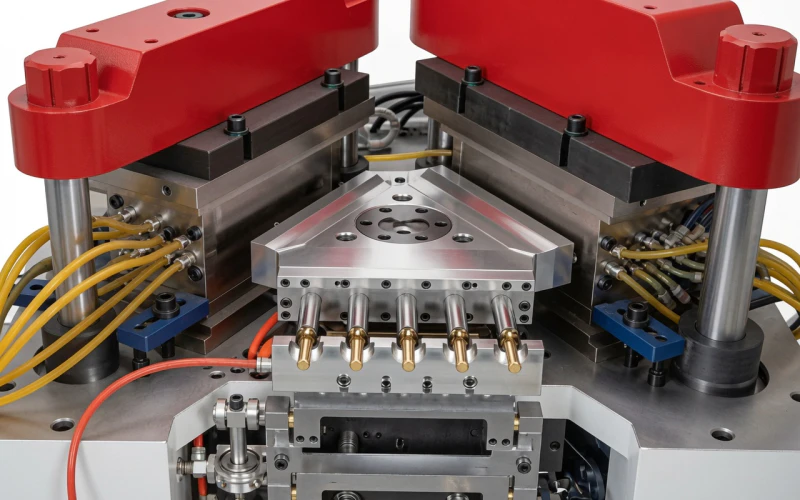
Figure 2: Multi-cavity IBM mold tooling. The landscape platen design across the ZQ series ensures optimal thermal balancing across all cavity rows.
5. Engineering Evaluation Factors Beyond Clamping Force
While clamping tonnage gets the most attention during procurement, experienced tool engineers know that three additional mechanical parameters must be evaluated simultaneously to prevent production bottlenecks:
Factor 1: Shot Weight Capacity vs. Plastification Recovery
Shot weight refers to the total weight of plastic injected per cycle (including core rod parisons and hot runner manifold volume). If your mold requires 450 grams of plastic per cycle, selecting a machine with a 420g maximum shot capacity will result in incomplete parison filling (short shots), regardless of how much clamping tonnage you have. Always ensure your total shot weight sits comfortably within 30% to 80% of the machine’s maximum rated shot capacity for optimal melt thermal stability.
Factor 2: Platen Orientation — Landscape vs. Portrait Layouts
Platen geometry dictates how cavities are arranged. Legacy American machines (e.g., Jomar) frequently used portrait platens (taller than wide). All ZQ Series machines feature landscape platens (wider than tall). Landscape orientation allows multi-cavity tooling to be arranged in wide horizontal rows, keeping all cavities closer to the central hot runner injection manifold. This reduces melt travel distance, balances pressure drops across outer cavities, and ensures uniform wall thickness across all bottles.
Factor 3: Facility Structural Clearance & HVAC Volume
Traditional vertical plastifier IBM machines stand between 3.2m and 4.0m tall, requiring expensive high-bay cleanroom construction and crane clearances. The ZQ Series utilizes a low-profile European horizontal architecture, keeping machine height between 1.7m (ZQ40) and 2.3m (ZQ135). In a GMP cleanroom setting, reducing ceiling height from 4.5m to 3.0m slashes the volume of air your HVAC system must continually filter, cool, and dehumidify by 33%, yielding massive ongoing electricity savings.
6. Auxiliary Utility Planning: The Oil-Free Air Mandate
A common oversight during IBM machinery procurement is failing to properly plan the auxiliary infrastructure required to support high-cavitation production. At Station 2 (Blow Station), compressed air expands the hot parisons against the chilled mold walls.
Because injection blow molding is the dominant process for pharmaceutical vials, eye droppers, and food-grade containers, the blow air comes into direct contact with the internal sterile surfaces of the container.
⚙ Mandatory Utility Requirement: ISO 8573-1 Class 0 Air
Standard oil-lubricated compressors equipped with inline coalescing filters are insufficient for GMP-certified IBM lines; filter failure risks aerosol oil contamination inside the bottles. Plants must install a dedicated Class-0 100% oil-free air compressor system.
When pairing your ZQ Series IBM machine with compressed air infrastructure, integrating a heavy-duty system such as the CM-B Series Oil-Free Screw Air Compressor guarantees absolute air purity, prevents batch rejection, and supplies the steady 0.8–1.2 MPa pressure stability required for flawless parison expansion.
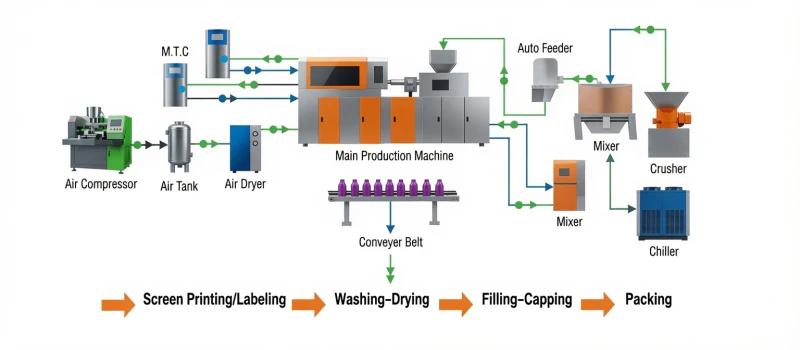
Figure 3: A complete IBM production cell requires integrated planning: matching machine tonnage with mold tooling, oil-free air compressors, mold temperature controllers, and chillers.
7. The 5-Step Tonnage Selection Decision Framework
When preparing a formal capital equipment requisition or engineering proposal, follow this quantitative 5-step framework to finalize your ZQ model selection:
Define Required Annual Production Volume
Calculate target units per year $\div$ operating hours $\div$ estimated cycle time. This yields your required minimum number of cavities.
Calculate Total Projected Parting-Line Area
Sum the 2D surface area of all cavities plus hot runner manifold drops. Multiply by peak injection pressure (approx. 50–70 MPa for standard resins) to establish minimum required clamping force (kN).
Calculate Total Shot Weight
Multiply single bottle weight by cavity count, adding 10% for manifold runner volume. Verify that total shot weight falls between 30% and 80% of the candidate machine’s rated capacity.
Check Platen Dimensions & Tie-Bar Spacing
Verify that the physical dimensions of the mold base fit within the platen length and width, allowing space for core rod indexing motion.
Factor Future Line Expansion
If your bottle portfolio is expected to add larger sizes or higher cavitation within 24 months, select the next tonnage tier up (e.g., choose ZQ80 over ZQ60) to avoid premature capital re-investment.
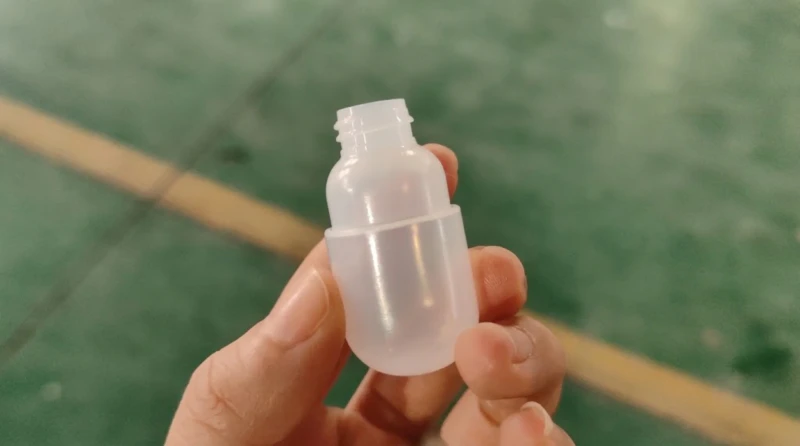
Figure 4: Flawless bottle output produced by correctly sized ZQ Series machines—featuring zero parting line flash, leak-proof neck finishes, and uniform wall distribution.
Conclusion: Sizing for Operational Excellence
Selecting the right IBM machine tonnage is a strategic calculation that directly impacts product quality, manufacturing yield, cleanroom energy efficiency, and long-term profitability. By matching your production matrix against the versatile ZQ Series—whether deploying the compact ZQ40 for specialized eye-dropper lines or the flagship ZQ135 for mega-volume vial contracts—you ensure your plant operates at peak mechanical and economic efficiency.
Need Assistance Calculating Your Exact Mold Tonnage?
Our application engineering team is available to analyze your bottle drawings, calculate projected parting-line forces, and recommend the exact ZQ machine configuration and mold layout for your facility.