
Buying a blow molding machine from a supplier you have never visited, in a country whose manufacturing standards you cannot directly verify, using technical documentation written in a language that may have been machine-translated — this is the procurement reality for most Russian packaging manufacturers sourcing ISBM or IBM equipment from China. The cost savings compared to Western or Japanese equivalents are real and significant. So are the risks. The difference between a well-selected Chinese ISBM supplier and a poorly selected one is not the country of origin — it is the depth of technical due diligence applied before the purchase order is signed. This guide identifies the eight technical red flags that separate serious manufacturers from assembly operations, explains what to look for in factory audits, and provides the contract clauses and FAT requirements that protect your investment.
1. Why Technical Due Diligence on Chinese Suppliers Is Non-Optional
The Chinese plastics machinery manufacturing sector divides into three distinct tiers. The first tier — perhaps fifteen to twenty manufacturers with genuine engineering capability, proprietary designs, CNC-machined structural components and ten or more years of export experience — produces machines that compete credibly with European and Japanese equivalents on performance, while offering a substantial cost advantage. The second tier — several hundred assembly operations that purchase standardised components and combine them into machines using contracted labour — produces equipment that may perform adequately for simple applications but lacks the engineering depth for complex resin or premium bottle geometries. The third tier — workshops operating from online storefronts with no production facility of their own — presents serious financial and technical risk to any buyer.
The problem is that all three tiers present essentially identical marketing materials: professional websites, high-resolution machine photographs, CE certificates and reference customer lists. The technical red flags described in this guide are detectable through documentation review, factory audit and a structured FAT — but only if you know what to look for and insist on testing before shipment.
The cost of a wrong decision: A poorly selected ISBM machine that fails to produce on-specification PETG cosmetic bottles has no resale value in the Russian market. The sunk cost is 100% of the purchase price — typically USD 80,000 to 250,000 — plus lost production opportunity for 12 to 18 months. The investment in due diligence before purchase is always a fraction of this exposure.
2. The 8 Technical Red Flags
Each of these red flags has been observed in real procurement processes by packaging manufacturers who subsequently experienced serious problems with machine performance or after-sales support. None is individually conclusive — but two or more together should be treated as disqualifying.
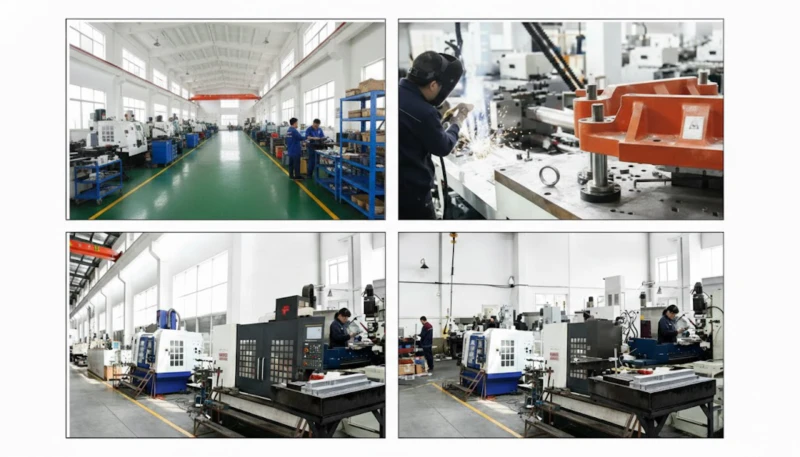
Fig. 1 — A genuine ISBM machine manufacturer operates its own CNC machining capability for structural components, a dedicated assembly facility and an in-house testing bay where machines are run with production molds before shipment. If a factory visit cannot confirm all three facilities, the supplier is most likely an assembly operation buying components from the same tier-one manufacturers it claims to compete with.
3. Nameplate vs Measurable: How to Verify Performance Claims
Every ISBM specification sheet contains figures that cannot be verified from the specification sheet alone. The following table maps each common specification claim to the independent verification method that confirms or refutes it:
| Specification Claim | What Cannot Be Trusted | Verification Method |
|---|---|---|
| Injection clamping force (KN) | Marketing-rounded figure; may be theoretical maximum, not operating value | Request hydraulic cylinder bore (mm) and max operating pressure (MPa). Calculate: F = (bore/2)² x 3.14159 x pressure |
| Cycle time (seconds) | Published minimum — achieved only with the lightest preform and lowest cavity count | Measure with a stopwatch during FAT using your specified mold, resin and production parameters. Measure 20 consecutive cycles. |
| Output per hour (BPH) | Derived from minimum cycle time and maximum cavity count — rarely achievable in production | Count actual bottles produced in 30 minutes of uninterrupted FAT production and multiply by 2. Verify against cycle time measurement. |
| Rated total power (kW) | Sum of all installed motor nameplate ratings — actual running power is 55–85% of this figure | Measure with a calibrated 3-phase power meter at the main panel incomer during FAT production. Record average over 1 hour. |
| ASB mold compatibility | May mean “mechanical dimensions match” rather than “verified production quality with ASB molds” | If you own ASB molds, bring one to the FAT and run it on the machine. Measure neck dimensions, gram weight and bottle clarity against your current ASB machine output. |
| Reject rate / scrap rate | Often not stated at all; when stated (“less than 1%”) cannot be verified from a specification sheet | During FAT, collect and inspect every bottle from a 30-minute production run. Classify by defect type. Reject rate = defective bottles / total bottles produced. |
4. Factory Audit Checklist
A factory visit without a structured checklist produces a general impression — useful, but insufficient. The following checklist covers the physical evidence that distinguishes genuine manufacturers from assembly operations:
-
ACNC machining shopA genuine ISBM manufacturer machines its own structural platens, machine bed, turntable and injection unit components in-house. Look for: horizontal machining centres with 800mm+ working area, quality controlled by in-process CMM inspection, work orders linking CNC output to specific machine serial numbers. If machining is outsourced and no in-house CNC capability exists, the manufacturer is an assembler.
-
BAssembly floor — machines at different build stagesA factory with a real production volume will have machines at multiple assembly stages simultaneously: frames being wired, hydraulic circuits being installed, PLC panels being programmed. If you visit and the factory shows you only one or two complete finished machines, there is no active production — those machines may have been brought in for the visit.
-
CIn-house testing bay with production moldsEvery machine should be run to production before shipment. The testing bay should be equipped with representative production molds, a resin drying system, a chilled water circuit and an air compressor — not just the machine alone. Ask to see production records from the testing bay for machines built in the previous 3 months.
-
DEngineering and R&D departmentRequest to meet the engineering team — not the sales engineer, the mechanical and electrical design engineers. Ask to see the CAD design system in use, the engineering change management process and the tooling drawings for the machine you are evaluating. A dedicated engineering team with genuine design ownership is the defining characteristic of a tier-one supplier.
-
ESpare parts inventoryA supplier who intends to support machines over their 15–25 year service life maintains a spare parts warehouse with critical wear components in stock. Walk through the parts warehouse — it should contain stocked inventory of seal kits, heater bands, neck ring sets, sensor and valve replacements for current machine models. An empty parts room or one stocked only with structural fasteners is a serious after-sales red flag.
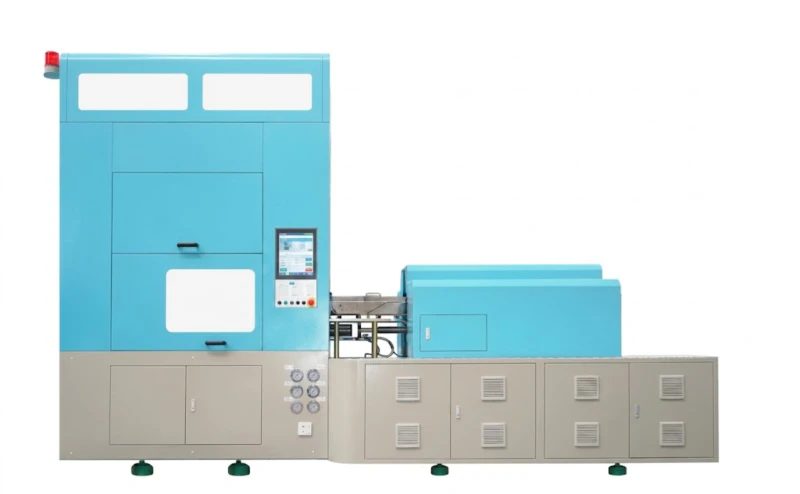
Fig. 2 — A machine in the factory testing bay prior to FAT. The correct verification sequence is: component inspection against the contract schedule, followed by a minimum 4-hour production run at the specified cycle time and cavity count, with all bottles from the final 30 minutes collected and inspected. No FAT means no shipment authorisation.
5. Component Brand Verification: What to Check and How
Component substitution after contract is best prevented by writing a detailed component schedule into the purchase agreement. During the FAT, verify each item in the schedule against the physical machine before accepting the production run results. The following are the highest-risk substitution points:
| Component | Specified Brand (HGY Series) | Common Substitutes to Watch For | Verification |
|---|---|---|---|
| PLC / Control system | Inovance / MiRLE | Unknown brand HMI panels; older PLC hardware | Check model plate on PLC cabinet; verify firmware version against supplier documentation |
| Servo motors (EV models) | Inovance / WEICHI / Yaskawa | Unbranded motors; lower-rated models from same brand | Check motor nameplate on each axis — brand, model number and rated torque must match schedule |
| Turntable servo | Japan Yaskawa or WEICHI | Lower-specification domestic brand | Open the turntable servo cabinet; photograph nameplate |
| Pneumatic valves | Parker (USA) | Domestic Chinese brand pneumatic valves | Parker valves have an embossed Parker logo on the valve body — check each manifold |
| Hydraulic control valve | YUKEN (Taiwan) | Domestic hydraulic valve sets | YUKEN logo cast into valve body; check model number against YUKEN catalogue |
| Oil-free air compressor | Matched capacity unit | Undersized unit, lubricated compressor | Verify rated capacity, working pressure, and oil-free certification. Check that the supplied oil-free air compressor for ISBM is specified without oil lubrication in the cylinder — pharmaceutical and cosmetic applications cannot accept oil contamination in the blow air circuit |
6. Contract Clauses That Protect Your Investment
The purchase contract is the legal instrument that converts verbal commitments into enforceable obligations. The following clauses are the minimum requirements for any ISBM machine purchase from a Chinese supplier:
-
1Technical specification schedule as a contract annexThe specification sheet provided during negotiation must be incorporated as a contractual annex — not merely referenced. Include machine model, rated clamping forces (with derivation from cylinder/servo specifications), injection volume, maximum cycle time at the specified cavity count, and the component schedule with brand names and model numbers.
-
2FAT acceptance as a condition of final paymentTypically 10–20% of the contract value should be held as a final payment, released only after successful FAT completion. Define “successful” in the contract: minimum continuous run time (4 hours), maximum defect rate (1%), minimum actual BPH at the specified cycle time and cavity count, and component inspection sign-off.
-
3Warranty terms with specific fault response timesA 12-month warranty clause is standard but meaningless without defined response times. Specify: (a) Remote technical support response within 24 hours of fault notification; (b) Spare parts dispatch within 3 business days for in-stock items; (c) On-site engineer visit within 15 days for faults not resolvable remotely. Warranty terms without these response time commitments are unenforceable in practice.
-
4Liquidated damages for delayed deliveryDelivery delay is common in Chinese capital equipment procurement, particularly when a supplier is overloaded with orders. Include a liquidated damages clause: a daily penalty (typically 0.1–0.2% of contract value per day of delay, capped at 10%) for delivery beyond the agreed date. This creates a contractual incentive for timely delivery and provides compensation for the production time lost.
-
5Governing law and dispute resolutionSpecify arbitration under a neutral international arbitration body (ICC, SIAC or CIETAC) rather than leaving dispute resolution to national courts. Chinese courts apply Chinese law; Russian courts apply Russian law — neither is a neutral forum for cross-border commercial disputes. International arbitration with a seat in a neutral jurisdiction provides the most predictable enforcement mechanism.
7. Factory Acceptance Test Protocol
A FAT is only meaningful if it tests the machine under conditions representative of actual production. A FAT conducted with the lightest available preform, the fewest cavities and a generous cycle time proves nothing about the machine’s capability for your specific application. The following protocol defines a credible FAT for an ISBM machine:
-
1Pre-run component verification (30 minutes)Before the machine is started, photograph and record the nameplate data for every component in the contract schedule. Confirm brand, model number and rated specification match the agreed annex. Any substitution discovered at this stage must be rectified before the production run begins — not accepted under a verbal “we will fix it after delivery” commitment.
-
2Startup and parameter setup (1 hour)The supplier’s engineer sets up the machine with your specified resin and the agreed mold. Record the time from first injection to first acceptable bottle — this is the startup time, which is operationally significant for shift changeovers. Target: first acceptable bottle within 45 minutes of material loading.
-
3Continuous 4-hour production runRun uninterrupted for 4 hours at the cycle time and cavity count specified in the contract. Record actual cycle time with a stopwatch every 30 minutes. Measure total power draw with a calibrated power meter. Count total bottles produced. Any stoppage extending more than 5 minutes restarts the 4-hour clock.
-
4Bottle sample collection and inspection (final 30 minutes)Collect every bottle produced in the final 30 minutes of the run (minimum 50 bottles per cavity). Measure: gram weight per cavity (max variation ±1.5g), neck OD and thread profile against closure standard, body OD at three heights, base haze (visual in directional light), stress whitening (visual at shoulder), and closure fitment test with production caps.
-
5FAT acceptance criteriaThe FAT passes when: (a) Actual cycle time is at or below the contract specification; (b) Defect rate in the sample batch is below 1%; (c) All measured dimensions are within the product drawing tolerances; (d) Gram weight variation between cavities is within ±1.5g; (e) No unscheduled stoppages exceeded 5 minutes during the 4-hour run; (f) All component nameplates match the contract schedule.
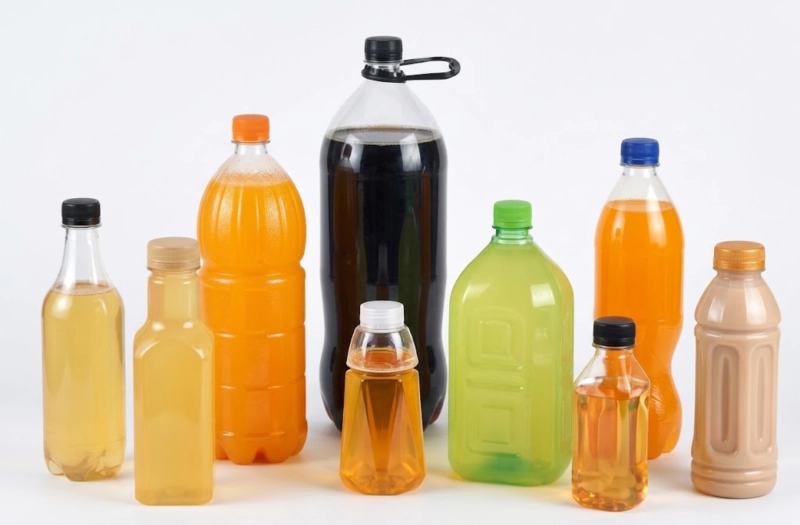
Fig. 3 — Bottle samples collected during a factory acceptance test. The FAT sample batch from the final 30 minutes of the production run must be measured for gram weight per cavity, neck dimensions, body OD and closure fitment — not just inspected visually. Measurement records from the FAT form part of the acceptance documentation and provide the baseline for any warranty claim.
8. After-Sales Support: Questions to Ask Before Buying
After-sales support capability is as important as machine specification for a Russian buyer who cannot simply call a local service engineer. The following questions, asked before contract signature and answered in writing, establish the supplier’s real after-sales capability:
- Q1What is the standard response time for remote technical support? (Acceptable answer: English or Russian-language support available within 24 hours by email or video call, staffed by engineers who understand machine operation — not by sales representatives.)
- Q2How are spare parts supplied to Russia? (Acceptable answer: DHL Express or similar courier, 5–7 working days for stocked items. Unacceptable: “We ship by sea, expect 45 days.”)
- Q3Is the PLC programme open or locked? (Acceptable answer: Open-access PLC with full programme documentation provided to the buyer at delivery. Locked PLCs that require the supplier to make all parameter changes create a permanent dependency that the supplier can exploit.)
- Q4What training is included in the price? (Acceptable answer: A minimum of 5 working days of on-site installation and training by a qualified engineer, with written training materials in Russian or English. Acceptable alternative: training at the factory before shipment, with a follow-up remote session after installation.)
- Q5How long will spare parts for this machine model remain available? (Acceptable answer: A minimum 10-year parts availability commitment in writing. Unacceptable: verbal assurance with no contractual backing.)
Disqualify immediately (any one of): No factory visit allowed; no FAT run; refuses to name reference customers; cannot explain specification derivation.
Proceed with caution (two or more of): No in-house CNC; no independent engineering team; component brands not in contract; CE certificate does not match machine model.
Green light (all of): Factory visit confirmed; FAT with your mold agreed; component schedule in contract; reference customers independently contactable; spare parts price list provided; PLC open access confirmed in writing.
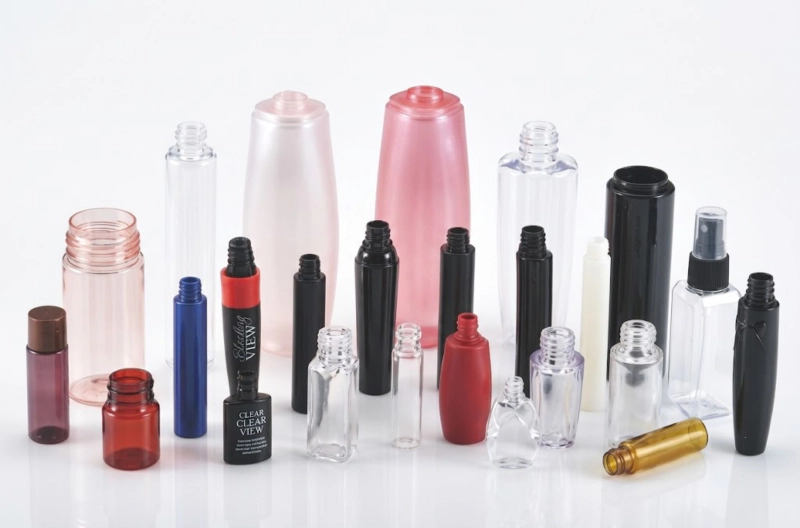
Fig. 4 — The result of selecting the right supplier: PETG cosmetic bottles at specification, first time, with a machine that performs as described in the FAT and continues to perform throughout its service life. The due diligence process described in this guide adds 2–4 weeks to the procurement timeline. It removes years of operational problems.
1. Marketing materials prove nothing. Every tier of the Chinese machinery market produces identical marketing. The only evidence that matters comes from factory visits, component inspection, reference calls and FAT results.
2. Specifications must be verifiable. Every number on a specification sheet should be traceable to a physical component rating. If the supplier cannot derive their claimed clamping force from cylinder bore and pressure, the number is unverified marketing.
3. The component schedule must be in the contract. Verbal commitments about component brands are worthless. Name every brand, model number and quantity in a contractual annex and tie final payment to component verification.
4. A real FAT with your mold and resin is non-negotiable. A supplier who declines to run your bottle during FAT cannot guarantee the machine will produce it in your factory. Make FAT acceptance the condition for releasing final payment.
5. After-sales support must be contractually defined. Response times, spare parts lead times, PLC access and training scope must be written into the contract. A warranty clause without defined service levels is not a warranty — it is an aspiration.
Ready to Evaluate Our Machines Against These Standards?
We welcome factory visits, provide full component schedules with every quotation, run FATs with customer molds as standard practice, and ship with open-access PLC documentation. Send us your bottle specification and we will arrange a demonstration at our factory in Hangzhou.