The Real Problem
The Hidden Cost Nobody Talks About When Replacing an ISBM Machine
You know you need a new machine. Your current ISBM line is ageing — spare parts are getting harder to source, cycle times are slipping, and your biggest cosmetic brand clients are asking for tighter tolerances and better optical clarity than your existing equipment can reliably deliver. The business case for upgrading is clear.
Then you open the mold quotation. And the conversation stops.
A single precision cavity set for a premium cosmetic bottle in PETG or PC — with a polished mirror finish, parting-line-free design, and correct neck ring dimensions — costs anywhere from $15,000 to $60,000 per mold, depending on complexity, cavity count, and material specification. If you are running five or six SKUs across your production line, the tooling bill for a full machine replacement can easily reach $150,000 to $300,000 before a single bottle is produced on the new line.
For many producers — particularly mid-scale cosmetic and pharmaceutical packagers — this tooling reinvestment is the single largest barrier to upgrading their production technology. And for the significant portion of the market that built their production lines on Japanese Nissei ASB tooling, there is a solution that fundamentally changes this calculation: an ASB-compatible one-step ISBM machine that runs your existing molds without modification.
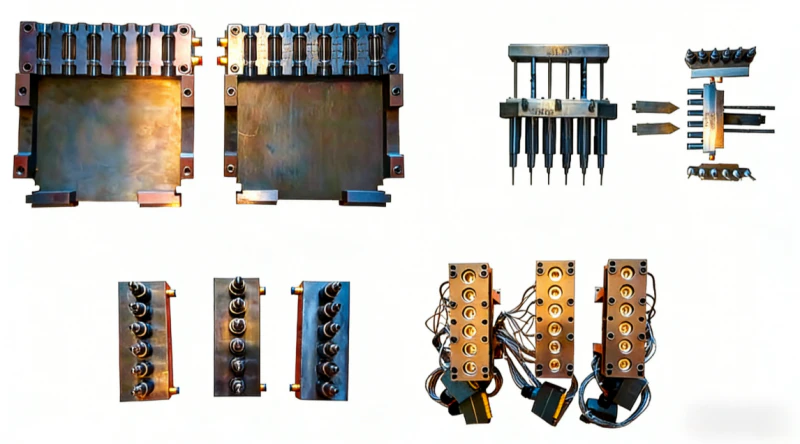
Fig. 1 — A complete Nissei ASB mold set represents a capital investment of $15,000–$60,000 per mold. ASB-compatible ISBM machines allow this entire tooling library to be transferred to a new, higher-performance machine platform with zero reinvestment.
Technical Foundation
What Is Nissei ASB Mold Compatibility — and Why Does It Matter?
Nissei ASB Machine Co., Ltd. of Japan has been the dominant force in one-step injection stretch blow molding technology for decades. Their machines set the engineering benchmark for the industry, and — critically — their mold interface standards became the global de facto standard for precision ISBM tooling. Toolmakers worldwide manufacture molds to the Nissei ASB specification because their customers demand it.
The result: an enormous installed base of Nissei ASB molds in production facilities around the world — molds that are mechanically precise, proven in service, and fully amortised. When the machine they were built for reaches end-of-life, the natural assumption is that the molds go with it. That assumption is wrong — and correcting it is where significant money is saved.
What “Compatibility” Actually Means in Engineering Terms
ASB mold compatibility is not marketing language. It refers to specific, measurable engineering parameters that must match between the mold and the machine. A genuinely compatible machine must match all of the following:
📐
Platen Dimensions & Bolt Pattern
The mold mounting platen must match the ASB standard bolt pattern, pitch circle diameter, and platen face dimensions exactly. A deviation of even 0.5mm renders the mold unmountable without expensive adapter plates.
🔄
Rotary Turret Pitch & Station Spacing
The 4-station (or 3-station) rotary turret must match the ASB station pitch exactly so that preforms transfer correctly from injection to conditioning to blow stations without contact or positional error.
🌡️
Hot Runner Interface & Nozzle Geometry
The hot runner manifold connection points, nozzle tip geometry, and heater element connector positions must match the ASB mold’s injection manifold exactly to ensure correct resin flow and thermal distribution.
💧
Cooling Water Port Locations & Flow Rates
Cooling water inlet and outlet ports must align with the ASB mold’s cooling circuit entry points. Mismatched flow rates or port positions require external manifold modifications that compromise thermal uniformity and bottle optical quality.
⚙️
Blow Mold Clamping Mechanism
The blow station clamping force profile, clamping speed ramp, and mold half alignment must replicate the ASB specification to maintain the parting line sealing pressure that prevents flash and maintains bottle dimensional accuracy.
🤖
Ejection Arm Geometry & Travel
The robot arm ejection path, grip width, and ejection stroke must be calibrated to the mold’s bottle geometry and ejection gate position — a parameter that varies between ASB mold families and must be correctly set at commissioning.
“Switching suppliers is always risky, but this was seamless. The machine’s ability to run our legacy Japanese ASB molds without modification saved us over $60,000 in new tooling. It’s a true cost-effective alternative without compromising quality.”
— CEO, Premium Packaging Manufacturer
Financial Analysis
The Real Financial Calculation: Mold Reinvestment vs. Mold Reuse
Let us put concrete numbers to the decision. The following analysis represents a typical mid-scale cosmetic and pharmaceutical packaging producer running five SKUs on a single ISBM line.
| Cost Category | Replace Machine + Rebuild All Molds | Replace Machine + Reuse ASB Molds |
|---|---|---|
| New machine cost | $X (identical) | $X (identical) |
| Mold tooling (5 SKUs) | $75,000 – $300,000 New mold sets required for each SKU |
$0 Existing ASB molds transferred directly |
| Mold qualification & trial runs | $8,000 – $25,000 Full qualification required for all new molds |
Minimal Molds already qualified to bottle spec |
| Production gap during transition | 8 – 20 weeks Mold lead time + qualification time |
2 – 4 weeks Machine installation & commissioning only |
| Client approval re-runs | Required for all SKUs New mold = new submission to brand QC |
Not required Same mold = same bottle = existing approval valid |
| Risk to existing brand contracts | High Bottle geometry change possible; re-approval risk |
None Identical bottle produced on new machine |
| Total additional investment | $83,000 – $325,000+ | Near zero |
Cost ranges based on industry averages for 5-cavity cosmetic/pharmaceutical ISBM mold sets in PET/PETG/PC. Actual costs vary by mold complexity and supplier.
The production gap cost deserves particular attention. For a cosmetic packager with a dedicated client running a seasonal promotion, a 16-week production gap for mold manufacturing and client re-approval is not a delay — it is a lost contract. The ability to resume production within weeks of machine installation, with identical bottles, is a commercial advantage that does not appear in any tooling cost comparison but is often the decisive factor in real procurement decisions.
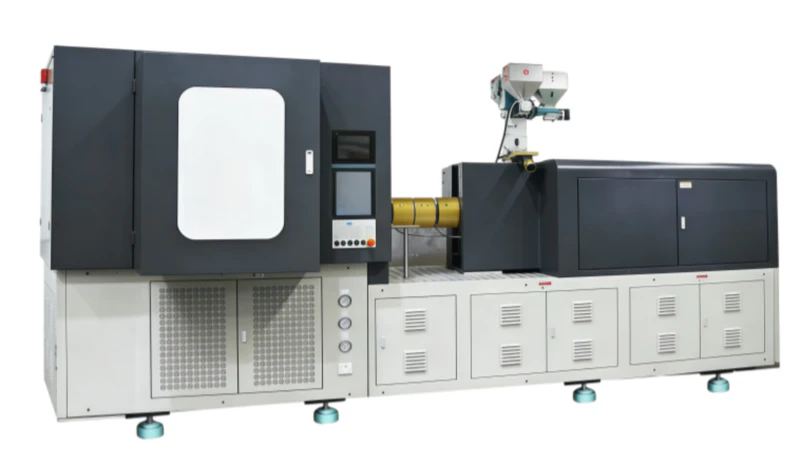
Fig. 2 — An ASB-compatible one-step ISBM machine produces the same premium bottle geometry from the same mold set — eliminating the tooling reinvestment, requalification timeline, and client approval risk that accompany a full mold rebuild.
Engineering Detail
Technical Deep-Dive: How ASB Mold Compatibility Is Engineered
Genuine ASB mold compatibility requires deliberate engineering choices at the machine design stage — not adaptors bolted on after the fact. The following describes the specific technical architecture of our ASB-compatible ISBM machine platform, and why each element matters to your production outcome.
Precision-matched platen and mold base architecture
Our machine’s platen face dimensions, T-slot pattern, and mold mounting bolt circle are machined to the Nissei ASB standard specification. Tolerances are held to ±0.02mm on all critical interface dimensions — the same precision level as the original ASB machine. This means your mold mounts with the same fit it had on the machine it was designed for. No shimming, no adapter plates, no positional compromise.
ASB-format rotary turret with identical station geometry
The 4-station rotary turret replicates the Nissei ASB station pitch, indexing angle, and preform transfer height with the precision necessary to ensure clean preform hand-off between stations. Incorrect station geometry causes preform orientation errors that produce off-centre wall distribution and neck ring dimensional failures — defects that trace back to the machine, not the mold.
Compatible hot runner connection with multi-zone temperature control
The injection station hot runner manifold connection interface is designed to mate with ASB mold injection manifolds without modification. Our PID-controlled multi-zone temperature system maintains hot runner zone temperatures to ±1°C — matching the thermal precision your mold was calibrated for during its original qualification runs. Process parameters developed on the original ASB machine transfer with minimal re-optimisation.
Dual-standard compatibility: Nissei ASB and Aoki mold sets
Our machine platform is engineered for compatibility with both Nissei ASB and Aoki mold standards — the two dominant ISBM tooling families globally. For production facilities that have accumulated molds from multiple tooling suppliers over the years, this dual compatibility means your entire existing tooling library is potentially reusable on a single new machine platform.
Full servo control for precise ASB process parameter replication
Our fully servo-electric machine drive system — across injection, conditioning, stretch, blow, and ejection stations — enables process parameter replication with a precision that hydraulic machines cannot match. Stretch rod speed profiles, blow pressure ramp curves, and conditioning temperature profiles documented from your original ASB machine can be re-entered precisely, dramatically shortening the process optimisation phase after machine changeover.
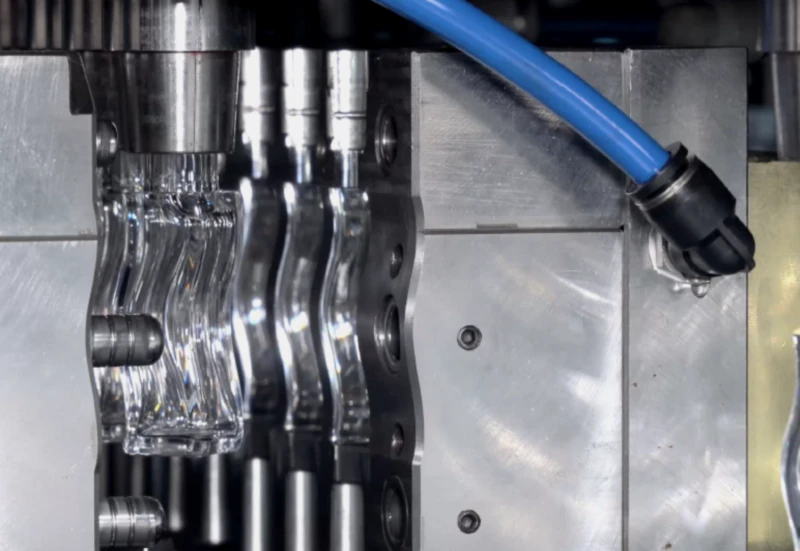
Fig. 3 — Precision-engineered mold interface: the injection station platen and hot runner connection system, machined to Nissei ASB standard tolerances. This engineering detail is what makes zero-modification mold transfer possible.
Quality Gains
Quality Upgrade Without the Tooling Bill: What You Actually Gain
Mold compatibility is the foundation, but it is not the complete story. Running your existing ASB molds on a modern, fully servo-controlled ISBM machine platform delivers concrete quality and efficiency improvements over your current production — improvements that pay for the machine investment independently of any tooling savings.
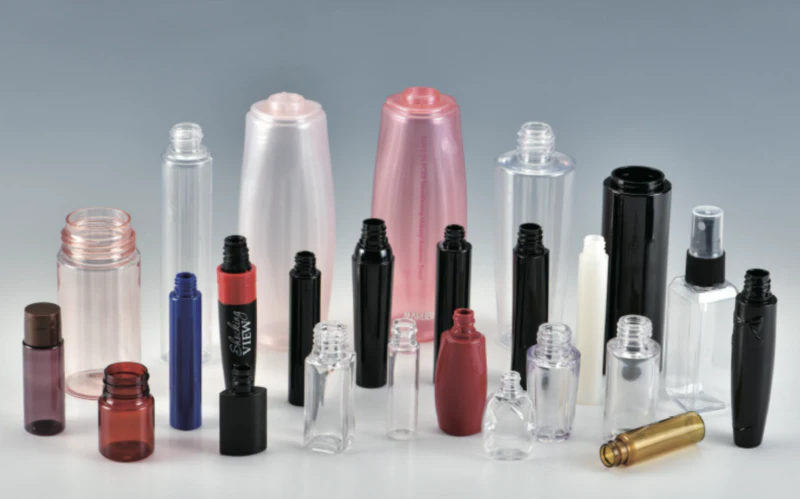
Fig. 4 — Premium cosmetic and pharmaceutical bottles produced on the ASB-compatible ISBM platform using existing Nissei ASB molds. The same tooling, operated on a modern machine, delivers measurably better optical clarity, tighter dimensional tolerances, and a more consistent scratch-free surface finish.
Qualification Guide
Who Is This Solution Right For? A Practical Qualification Guide
ASB-compatible ISBM machine replacement is the right solution for a clearly defined customer profile. Use the following qualification framework to assess whether your situation fits.
Strong Fit — This Solution Is Ideal If:
✔
You own two or more Nissei ASB molds that are in good mechanical condition, for SKUs you intend to continue producing. The more molds you own, the larger the tooling saving and the stronger the case.
✔
Your current Nissei ASB machine is more than 10 years old and experiencing growing spare parts lead times, increasing cycle time drift, or declining optical quality output.
✔
You produce for high-end cosmetic, pharmaceutical, or baby care brands where optical clarity, surface quality, and dimensional precision are primary quality criteria — not commodity volume.
✔
You want to expand your material capability to PETG, PC, or Tritan for existing or new clients — without the cost of new tooling, by running these premium materials through your existing molds on a more capable machine.
✔
Machine lead time and production continuity are critical — you cannot afford a 16–20 week production gap for new mold manufacture and you need the production line running as quickly as possible after machine installation.
Cases That Require a Different Approach:
→
Your existing molds are heavily worn or dimensionally out of tolerance. Mold compatibility saves the mold asset value — but only if the mold is still in serviceable condition. A mold inspection and dimensional audit should be your first step. We can advise on condition assessment criteria.
→
You are designing an entirely new product line with no existing molds. In this case, you start from zero tooling regardless — and your decision should focus on machine quality, capability, and total cost rather than mold compatibility.
→
You require volumes above 50 million units per year for a single SKU. At commodity-scale volume, multi-cavity two-step systems may offer a more appropriate throughput model. The ASB-compatible one-step platform is optimal for the premium quality, mid-volume segment.
Decision Framework
Decision Framework: Your 5-Step Switching Roadmap
For production managers and plant directors ready to move from evaluation to decision, the following roadmap provides a structured path from mold audit to production restart — typically achievable within 12–16 weeks from initial enquiry to first production run.
Mold audit and condition assessment (Week 1–2)
Document every mold in your library: mold ID, cavity count, bottle SKU, total cycle count, last service date, and current condition. Photograph parting line faces, cavity surfaces, and neck rings. Send this information to your machine supplier for compatibility confirmation and condition assessment. This is the foundation of the entire project.
Technical compatibility confirmation and machine specification (Week 2–3)
Your machine supplier reviews the mold documentation and confirms compatibility. For molds within the ASB/Aoki standard dimensions and configuration, this confirmation is typically straightforward. The machine specification — station count, clamping force, injection unit size — is confirmed against your bottle wall thickness requirements and resin portfolio.
Financial approval and machine order (Week 3–4)
With tooling savings quantified, energy reduction modelled, and production gap minimised, the investment case for approval typically looks very different from a conventional machine replacement. Build the business case around Total Cost of Ownership — including avoided tooling investment, reduced energy costs, and recovered production time — not just machine purchase price.
Machine delivery, installation, and commissioning (Week 8–12)
Factory-certified engineers handle complete installation and machine commissioning. Your existing ASB molds are mounted, the cooling circuits are connected, and the hot runner system is brought to temperature. Initial process parameter setup is guided by the process documentation from your previous machine — significantly accelerating the commissioning phase vs. a completely new tooling set.
Operator training and production release (Week 12–16)
On-site operator training covers machine operation, mold change procedure, process parameter adjustment, and routine maintenance. First-production quality approval — using your existing approved bottle dimensions and optical specifications — is typically achieved within days of training completion. Production resumes. The same bottles. Better process. Lower cost per unit.
The Core Investment Proposition — In Plain Terms
- Your molds are worth money. A fully amortised Nissei ASB mold in good condition has a replacement value of $15,000–$60,000. An ASB-compatible machine lets you keep that asset in production — not write it off.
- Your process knowledge is worth money. Years of parameter optimisation for your bottles, your resins, and your quality standards are embedded in your mold qualification records. Reusing the same molds on a compatible machine means that knowledge transfers directly — not rebuilt from scratch.
- Your client approvals are worth money. A bottle that is already approved by a major cosmetic brand took months and significant cost to qualify. The same bottle from the same mold on a new machine protects that approval status entirely.
- Time is money. A 12–16 week path to full production on a compatible machine vs. a 20–30 week path with new tooling is not just a scheduling convenience — it is recovered revenue, protected client relationships, and maintained market position.
- Better performance, same tooling. 40% less energy, tighter dimensional control, superior optical clarity, expanded material capability, faster changeovers, and local spare parts support — all on a machine that runs your existing molds from day one.
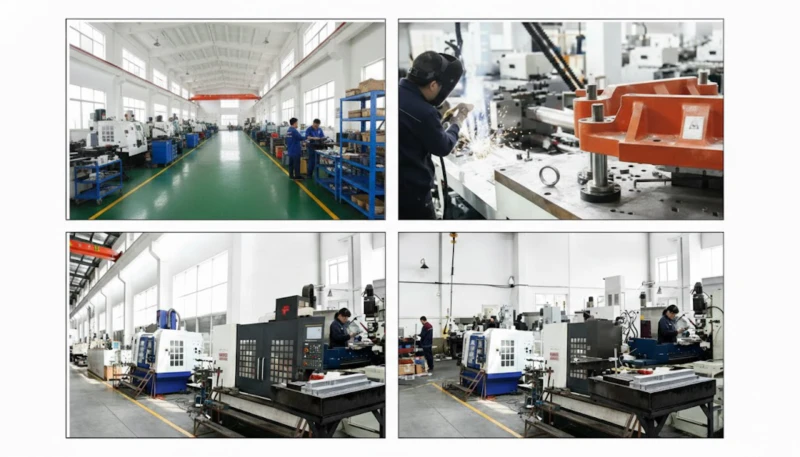
Fig. 5 — Backed by 20+ years of manufacturing excellence (est. 2003) and a 20,000 sqm modern production facility, the ASB-compatible ISBM machine platform serves premium cosmetic, pharmaceutical, and food packaging producers globally — including clients such as Estée Lauder, Walch, Blue Moon, and PROYA.
The decision to replace a machine should not come with a forced decision to replace the molds that go with it. For the significant portion of the global ISBM market that built its tooling library on the Nissei ASB standard, there is now a clear alternative: a modern, high-performance, fully servo-controlled one-step ISBM machine that runs your molds exactly as they were designed to run — without modification, without requalification, and without a tooling bill that doubles your capital outlay. That is the investment case. The bottles speak for themselves.
Packaging Machinery Strategy · 20+ Years Industry Experience
Specializing in ISBM machine platform evaluation, tooling asset assessment, and production line upgrade strategy for cosmetic, pharmaceutical, and food-grade packaging operations. This article reflects independent technical and commercial analysis grounded in real machine replacement projects. Published in association with injectionstretchblomolding.com — a leading ASB-compatible One-Step ISBM machine supplier, backed by 20+ years of manufacturing excellence (est. 2003) and a 20,000 sqm modern production facility.