
Importing heavy industrial equipment like Injection Stretch Blow Molding (ISBM) or Extrusion Blow Molding (EBM) machines into the Russian Federation is a highly complex logistical and legal undertaking. The Russian Federal Customs Service (FTS) operates on a strictly documentary and highly punitive framework. Unlike many jurisdictions where minor paperwork discrepancies can be resolved post-clearance, the Eurasian Economic Union (EAEU) customs code mandates absolute precision. A single digit error in a TN VED code, a missing Technical Passport, or a gross weight discrepancy of mere kilograms can trigger mandatory cargo un-stuffing, exhaustive physical inspections (Dozmor), and administrative fines that decimate project budgets. This comprehensive 8-step guide unpacks the entire regulatory labyrinth—from obtaining Preliminary Customs Classification Decisions to securing mandatory EAC certifications—ensuring your multi-million dollar machinery clears the SVH (Temporary Storage Warehouse) without delay.
1. Understanding the Russian Import Landscape for Heavy Machinery
Importing capital equipment into Russia goes far beyond simply arranging sea freight to Vladivostok, St. Petersburg, or rail freight via Zabaikalsk. The Russian Federal Customs Service (FTS) operates within the broader framework of the Eurasian Economic Union (EAEU), meaning rules are technically harmonized across Russia, Belarus, Kazakhstan, Armenia, and Kyrgyzstan. However, Russian enforcement is notoriously the most stringent and technologically advanced.
When importing an ISBM or EBM blow molding machine, you are not just importing a single widget; you are importing an interconnected system of extruders, servo motors, hydraulic pumps, high-pressure air compressors, water chillers, and PLC control cabinets. Customs inspectors view complex machinery with intense suspicion. Their primary objective is to ensure that no high-duty items (like standalone commercial air compressors or generic display monitors) are being “smuggled” under the guise of a zero-duty plastic forming machine.
Furthermore, the current geopolitical and economic climate has heightened scrutiny on intellectual property, parallel imports, and the exact origin of sub-components. Importers must proactively build an impenetrable wall of documentation that proves the machine is exactly what the invoice claims it to be, functioning solely as an integrated unit for manufacturing plastic containers.
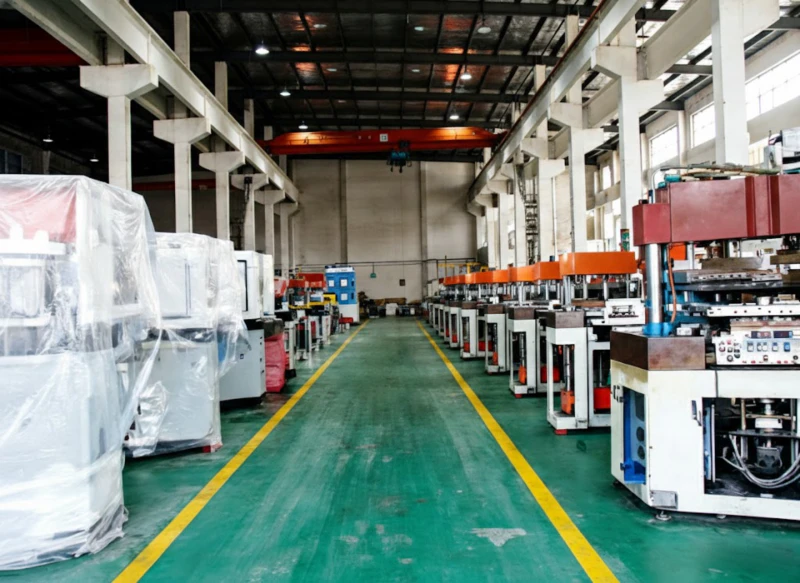
Fig. 1 — Preparation for export: An industrial blow molding machine must be rigorously packed, weighed, and documented before it ever leaves the factory floor to ensure smooth transit through EAEU borders.
2. TN VED Classification and the “Class Decision” Advantage
The TN VED (Товарная номенклатура внешнеэкономической деятельности) is the 10-digit EAEU equivalent of the international Harmonized System (HS) code. For a standard ISBM machine, the primary challenge is deciding whether to import the machine as a “single unit” or to declare each auxiliary component separately.
If a machine is shipped in multiple containers over several weeks, customs will treat each container as separate cargo unless you possess a Preliminary Customs Classification Decision (Классное решение). Issued by the Federal Customs Service headquarters in Moscow (not the local border post), this legally binding document allows an importer to classify an entire dissembled factory line under a single TN VED code (usually 8477), which typically carries a 0% import duty. Without this decision, the chiller might be taxed at 10%, the molds at 5%, and the conveyor belts at another rate.
| TN VED Code | Equipment Category | Base Duty Rate | Standard VAT |
|---|---|---|---|
| 8477 30 000 0 | Blow molding machines for rubber or plastics (Extrusion) | 0% | 20% |
| 8477 10 000 0 | Injection-molding machines (often covers One-Step ISBM) | 0% | 20% |
| 8480 71 000 0 | Injection or compression molds for plastics (Preform/Blow molds) | 0% – 5% | 20% |
| 8414 80 800 0 | Other air or vacuum pumps (High-pressure ISBM compressors) | 5% – 10% | 20% |
Pro-Tip on Class Decisions: Obtaining a Class Decision takes 60 to 90 days. It requires submitting exhaustive technical drawings, 3D models, and a functional flow diagram proving that the chiller or compressor cannot function independently and is exclusively calibrated for the blow molding machine. Do not ship the cargo until the decision is formally published by the FTS.
3. Customs Valuation (CTS), Duties, and VAT Exemptions
The financial mathematics of Russian customs clearance are unforgiving. Customs duties and VAT are calculated not just on the commercial invoice value of the machine, but on the Customs Value (Таможенная стоимость). Under CIF or CIP Incoterms, the Customs Value equals the cost of the machine plus the cost of international freight and insurance up to the EAEU border.
The Danger of Customs Value Correction (CTS)
If the FTS risk-management software determines that your declared invoice value is suspiciously low compared to their internal database of similar machines (a process known as CTS – Control of Customs Value), they will demand a massive security deposit before releasing the cargo. To prevent this, importers must proactively prepare a “Value Confirmation Dossier,” which includes the manufacturer’s export declaration (e.g., Chinese Customs Declaration), detailed public price lists, and bank transfer slips to prove the transaction is legitimate.
Government Decree No. 1042 (VAT Exemption)
Standard import VAT in Russia is 20%. However, to stimulate industrial modernization, the government offers a total VAT exemption for specific high-tech machinery that has no domestic analogs manufactured within Russia. This is governed by Russian Federation Government Decree No. 1042. If your ISBM machine’s exact TN VED code is listed in this decree, you save 20% on landed costs. However, securing this exemption requires flawless technical passports proving the machine’s specifications exceed local capabilities.
4. Mandatory EAC Certification (TR CU Technical Regulations)
You cannot simply import a machine built to European CE or American UL standards; the Russian Federation demands strict compliance with the Technical Regulations of the Customs Union (TR CU). Proof of compliance is the EAC (Eurasian Conformity) mark. For a blow molding line, an EAC Declaration or Certificate must be obtained by an authorized Russian legal entity (usually the importer or a registered representative) before the machine reaches the border.
-
ATR CU 010/2011: Safety of Machinery and EquipmentThis regulation governs mechanical hazards. To obtain this, the manufacturer must provide a comprehensive “Safety Justification” (Обоснование безопасности), detailing risk assessments, emergency stop logic, safety doors, and moving part guarding mechanisms.
-
BTR CU 004/2011: Safety of Low Voltage EquipmentFocuses on electrical safety for components operating between 50V and 1000V AC. It requires detailed wiring diagrams, grounding schematics, and insulation resistance test reports translated into Russian.
-
CTR CU 020/2011: Electromagnetic Compatibility (EMC)Ensures the machine’s inverters, PLCs, and servo drives do not emit interference and are immune to factory electrical noise. Requires strict component-level testing documentation.
-
DTR CU 032/2013: Safety of Pressure EquipmentCrucial for ISBM machines! Because ISBM requires 40-bar (4.0 MPa) high-pressure blow air, the air receiver tanks and manifolds fall under this strict regulation. High-pressure vessels often require physical testing by Russian experts and distinct certification separate from the main machine.
5. Currency Control (UIN) and Foreign Trade Contracts
Russian banks and customs systems are directly linked to prevent capital flight and monitor currency exchange. Before a Russian importer can wire a single ruble, yuan, or dollar to the foreign machinery manufacturer, the bilingual Foreign Trade Contract must be registered with the importer’s authorized Russian bank.
Upon registration, the bank issues a Unique Identifier of the Contract (УНК – Уникальный номер контракта). This UIN must be explicitly printed on every commercial invoice, packing list, and customs declaration. If a machine arrives at the border and the UIN on the invoice does not perfectly match the bank’s digital registry—or if the paid amount differs from the declared value without a registered contract addendum—the customs declaration will be instantly rejected.
Furthermore, the contract must explicitly state the exact terms of delivery (Incoterms 2020), the warranty period, and the cost breakdown of the machine versus the cost of commissioning services. FTS strictly taxes the machine hardware, but services (if separated clearly in the contract) may be treated differently for VAT and tax purposes.
6. The Dossier: Mastering the Exacting Documentary Requirements
“Without a piece of paper, you are an insect; with a piece of paper, you are a man.” This old Russian proverb translates directly into the fundamental law of Russian customs. The documentary dossier must be assembled with obsessive attention to detail. A mismatch of a single kilogram between documents can stall clearance for weeks.
- ✓The Commercial Invoice: Must include the UIN, exact manufacturer details, country of origin, TN VED code, unit price, total price, and be stamped/signed in blue ink by the exporter.
- ✓The Packing List: This is the most dangerous document. It must list the exact net weight, gross weight, dimensions, and number of wooden pallets. If the gross weight varies by more than 1-2% from the actual physical weight at the border, customs will suspect hidden contraband.
- ✓Transport Documents (CMR / Bill of Lading): Must match the invoice exactly. The consignee details must match the legal entity registered in the EAEU.
- ✓Technical Passport (Паспорт станка): A formal GOST-compliant document detailing the machine’s serial number, technical characteristics, power consumption, safety guidelines, and manufacturer guarantees, fully translated into professional technical Russian.
- ✓Used Machinery Specifics: If importing second-hand equipment, you must provide a certified appraisal report of its residual value and a technical expert’s conclusion that the machine is safe to operate and not considered “hazardous waste.”
7. Logistics and the SVH: Surviving Customs Physical Inspections
When your container crosses the Russian border (e.g., at Manzhouli/Zabaikalsk via rail) or arrives at a port (e.g., Vladivostok), it does not go directly to your factory. It is placed in a Temporary Storage Warehouse (СВХ – Склад временного хранения) under customs control. The clock immediately starts ticking. Storage fees at SVHs are exorbitant, and delays can quickly ruin project profit margins.
During the SVH phase, the FTS risk-management algorithm will assign a risk profile to your cargo. High-value machinery almost always triggers a Customs Inspection (Досмотр – Dozmor). This is a physical, invasive inspection.
The container is weighed. If the weight differs from the CMR/Packing list, an Administrative Offense case (CoAP RF Article 16.2) is opened. The machine must be unloaded and weighed pallet by pallet.
Inspectors will photograph the machine’s metal identification plate. It must boldly display the exact Model Name, Serial Number, Manufacturer Name, Date of Manufacture, and the official EAC logo. Stickers are prohibited; it must be a riveted metal plate.
FTS inspectors will open boxes looking for “gifts” from the manufacturer. A toolbox, a set of spare O-rings, or an extra PLC cable that is NOT explicitly listed on the packing list is considered contraband. The entire container will be arrested.
If the machine incorporates branded components (e.g., Siemens PLCs, Festo pneumatics) that are listed in the Russian Customs Intellectual Property Register (TROIS), customs may halt clearance to ask the trademark owner for permission, unless operating under authorized parallel import decrees.
If the Dozmor is passed and all duties and VAT have been successfully debited from the importer’s Unified Customs Account (ELS), the inspector will issue the coveted status: “Release Allowed” (Выпуск товаров разрешен). Only then can the truck leave the SVH for your facility.
8. The 30-Day Pre-Shipment Engineering and Compliance Checklist
The battle for smooth customs clearance is won at the factory, weeks before the machine is loaded into the shipping container. Use this rigorous checklist at the 30-day mark to ensure zero delays at the Russian border:
- Nameplate Photographic Evidence: Demand high-resolution photos of the metal nameplate riveted to the machine. Verify that it contains the EAC logo, the exact model number (matching the contract), the serial number, manufacturing year, and power specifications.
- Spare Parts Zero-Tolerance Policy: Instruct the factory engineer to remove any “bonus” spare parts, tools, or promotional materials that are not explicitly line-itemed on the commercial invoice and translated packing list.
- Weight Calibration: Do not rely on engineering estimates for weight. Have the factory weigh the final packed crates on calibrated scales. Ensure the Packing List reflects this exact reality. The tolerance for error at the Russian border is virtually zero.
- EAC Documentation Alignment: Ensure that the serial number on the machine exactly matches the serial number (or batch range) listed on the EAC Declaration/Certificate and the Technical Passport.
- Wood Packaging Standards (ISPM 15): Ensure all wooden crates, pallets, and dunnage bear the IPPC stamp (wheat stamp) proving fumigation or heat treatment. Russian phytosanitary inspectors will reject unstamped wood, forcing you to repack the machine at the border at immense cost.
- Unified Customs Account (ELS) Funding: Verify with your accounting department that the corporate FTS ELS account holds sufficient ruble funds to cover 100% of the calculated import duty, the 20% VAT, and the customs processing fees, factoring in minor currency exchange fluctuations.
Importing blow molding equipment into Russia is a supreme test of administrative endurance and logistical foresight. By aligning your engineering team with your customs broker early in the manufacturing process, respecting the absolute authority of the TN VED classification, and executing the documentary dossier flawlessly, you can navigate the SVH without incurring devastating demurrage penalties or administrative fines.
Need Expert Assistance Clearing Machinery in Russia?
From securing EAEU Preliminary Class Decisions to drafting GOST-compliant Technical Passports and executing flawless FTS electronic declarations, our technical logistics teams ensure your multi-million dollar investments cross the border safely and legally.