The Russian cosmetics and personal care market is undergoing a profound structural transformation. With the rapid departure of many Western luxury beauty conglomerates post-2022, domestic Russian brands and contract manufacturers (контрактное производство) have aggressively stepped up to fill the void in the premium segment. However, capturing the luxury consumer requires more than just high-quality serum formulations; it requires packaging that exudes “heft,” prestige, and flawless aesthetics. The traditional choice for premium packaging—glass—has become a logistical nightmare due to soaring breakage rates in Russia’s booming e-commerce networks (Wildberries, Ozon) and skyrocketing freight costs. Enter PETG (Polyethylene Terephthalate Glycol) processed via One-Step Injection Stretch Blow Molding (ISBM). This combination is rapidly becoming the gold standard for premium Russian cosmetics, offering the crystal-clear transparency and heavy-wall feel of glass, combined with absolute shatter resistance. This guide explores the engineering, economic, and logistical reasons behind this massive packaging shift.
1. The “Import Substitution” Era: Russian Brands Moving Upscale
The concept of Импортозамещение (Import Substitution) has radically reshaped the Russian beauty sector. Consumers who previously purchased imported luxury serums, toners, and micellar waters are now turning to premium domestic brands and high-end private labels curated by massive retail chains like Letual and Gold Apple (Золотое Яблоко).
However, the Russian consumer’s psychological threshold for “luxury” remains inextricably linked to tactile feedback. Standard PET (Polyethylene Terephthalate) bottles, while cheap and ubiquitous, often feel thin, squeaky, and easily deformable. They communicate “mass market.” To command a premium price point (above 1,500 – 3,000 RUB per 50ml), the packaging must feature rigid walls, heavy bases, and zero visible parting lines. The industry quickly realized that upgrading the formulation without simultaneously upgrading the packaging weight and clarity results in commercial failure. PETG emerged as the exact polymer needed to bridge the gap between the premium feel of glass and the logistical safety of plastic.
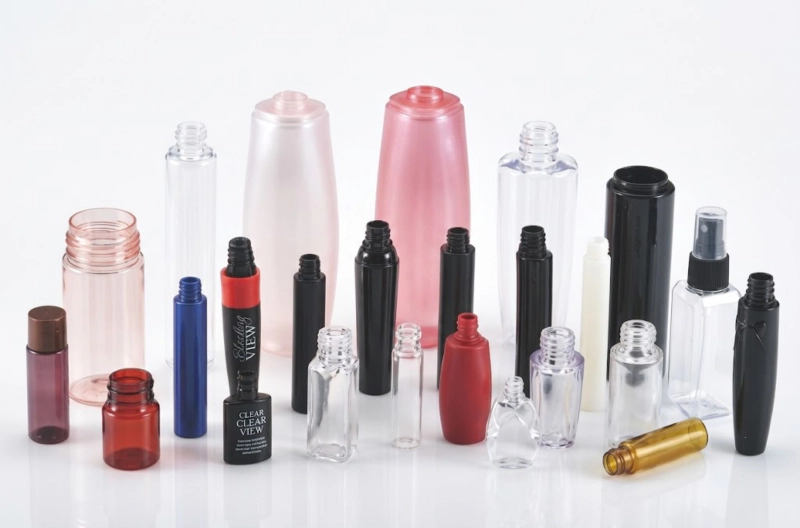
Fig. 1 — Thick-walled PETG packaging. Manufactured via one-step ISBM, these bottles mimic the optical clarity, heavy base, and rigid feel of luxury glass while remaining 100% shatterproof.
2. Material Showdown: Why PETG Defeats Glass and PMMA
When a cosmetics brand director decides to move upscale, they evaluate three primary materials for jars and bottles: Glass, Acrylic (PMMA), and PETG. Each has distinct engineering and economic profiles, but PETG wins in the modern Russian omnichannel retail environment.
| Parameter | Glass (Стекло) | Acrylic (PMMA) | PETG (ISBM) |
|---|---|---|---|
| Light Transmittance | 90 – 92% (Excellent) | 92% (Excellent) | 90 – 91% (Glass-like) |
| Impact Strength | Poor (Shatters) | Moderate (Chips/Cracks) | Extremely High (Unbreakable) |
| Scratch Resistance | Excellent | Poor (Scuffs easily) | Good |
| Freight Weight | Very Heavy (High Cost) | Medium | Lightweight (Low Cost) |
The addition of glycol to standard PET prevents the polymer from crystallizing (turning cloudy) when injection molded into thick sections. This is the superpower of PETG: it allows process engineers to design bottles with 3mm to 6mm thick walls and solid, heavy bases without losing optical clarity.
3. The Wildberries Factor: Surviving Russian Winter Logistics
E-commerce in Russia has exploded, driven by marketplaces like Wildberries and Ozon. However, the logistical reality of shipping a 50ml glass serum bottle from a warehouse in Moscow to a pickup point (ПВЗ) in Novosibirsk in the dead of winter is brutal.
The “Drop Test” Reality: Packaging engineers calculate that an e-commerce parcel is dropped an average of 4 to 6 times during transit. When glass shatters inside a Wildberries truck, the brand not only loses the product cost, but incurs severe platform fines for contaminating other parcels. Furthermore, glass and standard PET become highly brittle at -20°C ambient temperatures.
PETG possesses exceptional impact strength even at sub-zero temperatures. A thick-walled PETG bottle can be dropped from 1.5 meters onto a concrete warehouse floor and will simply bounce, leaving the cosmetic product entirely intact. This drastically reduces the need for expensive secondary packaging (bubble wrap, custom corrugated inserts), saving brands significant margins while ensuring a pristine unboxing experience for the customer.
4. The “Thick-Wall” Aesthetic: Engineering Luxury via ISBM
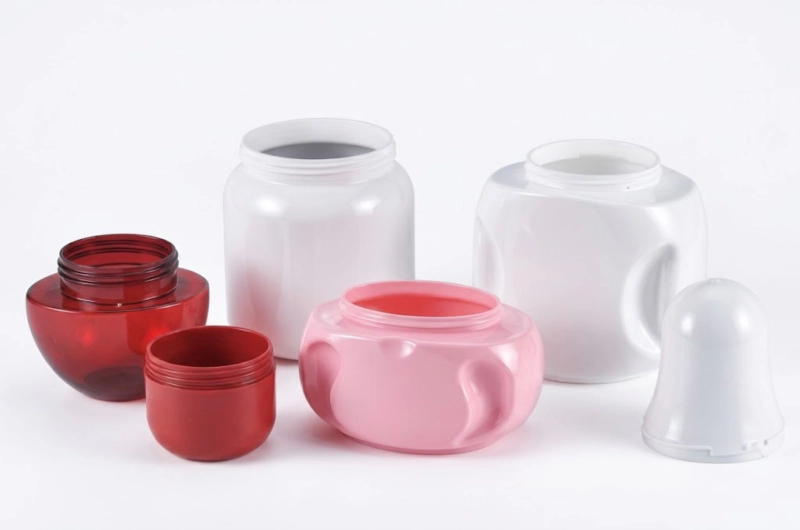
The visual cue for premium skincare is the “thick-wall” (Толстостенная) base. When a consumer looks at a serum bottle, a thick, transparent base creates a magnifying optical illusion, making the colored liquid inside appear suspended in glass.
You cannot achieve this with standard Two-Step (Reheat-Blow) PET machinery. Two-step processes require preforms to be cooled and reheated; reheating a 5mm thick preform uniformly is physically impossible without crystallizing (whitening) the outer skin.
To manufacture thick-walled PETG, One-Step Injection Stretch Blow Molding (ISBM) is strictly required. In the ISBM process, the PETG preform is injection-molded and then immediately transferred to the blow station while retaining its core residual heat. The 4-station ISBM machine utilizes a dedicated “thermal conditioning” station, allowing precise temperature profiling so that the thick base remains perfectly amorphous (crystal clear) while the thinner body is stretched to orient the polymer chains.
5. Chemical Resistance: Safeguarding Active Skincare Ingredients
Premium cosmetics are increasingly formulated with highly active ingredients: AHA/BHA acids, Retinol, Vitamin C, and concentrated essential oils. These aggressive chemical profiles routinely attack low-grade plastics.
Acrylic (PMMA) jars are notoriously susceptible to stress-cracking when exposed to strong citrus or tea tree oils. PETG provides an exceptional chemical barrier, preventing the polymer from crazing (micro-cracking) over a 24-month shelf life.
For professional salon peels and home-care acids, PETG remains inert. It does not leach plasticizers into the product, ensuring the formulation passes strict GOST R certification for dermatological safety.

6. Post-Processing: Hot Stamping, Frosting, and Silk Screening
The premium narrative is completed through decoration. Glass requires highly energy-intensive baking processes to cure silk-screen inks, and frosting glass utilizes environmentally hazardous hydrofluoric acid. PETG, by contrast, is highly receptive to modern, eco-friendly decoration techniques.
- ✓Silk Screening (Шелкография): PETG’s high surface tension allows UV-curable inks to adhere perfectly without the need for aggressive flame treatment, saving energy and cycle time.
- ✓Hot Stamping (Горячее тиснение): Because ISBM thick-walled bottles are highly rigid and do not deform under mechanical pressure, gold and silver foil hot stamping can be applied cleanly without crushing the bottle.
- ✓Soft-Touch and Matte Finishes: PETG can be spray-coated with soft-touch varnishes or matte finishes that mimic expensive frosted glass, providing a highly tactile, velvet-like grip favored by luxury brands.
7. The Economics of Tooling: Mold Costs for PETG vs. Glass
From a financial perspective for contract manufacturers in Russia, the shift to PETG is highly lucrative. Developing custom tooling for a unique glass bottle design is staggeringly expensive and typically requires Minimum Order Quantities (MOQs) of 100,000 to 300,000 units from European or Chinese glassworks. This limits custom designs to only the largest beauty conglomerates.
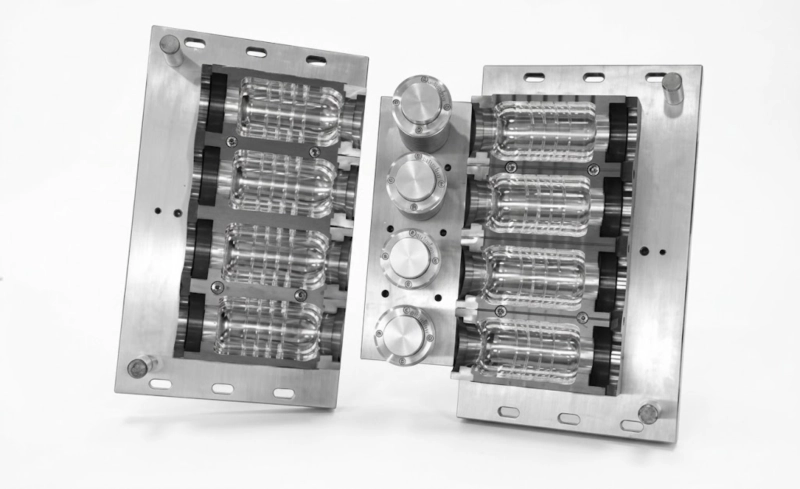
Conversely, custom ISBM mold sets for PETG are significantly more accessible. An independent Russian cosmetic brand can finance a proprietary 4-cavity ISBM mold and achieve ROI within the first 50,000 units. Furthermore, the ability to produce these bottles domestically within Russia drastically cuts down on international freight costs (shipping empty glass bottles from China means you are essentially paying to ship heavy air).
8. Strategic Takeaways for Packaging Procurement Managers
The shift from glass to PETG in the Russian premium cosmetics sector is not a temporary trend; it is a permanent structural change driven by the realities of e-commerce logistics and the push for localized manufacturing. For procurement directors and packaging engineers at Russian cosmetic brands, the mandate is clear:
- Audit Current Breakage Rates: Review your Wildberries and Ozon return data. If glass breakage exceeds 2%, the transition to thick-walled PETG will immediately pay for itself through reclaimed margins.
- Specify One-Step ISBM: When contracting local plastic manufacturers, verify they utilize One-Step ISBM technology (e.g., ASB, HGY). Two-step reheat machines cannot achieve the thick-wall base required for premium aesthetics.
- Leverage Custom Shapes: Capitalize on the lower tooling costs of ISBM to develop proprietary, recognizable bottle silhouettes rather than relying on generic stock packaging.
- Test Formulation Compatibility: While PETG is highly inert, always conduct a 3-month accelerated stability test at 40°C with your specific serums to ensure zero essential oil migration.
By adopting thick-wall PETG ISBM technology, Russian cosmetic brands can confidently position their products alongside the world’s most prestigious luxury labels, delivering a flawless aesthetic experience while completely neutralizing the risks of cross-country winter logistics.
Looking to Upgrade Your Cosmetics Packaging to PETG?
Our engineering team specializes in One-Step ISBM machinery capable of producing flawless, thick-walled PETG jars and bottles. Send us your bottle design to evaluate mold feasibility and cycle times.