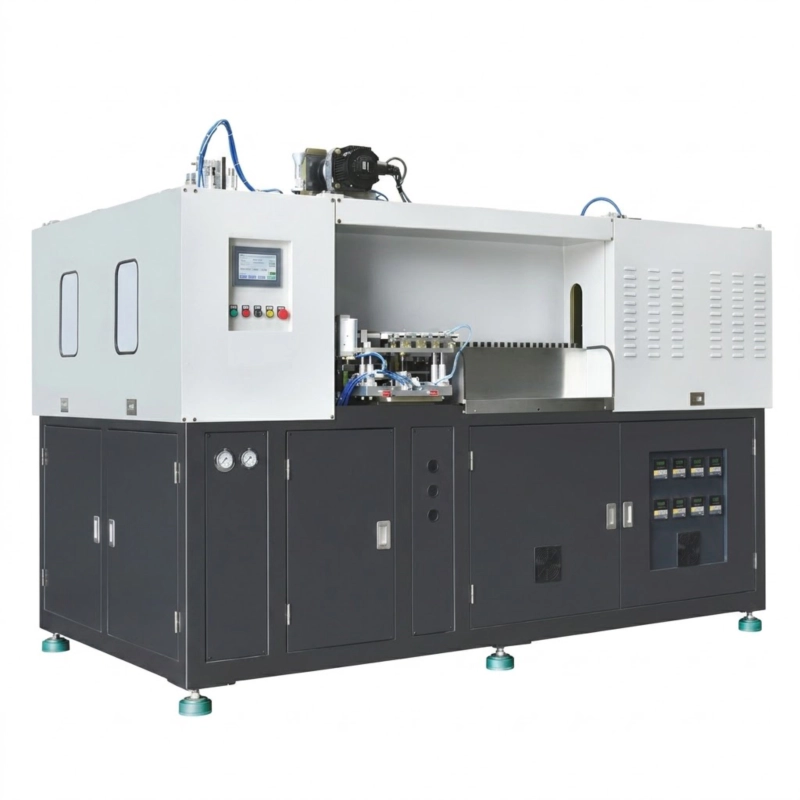
Medicine Bottle Series Blow Molding Machines
Automatic PET blow molding machines for pharmaceutical medicine bottles. 9 models, 2–6 cavities, 7–98 mm neck, 1,800–7,200 bph. GMP no-hand-contact. Incl. eye-drop 7 mm narrow-neck platform. CE.
Medicine Bottle Series
Blow Molding Machines — Complete Model Guide
► 500 ml – 1,500 ml
► 1,800 – 7,200 bph
► Neck from 7 mm – 98 mm
► GMP No-Hand-Contact
► CE Certified
1. Product Overview
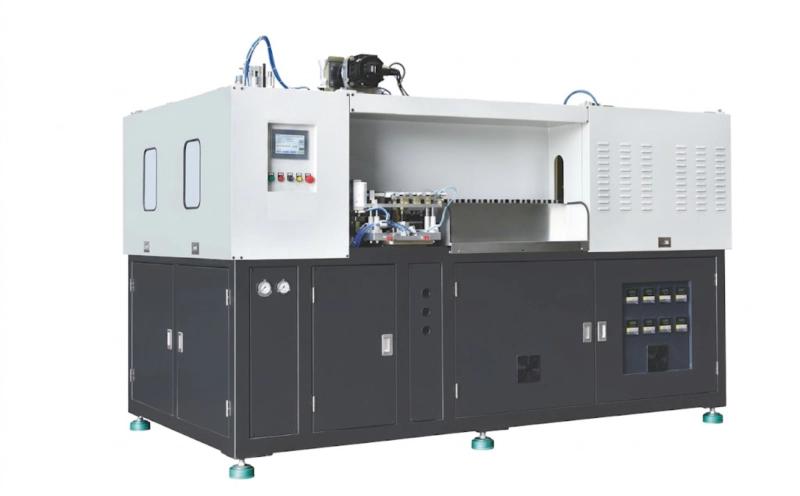
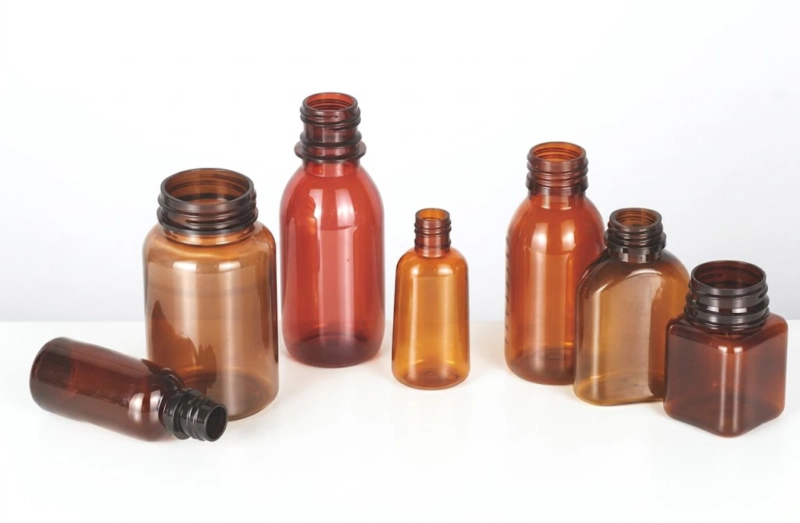
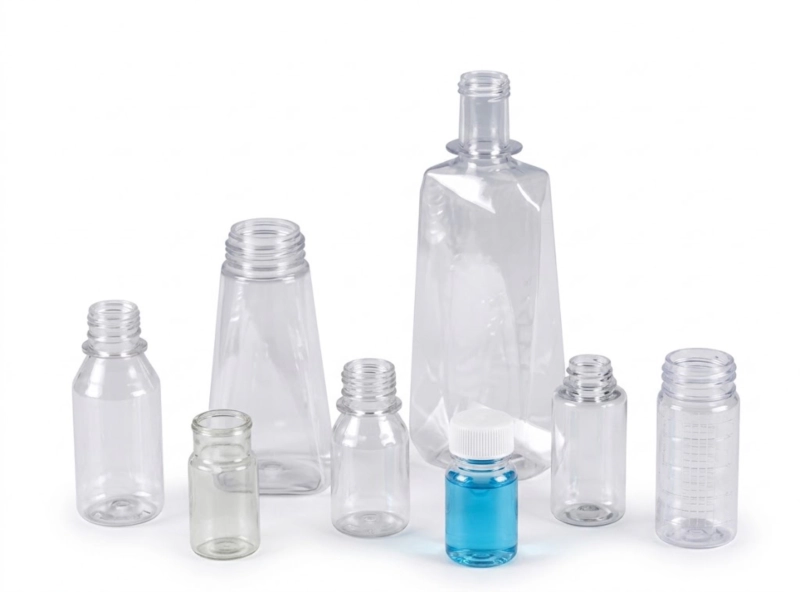
The Medicine Bottle Series Blow Molding Machines comprise 9 models across the AS and ES sub-series, engineered specifically for the stringent dimensional accuracy, surface quality, and no-hand-contact production requirements of pharmaceutical, medical, and healthcare bottle manufacturing. The series spans from the AS-grade high-precision servo platform for complex pharmaceutical bottle geometries, through standard servo ES-series models for oral liquid, tablet, and supplement containers, to the pioneering ES-3C76 narrow-neck platform — the first domestically developed automatic machine capable of producing containers with neck diameters as small as 18 mm, enabling fully automated production of eye-drop bottles, nasal-spray containers, and precision-dosage pharmaceutical vials.
All models in this series produce PET and PETG containers with no-hand-contact operation throughout the preform feed, oven conditioning, and blow cycle — satisfying the fundamental GMP requirement that primary packaging material has no direct human contact during production. PET and PETG offer compelling advantages over glass in pharmaceutical packaging: equivalent chemical inertness for aqueous formulations, superior drop resistance eliminating the breakage risk that contaminates filling lines, and crystal clarity that enables visual product inspection, fill-level verification, and colour-coded identification without label removal.
The AS-series models deliver the additional per-cavity servo precision required for pharmaceutical bottles with non-circular cross-sections, asymmetric shoulder profiles, or fine-detail neck-finish geometries that must meet tighter closure engagement tolerances than standard beverage or cosmetic applications.
Applicable Industries & Applications
✓ Nasal Spray & Ear-Drop Containers
✓ Oral Liquid & Syrup Bottles
✓ Tablet & Capsule Containers
✓ Nutraceutical & Supplement Bottles
✓ Diagnostic Reagent Containers
✓ Hotel Amenities & Travel Toiletries
✓ Veterinary & Animal Health Packaging
2. Working Principle
All models operate on the two-step reheat stretch blow molding (RSBM) process. Pharmaceutical-grade PET or PETG preforms are automatically fed from a gravity hopper, sorted neck-up by an orientation bowl, and conveyed through a multi-zone NIR oven on pitched mandrel holders — at no stage does operator hands contact the preform or the interior of the blown bottle.
At the blow station, servo stretch rods extend axially within each cavity while low-pressure air initiates radial expansion, followed by a high-pressure blast (26–35 kg/cm²) that drives PET or PETG against the cooled mold wall. Biaxial molecular orientation achieved during this simultaneous axial-radial stretching dramatically increases tensile strength, chemical barrier performance, and drop resistance of the finished pharmaceutical container.
The ES-3C76 narrow-neck platform requires a specialised preform handling and mandrel system designed for neck diameters as small as 18 mm — dimensions that standard pharmaceutical blow molder handling systems cannot accommodate. The oven mandrel pitch (76 mm) and transfer mechanism are precision-engineered to hold, orient, and transfer ultra-narrow-neck preforms without distortion or contamination of the inner surface.
Key structural components: servo-electric toggle-link clamping • per-cavity servo stretch rod • multi-zone NIR oven with pharmaceutical-grade neck-protection cooling collar • no-hand-contact automatic preform feeder and orientation system • Siemens/Mitsubishi PLC with HMI, recipe storage, and production batch logging • inline dimensional and weight rejection system.
3. Core Advantages
7 mm Ultra-Narrow Neck — Industry First
The ES-3C76 is the first domestically developed fully automatic stretch blow molder capable of producing containers with neck diameters down to 18 mm (with 7 mm capability available) — enabling automated production of eye-drop bottles, nasal-spray vials, and precision-dosage pharmaceutical containers that previously required manual or semi-automatic processes.
No-Hand-Contact — GMP Compatible
Fully automated preform feed, oven conveying, blow cycle, and bottle discharge means no operator hand contact with preforms or bottle interiors at any production stage — satisfying the fundamental GMP requirement for primary pharmaceutical packaging material and supporting HACCP and BRC compliance submissions at filling facilities.
AS-Grade Servo Precision
AS-series models use higher-specification servo motors and precision reducers delivering ±0.03 mm stretch-rod positioning accuracy — exceeding standard ES-series performance for pharmaceutical bottles with complex asymmetric geometries, fine-pitch neck finishes for child-resistant closures, or premium bottle profiles requiring tighter dimensional tolerances than standard packaging applications.
1,800 to 7,200 bph — Full Range
From 2-cavity 1,800 bph platforms for specialised pharmaceutical brands through to 6-cavity 7,200 bph lines for mass-market nutraceutical and supplement production — the series covers the full throughput range of pharmaceutical and healthcare bottle manufacturing without the need for multiple machine types.
PET & PETG — Pharmaceutical Grade
Both PET and PETG are globally approved for direct pharmaceutical contact. PETG offers superior clarity and glossiness for premium oral-care and supplement presentations. Both materials are processed without hardware modifications — oven zone profiles and PLC recipes for each material are stored on-board, enabling rapid changeover between resins for different product categories.
Complete Turnkey Supply
We supply blow molds (including precision pharmaceutical neck-finish tooling), preform injection molds, industrial chillers, and oil-free compressor packages from a single source — ensuring ISO 8573-1 Class 1 oil-free air quality compliance mandatory for direct-contact pharmaceutical packaging, and simplifying procurement for regulated pharmaceutical manufacturing environments.
4. Technical Specifications
▶ AS Series — High-Precision Pharmaceutical Specialist (2 & 4 Cavity, PET / PETG)
2 models. Higher-grade AS servo motors and precision reducers for complex pharmaceutical bottle geometries, asymmetric profiles, and fine-pitch child-resistant neck finishes. Exceeds standard ES-series dimensional tolerance for regulated pharmaceutical packaging.
| Parameter / Unit | AS-2C114.3 | AS-4C76.2 |
|---|---|---|
| Cavities | 2 | 4 |
| Max. Container Volume (ml) | 1,000 | 500 |
| Output (bph) | 2,000 | 4,000 |
| Max. Neck Diameter (mm) | 88 | 48 |
| Max. Body Diameter (mm) | 94 | 65 |
| Max. Container Height (mm) | 260 | 250 |
| Clamping Stroke (mm) | 122 | 100 |
| Stretching Stroke (mm) | 400 | 350 |
| Preform Holder | 48 | 96 |
| Max. Heating Power (kW) | 45 | 33 |
| Normal Heating Power (kW) | 20 | 17 |
| Blowing Pressure (kg/cm²) | 35 | 35 |
| HP Air Consumption (L/min) | 1,600 | 4,000 |
| Cooling Water Flow (L/min) | 30 | 40 |
| Machine Size L×W×H (mm) | 2660×1660×2150 | 3370×1850×2100 |
| Machine Weight (kg) | 2,600 | 4,000 |
▶ ES Series — Standard Servo Pharmaceutical & Healthcare Bottles (2 / 3 / 4 / 6 Cavity, PET / PETG)
7 models covering 500 ml to 1,500 ml. Includes the ES-3C76 narrow-neck specialist (18–38 mm neck) for eye-drop and precision-dosage containers, and the ES-6C76 high-speed platform at 7,200 bph for nutraceutical and supplement mass production.
| Parameter / Unit | ES-2C100 | ES-2C114.3 | ES-2C130 | ES-3C76 ★ | ES-4C76 | ES-4C100 | ES-6C76 |
|---|---|---|---|---|---|---|---|
| Cavities | 2 | 2 | 2 | 3 | 4 | 4 | 6 |
| Max. Volume (ml) | 500 | 1,000 | 1,500 | 700 | 700 | 800 | 700 |
| Output (bph) | 2,400 | 2,000 | 1,800 | 3,000 | 4,800 | 4,600 | 7,200 |
| Max. Neck Dia. (mm) | 68 | 88 | 98 | 18–38 ★ | 48 | 68 | 68 |
| Max. Body Dia. (mm) | 80 | 94 | 110 | 68 | 68 | 80 | 68 |
| Max. Height (mm) | 200 | 260 | 250 | 240 | 240 | 250 | 240 |
| Clamping Stroke (mm) | 110 | 132 | 160 | 100 | 100 | 128 | 100 |
| Stretching Stroke (mm) | 350 | 400 | 350 | 240 | 350 | 350 | 350 |
| Preform Holder | 60 | 60 | 60 | 72 | 96 | 92 | 130 |
| Max. Heating Power (kW) | 34 | 50 | 42.5 | 40 | 40 | 62.5 | 62.5 |
| Normal Heating Power (kW) | 8–12 | 16 | 8–13 | 18 | 18 | 21 | 26 |
| Blowing Pressure (kg/cm²) | 26–35 | 35 | 26–35 | 35 | 35 | 35 | 35 |
| HP Air (L/min) | 1,000–1,400 | 1,000 | 1,000–1,500 | 2,400 | 3,900 | 4,000 | 5,800 |
| Cooling Water Flow (L/min) | 30 | 30 | 30 | 30 | 30 | 30 | 40 |
| Machine Size L×W×H (mm) | 2900×1525×1930 | 3220×1660×2010 | 3600×1800×1980 | 2850×1850×2180 | 3290×1850×2260 | 4170×1930×2340 | 4690×2000×2000 |
| Machine Weight (kg) | 2,000 | 3,000 | 3,000 | 3,500 | 3,500 | 4,000 | 5,500 |
5. Structure & Material Engineering
🛠 Machine Frame & Clamping
Heavy-gauge welded steel frame, stress-relieved and CNC-machined at all guide-rail and bearing surfaces. Toggle-link servo-electric clamping with no hydraulic fluid — eliminating contamination risk in pharmaceutical production environments and extending maintenance intervals. The AS-series clamping mechanism incorporates higher-specification bearings and guide rails than the ES series, supporting the tighter dimensional tolerances required for pharmaceutical neck-finish production.
⚙ Narrow-Neck Mandrel System (ES-3C76)
The ES-3C76 features a precision narrow-neck mandrel and preform transfer system designed specifically for neck diameters of 18–38 mm. Standard pharmaceutical blow molder handling systems cannot accommodate necks below 28 mm without preform jamming or misorientation. The ES-3C76 mandrel geometry prevents these failures at production speeds up to 3,000 bph.
🌡 Pharmaceutical-Grade NIR Oven
Multi-zone NIR quartz-lamp oven with independently controlled zones and a pharmaceutical-grade neck-protection cooling collar. Pharmaceutical preforms span a wide wall-weight range — from ultra-light 1 g eye-drop vial preforms to heavier 50 g oral liquid bottle preforms — requiring individual zone configuration for each application. All oven enclosures are smooth-surface and cleanable, compatible with pharmaceutical facility cleaning protocols.
🔓 Pharmaceutical Mold Materials
Blow mold cavities machined from high-strength aluminium alloy with 3D CAD conformal cooling channels. Pharmaceutical bottle molds incorporate precision child-resistant neck-finish tooling (28 mm CRC, 38 mm CRC, and custom formats) machined to ±0.01 mm on the neck-finish geometry — tighter than standard packaging applications. Preform injection molds use imported 2316 mold steel with 420 stainless cavity plates, CNC-machined to ±0.02 mm.
📱 PLC, Batch Logging & Traceability
Siemens or Mitsubishi PLC with colour HMI touchscreen. Up to 50 bottle-format recipes on-board. The pharmaceutical-grade configuration includes production batch logging — recording output count, cycle time, and oven zone data per batch — supporting the production traceability documentation required by pharmaceutical filling facility quality systems (GMP, ISO 13485).
📈 Inline Rejection System
All non-conforming containers are automatically rejected before the downstream conveyor. In pharmaceutical filling lines where off-specification bottles cause closure failures, fill-level inaccuracy, or leakage, the inline rejection system provides the pre-filling quality gate required by GMP-compliant primary packaging operations.
6. Typical Application Scenarios
7. Our Machines vs. European Brand Platforms — Objective Comparison
| Comparison Item | Sidel SBO Series | Krones Contiform | SMI Smiflexi | Sipa SFR EVO | Our Series |
|---|---|---|---|---|---|
| Origin | France | Germany | Italy | Italy | Asia |
| Min. Neck Diameter | ~18 mm (selected) | ~18 mm (selected) | ~20 mm | ~18 mm (selected) | 7 mm (ES-3C76) |
| GMP No-Hand-Contact | Yes | Yes | Yes | Yes | Yes — all models |
| Approx. Entry CapEx (2-cav.) | USD 180K – 280K | USD 160K – 260K | USD 120K – 200K | USD 130K – 210K | Significantly lower — direct |
| AS-Grade Precision Option | Selected models | Selected models | Standard only | Standard only | AS series — 2 dedicated models |
| Spare Parts Lead Time | 4–12 weeks | 4–10 weeks | 4–10 weeks | 4–10 weeks | 3–7 days (stocked) |
| After-Sales Service | Regional agents | Regional agents | Regional agents | Regional agents | Direct + remote video |
| CE Certification | Yes | Yes | Yes | Yes | Yes |
CapEx figures are indicative market estimates. Our pricing is provided by confirmed quotation only.
8. Model Selection Guide
| Your Requirement | Recommended Model |
|---|---|
| Eye-drop / nasal-spray vials, 7–18 mm neck, 3-cavity | ES-3C76 (3 cavity, 3,000 bph) |
| Oral liquid / syrup, 100–500 ml, 68 mm neck, mid-volume | ES-2C100 (2 cavity, 2,400 bph) |
| Complex pharmaceutical bottle, asymmetric / CRC neck, precision | AS-2C114.3 (AS-grade, 2,000 bph) |
| Tablet / capsule container, 200–1,000 ml, 88 mm neck | AS-2C114.3 or ES-2C114.3 (2,000 bph) |
| High-speed tablet / supplement bottle, 48 mm neck, 4-cavity | AS-4C76.2 (4,000 bph) or ES-4C76 (4,800 bph) |
| Nutraceutical / supplement, 800 ml, 68 mm neck, high-volume | ES-4C100 (4,600 bph) |
| Oral liquid, up to 1,500 ml, 98 mm neck | ES-2C130 (1,800 bph) |
| Mass-market supplement / nutraceutical, 9,200 bph scale | ES-6C76 (6 cavity, 7,200 bph) |
9. Frequently Asked Questions
Explore our full range of two-step and one-step blow molding machines for pharmaceutical, food, and industrial packaging:
► Browse All Blow Molding Machines
✉ Request a Free Quotation
10. Work with a Specialist Manufacturer
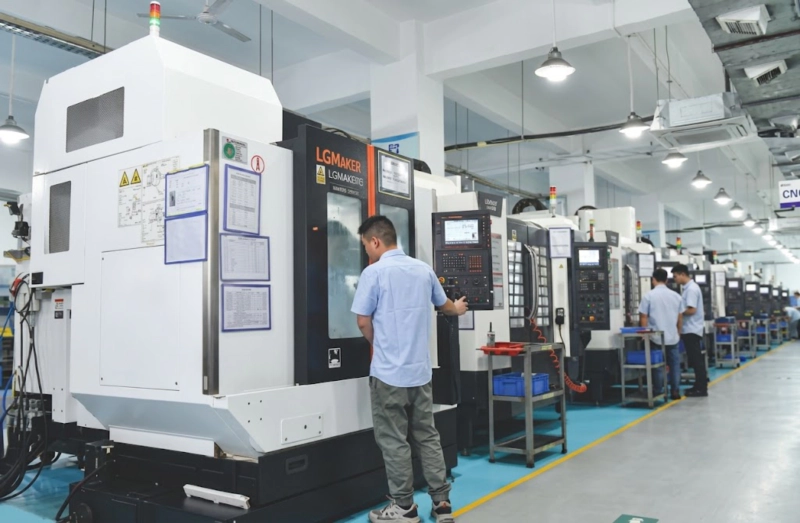
With over two decades of dedicated experience in blow molding machine design, manufacturing, and after-sales service, we supply automatic PET pharmaceutical and medicine bottle blow molding machines to pharmaceutical manufacturers, contract packaging organisations, nutraceutical producers, and healthcare packaging specialists across more than 20 countries. Our production facility operates dedicated CNC machining, precision pharmaceutical mold fabrication, machine assembly, and quality-control departments. Our engineers are available globally for installation, commissioning, IQ/OQ documentation support, and after-sales service.
Whether you are specifying your first pharmaceutical blow molder, adding a dedicated eye-drop bottle platform, scaling up nutraceutical supplement production capacity, or replacing an ageing European pharmaceutical packaging machine, our technical team will provide a no-obligation specification review and delivered-cost comparison within 48 hours of enquiry.