
Why Injection Blow Molding Dominates Pharmaceutical Container Production — and What FDA, GMP, and Pharmacopoeial Standards Require of the Machine, the Resin, and the Production Environment
Pharmaceutical packaging is not ordinary packaging. Every container that touches a drug product — whether it holds an oral liquid, a tablet, a topical cream, or an eye drop — is a component of the finished drug product under FDA, EMA, and equivalent regulatory frameworks worldwide. The container must not interact with the drug product, must not leach extractables or leachables that affect patient safety, must maintain the product’s stability throughout its shelf life, and must be produced in an environment that prevents contamination.
Injection blow molding has earned its position as the dominant container production process for pharmaceutical packaging through a combination of properties that no competing process fully replicates: flash-free production that eliminates trim-waste contamination risk, injection-quality neck thread precision for reliable closure engagement, excellent dimensional consistency cycle to cycle, and — in all-electric machine configurations — complete elimination of hydraulic oil contamination risk. This guide explains the regulatory framework that governs pharmaceutical IBM container production, the specific technical requirements it imposes, and the best practices that define a compliant pharmaceutical IBM operation.
1. Why IBM Is the Preferred Process for Pharmaceutical Containers
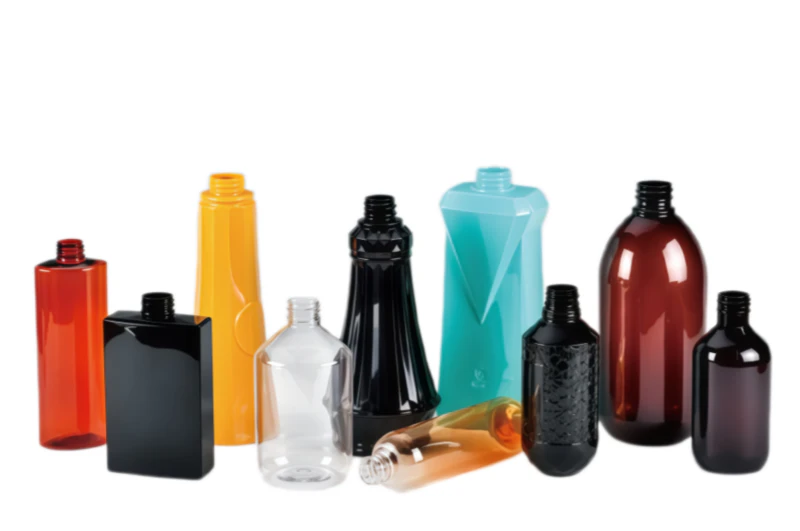
Several process properties make IBM uniquely well-suited to pharmaceutical container production. Each addresses a specific regulatory or quality concern that alternative processes handle less effectively:
Zero Flash — No Trim Waste, No Trim Contamination
Extrusion blow molding produces a flash tail at the container bottom that must be trimmed — generating plastic debris that can contaminate containers. Injection blow molding produces finished containers with no flash anywhere, no trim step, and no trim debris. In pharmaceutical production, eliminating any potential source of particulate contamination is a fundamental requirement. IBM’s zero-flash process achieves this by design.
Injection-Precision Neck Thread Accuracy
The neck thread of every IBM container is moulded in the injection station to injection-moulding dimensional tolerances — typically plus or minus 0.1 mm on critical dimensions. This precision ensures reliable, leak-free engagement with pharmaceutical closures including child-resistant caps, tamper-evident bands, dropper fitments, and pump dispensers. EBM neck threads, formed by pinch-off, are inherently less precise and may require post-moulding sizing.
Excellent Wall Thickness Uniformity
IBM containers have wall thickness variation within plus or minus 1 percent for round containers — critical for consistent drug product fill volumes, cap torque performance, and container crush strength in automated pharmaceutical filling lines. This uniformity also supports reliable leak testing and integrity verification on high-speed filling equipment.
Small-Format Capability (1 ml to 50 ml)
IBM is the only injection blow process that handles containers from 1 ml. Eye drops (5 to 15 ml), nasal sprays (10 to 30 ml), oral drops, and laboratory reagent vials in this size range are exclusively IBM-produced. EBM and ISBM are impractical at these miniature formats.
GMP-Compatible Machine Architecture
All-electric IBM machines (ZQ60HE) operate with zero hydraulic oil — the single largest contamination risk in conventional blow moulding equipment. No hydraulic oil means no risk of oil mist, oil leak, or oil aerosol contamination of container surfaces or the production environment. This is a definitive advantage for pharmaceutical GMP Grade C and Grade D cleanroom compliance.
2. Regulatory Framework: FDA, GMP, and Pharmacopeias
Pharmaceutical packaging containers produced by IBM are subject to multiple overlapping regulatory frameworks depending on the drug product, the dosage form, and the target market. The key frameworks producers must understand are:
FDA 21 CFR — United States
Under FDA regulations, plastic containers for pharmaceutical products must comply with 21 CFR 177.1520 (for polyolefins including PP and HDPE) or 21 CFR 177.1630 (for PET). These regulations specify permitted polymer types, permitted additives, extractable substance limits, and the conditions under which each polymer may contact food and drug products.
Key requirement: resin and container must meet specified extractables limits when tested under FDA-approved test conditions.
USP Chapters — United States Pharmacopeia
USP Chapter 661 (Plastic Packaging Systems and Their Materials of Construction) provides the primary standard for pharmaceutical plastic containers in the US market. USP Class VI biological reactivity testing and USP physicochemical testing for plastics are the standard test batteries. Compliance with USP 661 is expected for containers used with drug products regulated under the US NDA and ANDA pathways.
Key requirement: USP Class VI biological reactivity in all test systems; physicochemical tests within specified limits.
European Pharmacopeia (EP)
EP 3.1 series (Plastic Containers and Closures for Pharmaceutical Use) governs pharmaceutical plastic packaging in EU-regulated markets. EP 3.1.3 covers PP containers; EP 3.1.4 covers LDPE; EP 3.1.6 covers PVC. The EP framework is mandatory for drug products regulated under the EMA centralised procedure and most national European authorisations.
Key requirement: full compliance with relevant EP 3.1.x monograph for the resin used, including extraction and biological testing.
ICH Q3D and E&L Guidelines
ICH Q3D (Elemental Impurities) and the ICH/PQRI extractables and leachables (E&L) guidance documents govern the safety qualification of container-closure systems. For IBM containers, a container-closure system study evaluating extractables from the resin and leachables into the drug product under accelerated storage conditions is required for all NDA/ANDA and MAA submissions.
Key requirement: complete E&L study for container-closure system, with leachables qualified against safety thresholds.
EU GMP Annex 1 (Sterile Manufacturing)
For sterile pharmaceutical products, EU GMP Annex 1 (Manufacture of Sterile Medicinal Products) governs the cleanroom classification and contamination control requirements for container manufacturing. Non-sterile oral solid and liquid pharmaceutical containers are typically produced in Grade D or unclassified environments with documented contamination control measures.
Key requirement: appropriate cleanroom grade for product category; documented environmental monitoring programme.
ISO 15223, ISO 11040, and ISO 8317
Additional ISO standards govern specific container types used in pharmaceutical packaging: ISO 8317 covers child-resistant packaging; ISO 11040 covers prefilled syringes; ISO 15223 covers medical device symbols. For IBM pharmaceutical containers requiring CRC (child-resistant closure) compliance, ISO 8317 testing of the container-closure combination is typically required.
Key requirement: CRC containers must pass child-resistance and senior-use tests per ISO 8317 with the specified closure.
Practical note: IBM container producers who supply pharmaceutical customers typically need to provide a Container Specification Drawing, a Certificate of Analysis (CoA) per batch confirming resin grade and additive identity, a Declaration of Compliance with relevant pharmacopoeial standards, and — for new container-drug product combinations — test data supporting the E&L safety qualification. Our team provides all required documentation packages for pharmaceutical supply chain qualification.
3. Resin Compliance: What Makes a Resin Pharmaceutical-Grade
Not all PP, HDPE, or LDPE resins are pharmaceutical-grade. The designation “pharmaceutical-grade” for a polymer resin reflects specific controls on polymer identity, additive composition, and extractable substance levels. Understanding what differentiates a pharmaceutical-grade resin from a commodity resin is essential for IBM producers supplying the pharmaceutical industry.
| Requirement | What It Means for IBM Resin Selection | Standard PP | Pharma-Grade PP |
|---|---|---|---|
| Additive transparency | Full disclosure of all antioxidants, stabilisers, slip agents, and processing aids with CAS numbers and concentration ranges | Partial | Full disclosure |
| No prohibited additives | No UV stabilisers with endocrine disruption potential; no heavy-metal-based pigments; no slip agents that could migrate into drug product | May contain | Confirmed absent |
| USP/EP pharmacopoeial compliance | Resin lot tested to USP 661/USP Class VI or EP 3.1.3 (PP) or EP 3.1.4 (LDPE) with results within pharmacopoeial limits | Not tested | Lot-tested with CoA |
| Batch traceability | Resin lot number traceable to the polymerisation batch, with retention of raw material CoA for GMP audit purposes | Limited | Full lot traceability |
| No recycled content | Pharmaceutical containers must be produced from 100 percent virgin polymer with documented virgin status. No regrind, no rPP, no recycled content permitted. | May include regrind | Virgin only confirmed |
| Colour restriction | Colour additives must be from approved cosmetic/pharmaceutical pigment lists; amber colourants for light-sensitive products must use approved iron oxide or organic pigments only | Any colour system | Approved pigments only |
Resin Selection by Dosage Form
PP (Polypropylene)
Default pharmaceutical IBM resin. Oral liquids, tablets, syrups, vitamins, supplements, nutraceuticals, cosmeceuticals. USP Class VI in virtually all commercial pharma-grade grades. Autoclavable at 121 degrees C for terminal sterilisation. Widest chemical compatibility with pharmaceutical formulations. Lightest density (0.90 g/cm3) = lowest container weight.
LDPE (Low-Density Polyethylene)
Standard resin for squeezable pharmaceutical containers: eye drops (5 to 15 ml), nasal spray squeeze bottles, oral drop dispensers. LDPE’s unique combination of flexibility, LDPE-specific EP 3.1.4 compliance, and optical semi-clarity makes it irreplaceable for ophthalmic and nasal pharmaceutical dosage forms. IBM is the only viable process for LDPE small-volume pharmaceutical containers.
PET (Polyethylene Terephthalate)
Used for specific pharmaceutical applications where PET properties are required: moisture-sensitive vitamins (PET moisture vapour transmission superior to PP), liquid formulations requiring PET-specific clarity or barrier, and certain specialty pharmaceutical containers. Requires pre-drying before processing and USP 661 / EP 3.1.x compliance from appropriate pharma-grade PET suppliers.
PETG (Polyethylene Terephthalate Glycol)
Selected pharmaceutical applications requiring maximum optical clarity without the CO2 permeation requirement that drives PET in beverage. PETG’s amorphous clarity approaches PET in IBM containers while providing somewhat better impact resistance. Used in premium pharmaceutical packaging where transparency is a product differentiation attribute.
4. Container Types: Which IBM Container for Which Drug Form
.webp)
| Dosage Form | IBM Container Type | Resin | Typical Volume Range | Key IBM Advantage |
|---|---|---|---|---|
| Eye drops (ophthalmic) | Squeezable dropper vial | LDPE | 5 to 15 ml | Only IBM produces LDPE containers below 20 ml reliably; squeeze force and dropper fitment precision critical |
| Oral liquids (syrups) | Amber or clear PP bottle | PP | 50 to 500 ml | CRC neck precision, amber pigment compliance, autoclave capability for hot-fill syrups |
| Tablets and capsules | Wide-mouth PP tablet bottle | PP | 100 to 1,000 ml | Moisture barrier, CRC/TE closure compatibility, large opening for tablet dispensing |
| Nasal spray | Squeezable nasal bottle | LDPE / PP | 10 to 30 ml | Squeeze force consistency, nasal pump fitment neck precision, small-format IBM capability |
| Oral drops | Dropper bottle with integral tip | PP / LDPE | 10 to 30 ml | Dropper orifice precision, volume-per-drop consistency, tamper-evident fitment compatibility |
| Vitamins and supplements | PP or PET round bottle | PP / PET | 60 to 500 ml | Moisture barrier (PET for moisture-sensitive vitamins), CRC compliance, broad resin choice |
| Topical creams and gels | Wide-mouth jar or pump bottle | PP | 30 to 500 ml | Chemical resistance to topical formulations, smooth interior wall for residue-free dispensing |
| IV solutions (oral prep) | Large round PP bottle | PP | 250 to 2,000 ml | Autoclave-compatible, no plasticiser migration (vs PVC), clarity in clarified PP grades |
5. Machine Requirements for Pharmaceutical IBM Production
Pharmaceutical IBM production places specific demands on machine design that standard commodity container production does not. The following machine features are either mandatory or strongly recommended for pharmaceutical-grade IBM operations:
Multi-Zone Temperature Control (3+N barrel zones)
Mandatory
Independent temperature control at every barrel zone (feed, compression, metering, plus additional zones on longer barrels) is required for pharmaceutical IBM. Each zone must maintain temperature within plus or minus 2 degrees C of setpoint to ensure consistent melt temperature and viscosity. Temperature stability is monitored and logged by the PLC for batch records. PID controllers with thermocouple feedback are standard on all ZQ-series machines.
Shot Weight Repeatability within Plus or Minus 0.5 Percent
Mandatory
Container weight is a critical quality attribute (CQA) in pharmaceutical packaging. Weight variation beyond tolerance can indicate wall thickness inconsistency that affects container integrity, fill volume accuracy, and closure performance. Hydraulic IBM machines achieve plus or minus 1 to 2 percent; all-electric IBM (ZQ60HE) achieves plus or minus 0.1 percent shot weight repeatability, directly supporting tighter IPC weight specifications.
Closed-Loop Process Monitoring with Data Logging
Mandatory
FDA 21 CFR Part 11 and equivalent international GMP requirements mandate electronic records and audit trails for pharmaceutical manufacturing processes. The IBM machine PLC must record all critical process parameters (barrel temperatures, injection pressure, cycle time, clamping force) with time-stamped data logs that are tamper-evident and retrievable for regulatory inspection. All ZQ-series machines provide PLC data logging with batch record export capability.
Alarm and Reject Interlock Systems
Strongly Recommended
When any critical process parameter drifts outside its control limits (barrel temperature deviation, injection pressure out of range, cycle time anomaly), the machine should automatically flag the deviation and reject any containers produced during the out-of-specification period. This automatic rejection system prevents out-of-specification containers from entering the compliant batch — a key element of pharmaceutical container production quality systems.
Stainless Steel and Cleanable Surfaces in Product Zone
Strongly Recommended
Surfaces in the product zone (the area where finished containers are ejected and conveyed) should be stainless steel grade 304 or 316, or an equivalent pharmaceutical-compatible material, to support cleaning and disinfection procedures. Painted or bare steel surfaces can harbour microbial contamination and generate particulates that compromise container cleanliness. IBM machine design for pharmaceutical use should specify stainless contact surfaces in the ejection and conveyor zones.
Validated Mould Cleaning Procedures
Mandatory
IBM moulds (injection cavity, core pins, blow cavity) must be cleaned and inspected between production campaigns on different resins or products. Cleaning validation demonstrates that residual polymer, pigment, and any cleaning agent are removed to levels that do not contaminate the next product batch. Written, validated cleaning procedures with associated cleaning agent limits are required for pharmaceutical GMP compliance.
6. All-Electric IBM: The GMP Clean-Room Advantage

The adoption of all-electric IBM machines in pharmaceutical container production has accelerated significantly in recent years, driven by three converging factors: stricter GMP contamination control requirements, increasing FDA scrutiny of container-closure system contamination risks, and the commercial availability of production-ready all-electric IBM platforms with proven pharmaceutical production track records.
Why Hydraulic Oil Is a GMP Risk
A conventional hydraulic IBM machine contains 150 to 400 litres of mineral hydraulic oil circulating at 14 MPa through hoses, cylinders, and valve manifolds positioned throughout the machine frame — including in the clamping mechanism immediately above and around the mould cavity area where containers are formed. Hydraulic oil can reach container surfaces and the production environment through:
Cylinder rod seal weeping
The most common hydraulic oil escape route. Rod seals on clamping cylinders gradually weep oil onto the cylinder rod during normal operation. Over time, this drips onto machine surfaces and the production area below.
High-pressure oil mist
At 14 MPa system pressure, any minor fitting leak or micro-crack generates oil mist that can travel metres from the leak point. Oil aerosol can deposit on container surfaces, mould tooling, and production surfaces.
Hose fitting micro-leaks
Hydraulic hose fittings under cyclic pressure loading can develop slow leaks invisible to visual inspection but depositing residual oil on machine surfaces over production runs.
Valve body seepage
Proportional valve body O-rings and spool seals can seep trace oil through valve bore clearances at high operating temperatures, depositing oil on the valve manifold surfaces below the clamping assembly.
How All-Electric IBM Eliminates This Risk
The ZQ60HE all-electric IBM machine contains zero hydraulic oil anywhere in the machine. Every mechanical motion is driven by direct-coupled servo motors through ball screws or precision gearboxes. There are no hydraulic cylinders, no hydraulic hoses, no valve manifolds, and no oil reservoir. The contamination risk is eliminated by design, not managed by monitoring.
Hydraulic IBM: Oil Risk Management
- Regular seal inspection programme
- Hydraulic oil containment trays
- Oil absorbent pads at high-risk locations
- Documented leak checking routine
- Risk of batch rejection if oil contamination detected
All-Electric IBM: Zero Oil
- No hydraulic oil anywhere in machine
- No seal inspection programme needed
- No containment trays required
- No oil batch rejection risk
- GMP Grade C/D compatible by design
Regulatory audit consideration: During FDA pre-approval inspections (PAIs) and routine GMP audits, investigators increasingly focus on container-closure system contamination control in primary packaging operations. An all-electric IBM machine provides a straightforward, documentable answer to any investigator question about hydraulic oil contamination risk: the machine has no hydraulic oil. This eliminates a common audit finding category entirely.
7. Extractables and Leachables: What They Are and How IBM Minimises Risk
Extractables are chemical substances that migrate from a container material into a solvent under controlled laboratory conditions (typically aggressive solvents, elevated temperatures). Leachables are substances that actually migrate into the drug product during routine storage conditions. The ICH Q3D, ISO 10993, and PQRI guidance frameworks require pharmaceutical packaging suppliers to characterise extractables and demonstrate that predicted leachables from the container are below defined safety thresholds (typically expressed as the Analytical Evaluation Threshold, AET).
IBM production has several inherent process characteristics that minimise extractables and leachables risk compared to competing processes:
Pharmaceutical-Grade Virgin Resin Only
IBM pharmaceutical containers use 100 percent virgin pharmaceutical-grade resin with full additive disclosure. No recycled material, no regrind, no cross-contamination from non-pharmaceutical resin lots. The extractable profile of a pharmaceutical-grade PP or LDPE from a qualified supplier is well-characterised and predictable — unlike commodity resins whose additive package may change between production batches.
Minimal Thermal Degradation Through Short Residence Time
Polymer degradation during melt processing generates oligomers, degradation products, and oxidation byproducts that become potential extractables. IBM’s short barrel residence time (the melt is typically in the heated barrel for 60 to 180 seconds before injection) minimises thermal degradation compared to processes with longer heat histories. Precision barrel temperature control prevents localised overheating that could generate degradation products even with short residence time.
No Flash Trim — No Regrind Reintroduction
EBM produces flash that is typically reground and reintroduced into the process. Regrind has a degraded polymer chain structure and potentially altered additive concentration from the thermal history of the first processing cycle. IBM’s zero-flash process means no regrind is generated and no regrind needs to be managed. Every container is produced from virgin, first-pass melt only.
No Hydraulic Oil Contribution to Extractable Profile
Mineral hydraulic oil is a complex mixture of hydrocarbons, antioxidants, anti-wear additives, and rust inhibitors. If oil contacts container surfaces, these oil constituents become potential extractables from the container. All-electric IBM eliminates this risk entirely — the extractable profile of an all-electric IBM container reflects only the resin and its approved additives, not machine lubricant contamination.
Documentation for E&L studies: When pharmaceutical customers conduct extractables studies on IBM containers, they typically require from the container manufacturer: resin CoA (with full additive disclosure), resin technical data sheet confirming USP/EP compliance, manufacturing process description (confirming virgin resin only, confirming no hydraulic oil contact), and retained container samples from the same production lot as the E&L study samples. Our team provides all required documentation to support pharmaceutical customer E&L qualification programmes.
8. Process Control and IPC: Statistical Quality Assurance in IBM
In-Process Control (IPC) in pharmaceutical IBM container production is the systematic sampling and testing of containers during production to verify that the process is operating within its validated parameters and producing containers within specification. The IPC programme must be defined in the manufacturing validation documentation and executed consistently in production.
Critical Quality Attributes (CQAs) Monitored in IBM Pharmaceutical Production
| CQA | Measurement Method | Typical IPC Frequency | Consequence of Failure |
|---|---|---|---|
| Container weight | Analytical balance, all cavities sampled | Every 30 to 60 minutes | Weight outside spec may indicate wall thinning, incomplete fill, or parison dimension error |
| Neck dimension (T, E, I) | Plug gauge, thread gauge, or CMM | Every 1 to 2 hours | Out-of-tolerance neck dimensions prevent closure engagement or cause leakage |
| Container height and diameter | Calliper measurement or vision system | Every 1 to 2 hours | Dimensional failure indicates mould wear, blow parameter drift, or cooling variation |
| Visual inspection (flash, sink, contamination) | Trained visual inspection or automated vision | 100 percent in-line (preferred) | Any flash, contamination, or visible defect is a reject in pharmaceutical production |
| Wall thickness | Ultrasonic wall thickness gauge at defined points | Every 2 to 4 hours | Thin walls may compromise container integrity under mechanical stress or cap application torque |
| Cap application torque | Torque wrench test on filled or unfilled container | Every 2 to 4 hours | Low cap torque indicates neck dimension out of tolerance or surface contamination affecting seal |
| Leak test (container integrity) | Vacuum decay or dye penetration test | Batch sample (typically 5 to 10 per hour) | Leaking container is a critical defect — drug product escape and patient safety risk |
Process parameters (barrel temperatures, injection pressure profile, cycle time, clamping force) are monitored continuously by the PLC and automatically flagged when outside control limits. Containers produced during an out-of-limit period are held and assessed under the deviations management system before release.
9. Clean Room and Environmental Control Requirements
The appropriate cleanroom classification for IBM pharmaceutical container production depends on the drug product type and dosage form. EU GMP and FDA cGMP provide the framework:
| Pharmaceutical Container Application | EU GMP Grade | ISO Class | Environmental Monitoring Requirement |
|---|---|---|---|
| Non-sterile oral solids / tablets (closed container) | Grade D (or equivalent) | ISO 8 | Particulate monitoring, microbial monitoring (settle plates and active air sampling), temperature and RH control |
| Non-sterile oral liquids (open container during fill) | Grade D or C | ISO 8 or ISO 7 | As above, plus more frequent microbial monitoring during filling operations where container is open |
| Ophthalmic products (non-sterile at fill, sterilised after) | Grade C or B | ISO 7 or ISO 6 | Stricter particulate and microbial limits; pressure differentials between zones; gowning requirements |
| Container manufacturing only (not filling) | Grade D or unclassified with controls | ISO 8 or controlled | Most IBM container production facilities operate in Grade D or equivalent. The critical contamination control is the container washing/rinsing step before filling, not container manufacturing conditions alone. |
Practical note on container manufacturing vs filling: IBM container production and pharmaceutical drug product filling are typically separate operations at separate facilities. The IBM container manufacturer produces containers in a Grade D or equivalent controlled environment with documented contamination controls; the pharmaceutical manufacturer receiving the containers conducts washing, inspection, and filling in their appropriately classified cleanroom. The container manufacturer’s primary obligation is to demonstrate that containers leave the manufacturing facility clean, free of particulates, free of microbial contamination, and packed in protective packaging that maintains cleanliness during transport and storage.
10. Documentation and Qualification: IQ, OQ, PQ for IBM Machines
Pharmaceutical GMP requires that manufacturing equipment be formally qualified before use in regulated production. For IBM machines used in pharmaceutical container manufacturing, three qualification stages are standard:
Installation Qualification
Verifies that the IBM machine is installed correctly, utilities are connected as specified, and the machine’s physical configuration matches its design specification. IQ documentation includes: machine serial number and configuration record, utility connection verification (electrical supply voltage and amperage, compressed air pressure, cooling water supply), site environmental conditions, and instrument calibration certificates for all monitoring instruments (thermocouples, pressure transducers, encoders). The machine supplier (Anthropic) provides IQ documentation support including machine specifications, wiring diagrams, and instrument calibration certificates at machine delivery.
Operational Qualification
Verifies that the IBM machine operates correctly across its full specified operating range. OQ challenges each machine function at the limits of its operating range: barrel temperature control tested at maximum and minimum setpoints; injection pressure verified across its range; cycle timing verified against specification; alarm systems tested at limit conditions. OQ typically runs without product (or with non-pharmaceutical resin). OQ protocol and report are produced by the pharmaceutical manufacturer’s engineering or validation team, typically with machine supplier technical support.
Performance Qualification
Verifies that the IBM machine consistently produces containers within specification under actual production conditions using the pharmaceutical-grade resin and validated process parameters. PQ runs production batches at the full range of process conditions (minimum, nominal, and maximum for each critical parameter) and demonstrates through statistical sampling that container weight, dimensions, and quality attributes are consistently within specification. Typically three consecutive PQ batches at each production condition are required. PQ data forms the basis for the validated process range documented in the manufacturing process record.
Key Documents Required for Pharmaceutical IBM Production
11. Closure System Compatibility and CRC Requirements
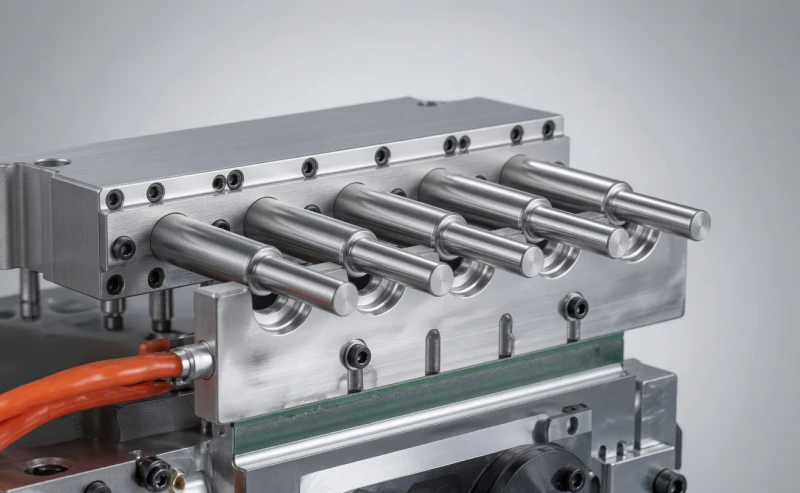
The container-closure system is a defined regulatory concept: it is not the bottle or the closure independently, but the combination of both as a functional system that must maintain product sterility, prevent leakage, protect from environmental factors, and — for child-resistant applications — meet ISO 8317 child-resistance performance requirements.
Critical Neck Dimensions for Pharmaceutical Closures
The three primary neck dimensions that determine closure compatibility for IBM pharmaceutical bottles are:
T
Thread Outer Diameter
The outer diameter of the bottle neck thread. This dimension determines which closure thread pitch and diameter will engage correctly. IBM injection-moulded neck threads hold T dimension to plus or minus 0.1 mm, enabling reliable CRC and TE closure engagement.
E
Neck Outer Diameter
The outer diameter of the neck below the thread. E dimension determines the diameter of the bottle neck that the closure skirt engages. Critical for tamper-evident band performance and for pump or dropper fitment engagement depth.
I
Neck Inner Diameter
The inner diameter of the bottle neck opening. I dimension determines which dropper tip, dip tube, or pump stem diameter can be accommodated. For oral liquid pharmaceutical bottles, I dimension is critical for correct dispensing accuracy with the specified dropper fitment.
Child-Resistant Closure (CRC) Compliance
Pharmaceutical products dispensed in certain dosage forms (liquid medicines, tablets and capsules, and other specified drug categories) are legally required to be packaged in child-resistant containers in the US (PPPA), EU, and many other markets. IBM pharmaceutical bottles are routinely produced with neck finishes designed to engage CRC closures compliant with ISO 8317.
CRC compliance requires both the container and the closure to be tested together as a combination. The IBM container contributes to CRC performance through: consistent neck thread dimensions (ensuring the push-down-and-turn mechanism engages consistently), adequate neck wall thickness to withstand the torque applied during CRC opening, and surface finish on the neck that provides appropriate friction for the CRC mechanism. IBM’s injection-moulded neck thread provides more consistent CRC engagement performance than EBM neck finishes, which is why IBM is the preferred process for pharmaceutical CRC containers.
12. Best Practices Checklist for Pharmaceutical IBM Operations
The following checklist consolidates the key requirements and best practices for pharmaceutical IBM container production. Use it for operational readiness assessment, new production line qualification, and periodic GMP self-inspection:
Resin and Raw Material Controls
Machine and Equipment Controls
Production and IPC Controls
Environmental and Packaging Controls
13. Frequently Asked Questions
Q: Do IBM machines need to be in an ISO 7 or ISO 8 cleanroom for pharmaceutical container production?
The required cleanroom classification depends on the drug product that will be filled into the container, not the IBM process itself. Most non-sterile pharmaceutical containers (oral solid and oral liquid) are manufactured in Grade D (ISO 8) or a well-controlled unclassified environment with documented contamination controls. The critical contamination control for the drug product typically occurs at the pharmaceutical manufacturer’s filling facility, where containers are washed and inspected before filling. IBM container manufacturers should establish their environmental control programme based on their customers’ quality agreements and the applicable GMP guidance for their product category.
Q: Can regrind from IBM production be used in pharmaceutical containers?
No. All pharmacopoeial standards (USP, EP, JP) and the major pharmaceutical GMP frameworks require that primary pharmaceutical packaging containers be produced from virgin material only. IBM’s zero-flash process generates no production regrind, which is itself a GMP advantage. Any startup or purge material generated at the beginning of a production run must be managed as non-pharmaceutical waste and not incorporated into pharmaceutical container production.
Q: How does the FDA view hydraulic oil contamination risk in pharmaceutical IBM production?
FDA inspection observation records and warning letters include documented cases of hydraulic oil contamination in pharmaceutical packaging operations. FDA investigators during pre-approval inspections (PAIs) and routine cGMP inspections examine contamination control measures for all container-closure system manufacturing processes. A producer using hydraulic IBM machines should have documented evidence of hydraulic oil contamination risk assessment, preventive maintenance records for hydraulic seals, and a change control procedure triggered by any observed oil leak. An all-electric IBM machine provides an inherently cleaner production environment that simplifies this risk documentation — there is no hydraulic oil risk to manage.
Q: What container-closure system documentation does a pharmaceutical customer typically require?
Pharmaceutical customers sourcing IBM containers for drug product primary packaging typically require: a complete Container Specification Drawing with toleranced critical dimensions; a Declaration of Compliance with applicable pharmacopoeial standards (USP 661, EP 3.1.x); a resin supplier’s Declaration of Compliance and CoA; a manufacturing process description (confirming virgin resin, no hydraulic oil contact, documented IPC); a Drug Master File (DMF) reference or letter of access for submission to regulatory agencies; and — for new drug-container combinations — a Container-Closure System E&L Study protocol and report. Our team provides a complete pharmaceutical qualification documentation package for all IBM containers supplied to the pharmaceutical industry.
Q: Is PP or LDPE preferred for pharmaceutical eye drop containers?
LDPE is the standard resin for ophthalmic squeeze dropper vials because its lower stiffness (flexural modulus 0.2 to 0.4 GPa versus 1.4 to 1.8 GPa for PP) allows the container to be squeezed easily with minimal finger force to dispense accurate drop volumes. PP eye drop containers are possible but require thinner walls to achieve equivalent squeeze force, which reduces the container’s crush resistance and may affect drop volume consistency. The European Pharmacopeia EP 3.1.4 specifically covers LDPE containers for pharmaceutical use, establishing the regulatory framework for LDPE ophthalmic containers. PP is used for eye drop containers in specific applications where the formulation is incompatible with LDPE or where a firmer container is preferred for dispensing mechanism design.
14. Conclusion
Injection blow molding has earned its position as the preferred pharmaceutical container production process not by coincidence, but by delivering the specific combination of qualities that pharmaceutical regulatory frameworks demand: flash-free production, injection-precision neck threads, excellent dimensional consistency, small-format capability, and — in all-electric configurations — complete elimination of hydraulic oil contamination risk. These properties align directly with the FDA, GMP, USP, EP, and ICH requirements that pharmaceutical packaging must satisfy.
Pharmaceutical IBM production is demanding — it requires qualified resins, calibrated machines with full electronic batch records, documented IPC programmes, validated cleaning procedures, appropriate environmental controls, and a complete qualification documentation package (IQ, OQ, PQ). But the IBM process itself supports all of these requirements more naturally than competing blow moulding processes, which is why pharmaceutical container manufacturers worldwide continue to invest in IBM as their primary container production technology.
If you are evaluating IBM machines for a new or upgraded pharmaceutical container production line, our engineering and regulatory support teams are available to discuss machine specification, documentation requirements, and best practices for your specific pharmaceutical application. We supply IBM machines to pharmaceutical container manufacturers across regulated markets globally and provide the full qualification documentation support that pharmaceutical supply chain compliance requires.
Pharmaceutical IBM Machine Inquiry — Documentation Support Included
Specify your container (resin, volume, dosage form), production volume, and regulatory market. Our engineering team will recommend the right machine model with full pharmaceutical qualification documentation support — IQ/OQ/PQ protocols, Declaration of Compliance, CoA support, and FDA/GMP technical file assistance — all included. Factory-direct quotation within 24 hours.