Successfully navigating the labyrinth of Russian customs to import an Injection Stretch Blow Molding (ISBM) machine is only the first phase of your project. The true, unforgiving engineering challenge begins the moment the shipping containers arrive at your factory gates. Russian industrial infrastructure presents highly specific demands: legacy Soviet-era substations prone to extreme voltage fluctuations, rigorous SNiP (Building Codes) for floor loading and vibration, mandatory GOST compliance for electrical grounding, and unforgiving winter temperatures that dictate how chillers, cooling towers, and compressed air dryers must be configured. A multi-million dollar machine designed to produce flawless cosmetic PETG or pharmaceutical PC bottles will completely fail if the high-pressure air drops by a mere 2 bar, or if the chilled water flow fluctuates. This definitive, deep-dive guide outlines the critical facility requirements—encompassing space planning, electrical load stabilization, multi-stage compressed air systems, and thermodynamic cooling—that must be flawlessly executed before the commissioning engineer even steps foot on your factory floor.
1. Space Planning: SNiP Floor Loading, Rigging, and Vibration Control
An ISBM machine is an exceptionally heavy piece of capital equipment that exerts massive dynamic forces during the high-speed clamping, injection, and stretch-blowing phases. Russian building codes—specifically SNiP 2.03.13-88 (Полы / Industrial Floors)—must be strictly consulted before authorizing the final installation location. A standard 4-station ISBM machine weighs between 12 to 20 tons. Because this weight is concentrated on 6 to 8 leveling pads, the point-loading on the factory floor is immense.
Concrete Specifications and Epoxy Finishes
The concrete slab must be heavily reinforced, typically utilizing C25/30 (M350) grade concrete with double-layer rebar meshes, and have a minimum depth of 250mm to 300mm depending on the subsoil. The floor must be leveled to a tolerance of ±2mm per meter. If the floor is uneven, the heavy cast-iron machine frame will slowly twist over time. This twisting throws the tie-bars out of alignment, leading to premature wear on bushings, leaking hot runners, and uneven bottle wall thickness—defects that no amount of software parameter tuning can fix. To prevent concrete dust from contaminating the hydraulic oil and the preforms, the entire production area should be sealed with an industrial epoxy or polyurethane resin coating before the machine is moved in.
Rigging (Такелажные работы) and Overhead Access
Getting the machine from the shipping container to its final spot requires professional rigging. Ensure your factory doors have a minimum clearance height and width (usually 3.5m x 3.5m) to allow heavy-duty forklifts or air-skates to maneuver the machine indoors. Once installed, Russian factories typically rely on factory overhead cranes (кран-балка) for mold changes. You must guarantee a minimum clear vertical height of 4.0 to 5.0 meters above the machine’s tie-bars to safely extract the heavy injection hot-runner and blow mold assemblies. Obstructing this overhead path will increase mold changeover times from a couple of hours to several days.
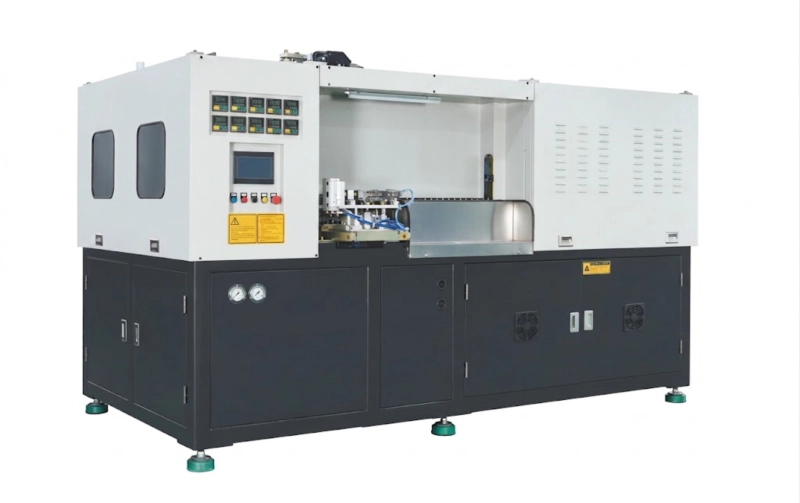
Fig. 1 — High-volume ISBM machine positioned on an epoxy-coated industrial floor. Note the dedicated 1.5m maintenance perimeter surrounding the machine and the open overhead trajectory required for safe mold exchanges.
2. Electrical Requirements: GOST Standards, Harmonics, and Power Stability
Electrical instability is the leading cause of PLC data corruption and servo drive burnout in Russian industrial parks—particularly in regions outside the immediate perimeters of Moscow, St. Petersburg, and Kazan. While GOST 29322-2014 formally transitioned the Russian grid standard to 400V/230V, the vast majority of regional factory substations still deliver the legacy 380V/220V (50Hz) standard. Modern ISBM machines are designed for a 380V-400V (±10%), 3-phase, 5-wire (L1, L2, L3, N, PE) system.
| System Component | Voltage / Frequency | Typical Installed Power | Cable Requirement (Copper) |
|---|---|---|---|
| ISBM Machine (Main Base) | 380V / 50Hz (3P+N+PE) | 80 kW – 150 kW | 3x95mm² + 2x50mm² |
| PET Resin Desiccant Dryer | 380V / 50Hz | 30 kW – 55 kW | 3x35mm² + 2x16mm² |
| High-Pressure Compressor | 380V / 50Hz | 45 kW – 90 kW | 3x50mm² + 2x25mm² |
| Industrial Chiller (Outdoor) | 380V / 50Hz | 20 kW – 40 kW | 3x25mm² + 2x16mm² |
Grounding Loops and Harmonic Distortion
The grounding loop (Контур заземления) is non-negotiable. Russian state inspectors require grounding resistance to be less than 4 Ohms. Poor grounding causes stray currents that disrupt the analog signals connecting the machine’s linear transducers (position rulers) to the PLC, resulting in erratic injection speeds and clamping profiles.
Furthermore, modern ISBM machines utilize massive servo motors. These non-linear loads inject Total Harmonic Distortion (THD) back into your factory’s electrical grid. If you are running multiple ISBM machines simultaneously, this harmonic noise can overheat your main substation transformers. It is highly advised to install Active Harmonic Filters (AHF) and Capacitor Banks to correct the Power Factor (cos φ) closer to 0.98, avoiding penalties from your local energy provider.
3. High-Pressure Blow Air (40 Bar): Topologies & Rostekhnadzor Rules
Unlike standard injection molding, ISBM requires high-pressure compressed air to stretch and blow the thick PET/PC preform into the cold mold cavity. This necessitates a dedicated 40-bar (4.0 MPa) compressor system. Crucially, for cosmetic, food, and pharmaceutical containers, this air must be strictly 100% oil-free (Class 0 per GOST ISO 8573-1). Even minor oil carryover will permanently fog the interior of PETG bottles and cause rapid degradation of the machine’s proportional blowing valves.
Booster Compressors vs. Direct High-Pressure
Importers generally choose between two topologies: A primary 40-bar 3-stage piston compressor, or a “Booster” system that takes standard 8-bar factory air and amplifies it to 40 bar. Booster systems are more energy-efficient if your factory already has massive low-pressure screw compressors, but the initial 8-bar air MUST be dried and filtered perfectly before entering the booster; otherwise, water will destroy the high-pressure piston rings.
Rostekhnadzor (Ростехнадзор) Compliance
In the Russian Federation, any pressure vessel operating above 0.07 MPa with a significant volume falls under the strict jurisdiction of Rostekhnadzor and TR CU 032/2013 (Safety of Pressure Equipment). The 40-bar air receiver tanks (typically 600L to 1000L) must have valid EAEU safety certificates, certified mechanical safety relief valves, and a stamped Technical Passport. We highly recommend pairing your ISBM machine with a dedicated, fully-certified matched 40-bar oil-free compressor system to bypass integration nightmares.
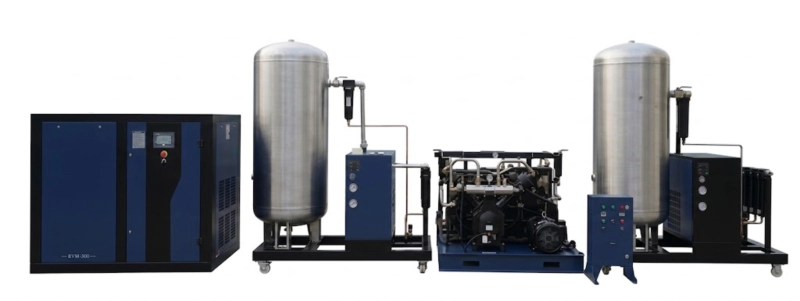
Fig. 2 — A dedicated 40-bar oil-free compressor station. Proper sizing of the high-pressure receiver tank buffers the massive, instantaneous volumetric demands required during the simultaneous stretch-blow phase of multi-cavity production.
4. Low-Pressure Actuation Air: Preventing Winter Pneumatic Freeze-ups
In addition to the blow air, the machine requires a steady, high-volume supply of low-pressure actuation air (0.8 – 1.0 MPa) to forcefully drive the pneumatic cylinders, safety gates, mechanical ejectors, and hot-runner valve gates. While most industrial facilities already have a standard 8-bar compressed air network, the quality and dew point of this air during a Russian winter is a notorious point of failure.
If compressed air lines run along unheated exterior walls, across factory roofs, or between separate buildings, the residual moisture in the compressed air will rapidly condense and freeze during -25°C winter nights. Micro-ice crystals will shoot directly into the machine’s delicate Festo or SMC solenoid valves, causing them to jam and halting production entirely.
To prevent this, a high-quality refrigerated air dryer (осушитель воздуха рефрижераторного типа) capable of bringing the pressure dew point down to +3°C must be installed. If air lines run outside, a desiccant dryer (адсорбционный осушитель) achieving a -40°C dew point is mandatory. Furthermore, old rusty carbon-steel pipes should be replaced with modern extruded aluminum or PPR piping to prevent rust flakes from acting as abrasive sandpaper inside the machine’s pneumatic cylinders.
5. Industrial Chilled Water: Reynolds Numbers and the Winter Glycol Penalty
The ISBM process is profoundly dependent on thermodynamics. The injection mold requires aggressive chilled water to rapidly solidify the polymer melt into a preform, while the blow mold needs precisely controlled water to set the final bottle shape, maximize structural rigidity, and ensure optical clarity. A typical mid-sized ISBM machine requires a water flow rate of 150 to 300 Liters/minute at a steady pressure of 0.4 to 0.6 MPa.
Turbulent Flow and the Reynolds Number
Cooling efficiency is not just about temperature; it is about flow velocity. To efficiently extract heat from the mold steel, the water flow inside the cooling channels must achieve “turbulent flow” (a Reynolds Number greater than 4,000). If the water pressure is too low, the flow becomes laminar, acting as an insulator rather than a coolant, which drastically increases your cycle time and ruins profitability.
The Russian Winter Glycol Penalty
In Russia, many factories place their large chiller condensers outdoors to save floor space and to utilize energy-saving “free cooling” during the winter. However, if any part of your chilled water loop is exposed to sub-zero outside temperatures, you must use a Propylene Glycol or Ethylene Glycol mixture (usually 35-45% concentration to prevent freezing at -30°C). Glycol is significantly more viscous than pure water and has a lower specific heat capacity. This is known as the “Glycol Penalty.” If you plan to use glycol, you must inform the machine and mold manufacturer in advance so they can upsize the internal water manifolds, increase the pump horsepower, and expand the heat exchanger surface area to compensate.
6. Factory Climate Control: Cleanrooms, ESD, and Surviving the Russian Winter
ISBM machines operate at extreme temperatures (the injection barrel reaches up to 290°C for PET and PC). They generate significant radiant heat. Paradoxically, the main challenge in Russian factories is often balancing the extreme cold outside with the localized heat inside.
Winter Heating and Electrostatic Discharge (ESD)
During winter, factory central heating (отопление) must maintain the ambient temperature of the production hall strictly above +15°C. If the ambient temperature drops lower, the hydraulic oil in the machine will become too viscous, leading to sluggish servo response and inconsistent injection pressures during morning start-ups. Furthermore, central heating severely drops the relative humidity in the factory. Dry air turns newly blown plastic bottles into massive static electricity magnets. Dust will aggressively cling to the bottles, ruining cosmetic packaging. Installing overhead industrial humidifiers or ionizing air bars over the conveyor belts is highly recommended.
Cleanroom (Clean Zone) Integration
If you are producing pharmaceutical eye-droppers, IV bottles, or premium cosmetic serum jars, the ISBM machine must be housed inside a Cleanroom (typically ISO Class 7 or 8 per GOST R ISO 14644-1). This requires the HVAC system to maintain positive air pressure inside the room, preventing outside dust from entering when doors open. The machine’s hydraulic power pack and heat-generating servo drives are often customized to sit outside the cleanroom wall, with only the clamping and ejection area inside the sterile zone.
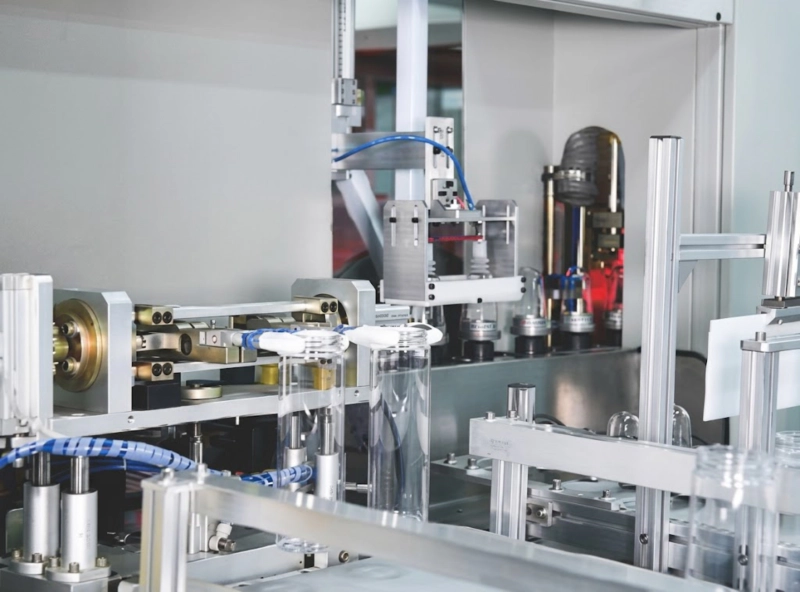
Fig. 3 — High-end customer application cases (Cosmetics & Pharma). These bottles often demand ISO Class 7/8 cleanroom production environments, where factory climate control and ESD mitigation are just as crucial as the machine’s parameters.
7. Optimal Layout for Auxiliaries: Dryers, Dosers, and Conveyors
The ISBM machine is the heart of the manufacturing system, but the ISBM auxiliary equipment represents its arteries. The layout of these peripheral devices dictates the efficiency of your material flow and the ergonomics of your operators.
PET and PC are highly hygroscopic. Place the desiccant dryer as close to the machine’s hopper as physically possible. Long vacuum conveying lines will allow dried resin to absorb ambient moisture from the humid factory air before it melts, resulting in cloudy bottles, visual bubbles, and disastrously lowered drop-test strength.
If coloring bottles, a volumetric or gravimetric doser must be mounted directly onto the feed throat. If incorporating crushed reject bottles (regrind), ensure the granulator is placed in a separate, sound-proofed room to keep dust and noise away from the primary ISBM clean zone.
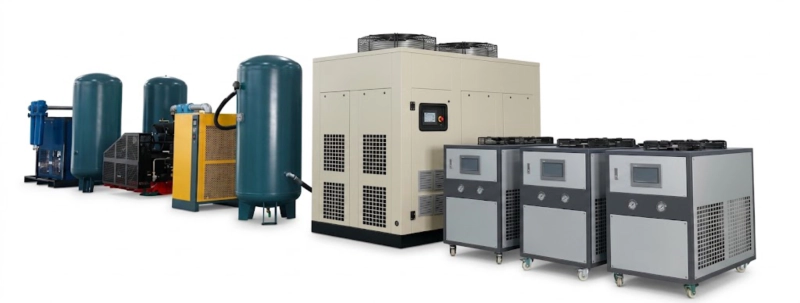
Fig. 4 — A standard suite of ISBM auxiliary equipment. Strategic layout of the desiccant dryer (preventing moisture re-absorption) and the industrial chiller ensures uninterrupted, defect-free production runs.
8. The Definitive Civil and Mechanical Pre-Commissioning Checklist
Having a foreign technician sit idle in a hotel in Moscow or Yekaterinburg because a high-voltage power cable is missing costs thousands of dollars a day in wasted fees and lost production. Exactly 14 days before the scheduled arrival of the commissioning engineer, your Chief Engineer (Главный инженер) must physically verify and sign off on the following exhaustive protocol:
14-Day Facility Readiness Protocol
- Power Connected & Load Tested: The main 380V power cable is physically pulled into the machine cabinet. Phase rotation has been verified. Grounding resistance is tested and confirmed to be < 4 Ohms per GOST standards.
- Fluids Plumbed, Purged & Pressurized: Chilled water hoses are connected to the machine manifolds. The chiller is filled (with appropriate water/glycol mix), completely purged of air bubbles, and successfully holding 10°C under continuous circulation.
- Pneumatics Live and Dry: Both the 10-bar low-pressure and 40-bar high-pressure lines are connected to the machine inlets. The compressors have run for at least 4 hours, and the dew point has been measured at the machine inlet to ensure zero moisture is entering the lines.
- Hydraulic Systems Prepared: High-quality, anti-wear hydraulic oil (usually ISO VG 46 or 68, depending on factory ambient temperature) has been purchased locally, filtered, and pumped into the machine reservoir to the exact sight-glass level.
- Process Materials Staged: At least 1,000 kg of the exact production-grade resin (e.g., specific IV grade of PET or Tritan) and relevant color masterbatch are on-site and staged next to the dryer.
- Fire Safety (MChS) Clearance: The production area is cleared of debris, fire extinguishers are placed at designated posts, and the layout complies with Russian Ministry of Emergency Situations (МЧС) emergency egress regulations.
Proper facility preparation is the unglamorous but absolute prerequisite for a highly profitable ISBM project. An advanced molding machine that is installed on a rock-solid civil foundation, fed with clean and stable power, and supplied with bone-dry, high-pressure air will run reliably for decades. Treat the surrounding factory infrastructure with the exact same engineering respect as the capital equipment itself.
Planning a Factory Layout for Your New ISBM Machine?
Provide us with your factory dimensions, and our engineering team will create a custom 2D/3D civil and mechanical layout encompassing the machine, overhead cranes, chillers, and 40-bar compressor stations—ensuring full compliance with EAEU operational and maintenance clearances.