
IBM Machine Buyer Guide
A factual, data-driven comparison of two 80T/85T-class injection blow molding machines — evaluating clamping force, injection weight limits, platen orientation, and machine footprint to assist packaging manufacturers in capital equipment procurement.
When high-volume packaging manufacturers require an injection blow molding (IBM) machine capable of running 12-to-18 cavity molds, or processing large-format 500ml–1000ml bottles, the evaluation shifts to the heavy-duty 80T–85T class. Historically, the Jomar IBM85S has been a dominant force in this tier, providing the robust clamping power necessary for extensive pharmaceutical and nutraceutical production lines.
However, as global manufacturing standards evolve, alternative platforms engineered to European structural philosophies have entered the space. The ZQ80 represents this new generation, offering equivalent or superior clamping forces, heavy-shot injection weights, and a radically reduced machine height at a highly competitive total cost of ownership.
This article provides a direct, technical side-by-side comparison using available specification data. It is not a promotional piece, but an objective procurement tool designed to help engineering and purchasing teams understand exactly where the Jomar IBM85S excels, where the ZQ80 offers advantages, and how to evaluate the transition costs between the two platforms.
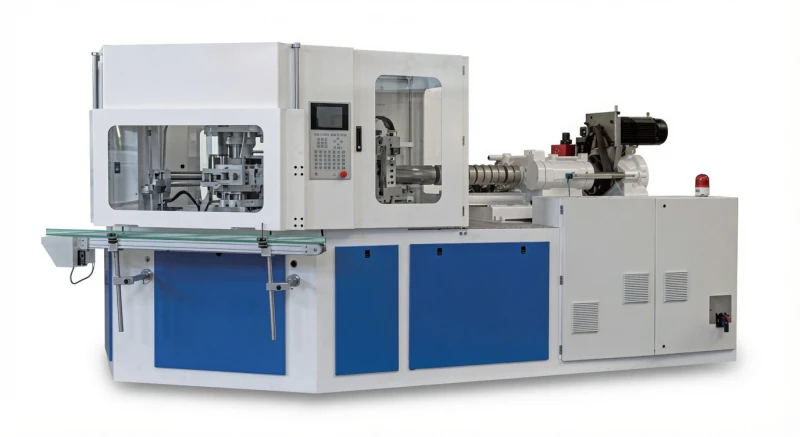
80T-Class IBM Machine Comparison: Key specification differences between the ZQ80 and the legacy Jomar IBM85S
Understanding the 80T/85T IBM Machine Class
The 80T/85T class represents the upper tier of standard injection blow molding machinery. These machines are defined by their ability to generate between 750 kN and 850 kN (approx. 80 to 85 US tons) of hydraulic clamping force during the injection stage. This massive force is required to keep large, multi-cavity molds fully closed against extreme polymer injection pressures, completely preventing flash.
Machines of this size are capital-intensive workhorses. They are deployed when a facility needs to produce millions of units annually of 10ml–100ml dropper bottles, vaccine vials, or roll-on deodorant spheres using 10+ cavity tooling. They are equally critical for large-volume containers, such as 500ml to 1,000ml vitamin packer bottles and large cosmetics, where the sheer volume of plastic injected per cycle (shot weight) demands a massive plastification unit.
Both the ZQ80 and the Jomar IBM85S rely on the proven one-step, three-station rotary table process (inject, blow, strip). The core differences lie not in the IBM process itself, but in the structural engineering, physical dimensions, and raw specification limits of the two platforms.
Core Specification Comparison — ZQ80 vs Jomar IBM85S
The following table outlines the critical technical parameters for both machines, providing a direct comparison for equipment qualification.
| Parameter | ZQ80 | Jomar IBM85S | Advantage |
|---|---|---|---|
| Injection Clamping Force | 800 kN | 756 kN (85 US Tons) | ZQ80 +5.8% |
| Screw Diameter | 55 / 60 / 65 mm | 50 / 63 mm | Comparable Options |
| Injection Weight | 420 / 620 g | ~450 / 580 g | Comparable |
| Max. Platen Size (L x W) | 720 x 480 mm | ~660 x 508 mm | Differs by Orientation |
| Blow Clamping Force | 150 kN | — | ZQ80 Published |
| Machine Height | 1.95 m | 3.0 – 3.6 m | ZQ80 -35% Lower |
| Machine Footprint (L x W) | 4.2 x 1.6 m | 3.5 x 2.2 m | Comparable Area |
| Installed Power | 45 kW | ~55 kW | ZQ80 High Efficiency |
| Bottle Volume Range | 1 – 2,500 ml | ~1 – 1,500 ml | ZQ80 Wider Range |
| Origin | China | USA | ZQ80 Lower Cost |
Note: Jomar IBM85S specifications are sourced from publicly available historical data and converted to metric where appropriate. Specifications are provided for comparative reference only.
Parameter Deep Dive: Where the Differences Impact Production
1. Injection Clamping Force: 800 kN vs 756 kN
The ZQ80 offers a genuine 800 kN (80 metric tons) of injection clamping force, slightly edging out the Jomar IBM85S which provides approximately 756 kN (85 US tons). At this high-tonnage level, both machines are extremely capable. However, the slightly higher metric clamping force of the ZQ80 provides critical stability when pushing the limits of 14+ cavity molds, ensuring zero mold deflection and absolutely no flash on parting lines even under intense polymer injection speeds.
2. Injection Weight Capacity
Both platforms are true heavyweights in shot capacity. With its largest 65mm screw option, the ZQ80 can deliver up to 620 grams of injection weight per cycle. This allows packaging manufacturers to blow either thick-walled premium cosmetic jars, or run massive multi-cavity tools (e.g., 14 cavities of a 30g bottle) without starving the injection unit.
3. Platen Orientation: Landscape vs Portrait
This is a fundamental architectural difference. The ZQ80 utilizes a landscape-oriented platen (720 mm wide x 480 mm high), while the Jomar IBM85S relies on a portrait-style platen. Landscape orientation excels at accommodating horizontal multi-row cavity layouts, keeping parisons closer to the injection nozzle center to ensure balanced polymer flow and even heat distribution. It’s an essential consideration for mold designers looking to maximize cavity count.
4. Machine Height and Facility Footprint
Perhaps the most visible difference is vertical footprint. The legacy vertical plastifier design of the Jomar IBM85S results in a towering machine height of up to 3.6 meters, requiring significant overhead factory clearance for maintenance and resin feeding. The ZQ80 utilizes a European-style low-profile design, keeping the overall machine height under 2 meters (1.95m). This allows the ZQ80 to be installed in standard cleanrooms and legacy factory floors without structural modifications to the facility ceiling.
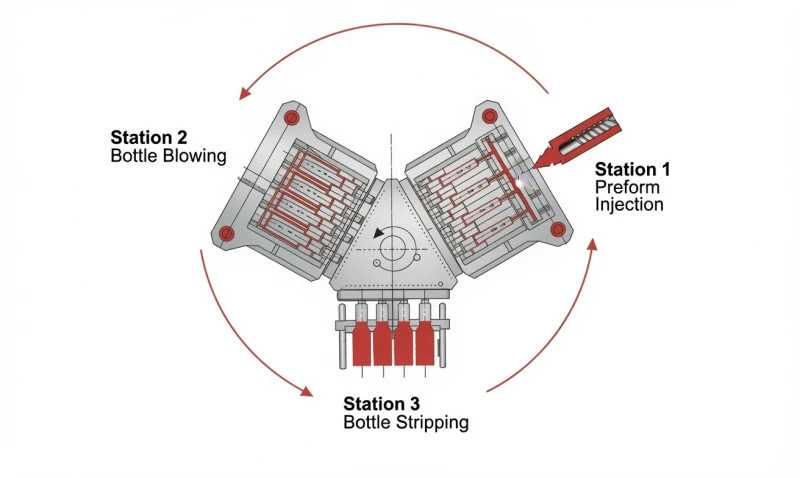
The fundamental one-step IBM three-station process (inject, blow, strip) remains identical across both the ZQ80 and Jomar platforms.
Cavitation Potential: Maximizing Bottles Per Cycle
In the 80T/85T class, maximum cavitation defines the machine’s ROI. The table below illustrates the estimated cavitation capacities for various bottle sizes. Note: Actual cavitation depends heavily on bottle weight, wall thickness, and precise mold layout.
| Bottle Volume | ZQ80 Max Cavities | Jomar IBM85S Est. |
|---|---|---|
| 10 ml | 16 – 18 | 14 – 16 |
| 30 ml | 12 – 14 | 12 |
| 60 ml | 10 – 12 | 10 |
| 100 ml | 8 – 10 | 8 |
| 500 ml | 4 – 5 | 4 |
| 1000 ml | 2 – 3 | 2 |
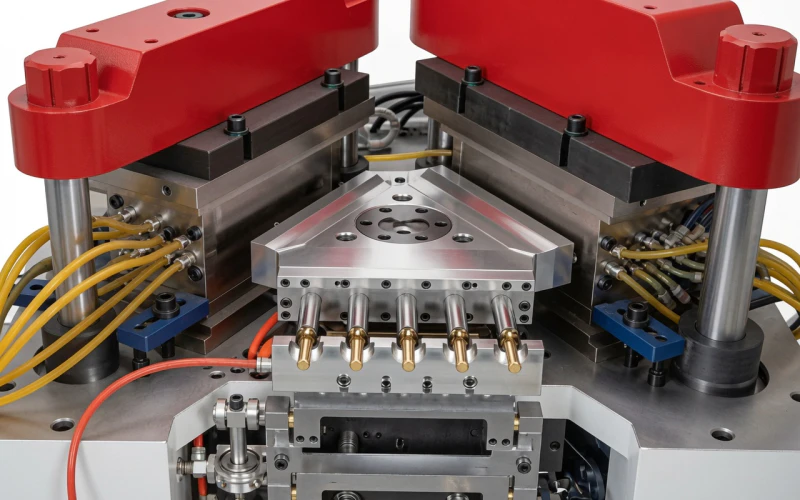
High-cavitation tooling requires the massive 800 kN clamping force of the 80T class to prevent flash and ensure uniform parison fill.
Where the Jomar IBM85S Retains Advantages
An objective evaluation must acknowledge the specific areas where the legacy Jomar IBM85S platform maintains strong advantages for certain buyers:
⚠ Plug-and-Play Mold Compatibility
For facilities that already own dozens of expensive Jomar IBM85S molds, purchasing another 85S allows for instant, drop-in mold changes without the cost or lead time of re-engineering backplates and die sets to fit a different platen.
⚠ Established Service Network
With decades of history, Jomar’s North American and European service networks are deeply established. If localized factory support and immediate spare parts availability (in the US) are non-negotiable procurement mandates, this is a significant advantage.
⚠ Qualification History
In highly regulated FDA-level pharmaceutical environments, replacing a qualified IBM85S with the exact same model streamlines the IQ/OQ/PQ validation process significantly compared to introducing a brand-new machine platform.
Materials and End-Use Applications
Both the ZQ80 and Jomar IBM85S are highly versatile, capable of processing all standard injection-grade thermoplastic resins: HDPE, LDPE, PP, PS, ABS, EVA, PCTG, and PLA. The high clamping force makes them exceptionally suited for thick-walled containers and complex geometries in the following sectors:
High-Volume Pharma
Massive runs of 10ml vials, eye droppers, and cough syrup bottles
Nutraceutical Packers
250ml to 1,000ml vitamin, protein, and supplement bottles
Premium Cosmetics
Heavy-wall PCTG/ABS cosmetic jars and roll-on deodorant
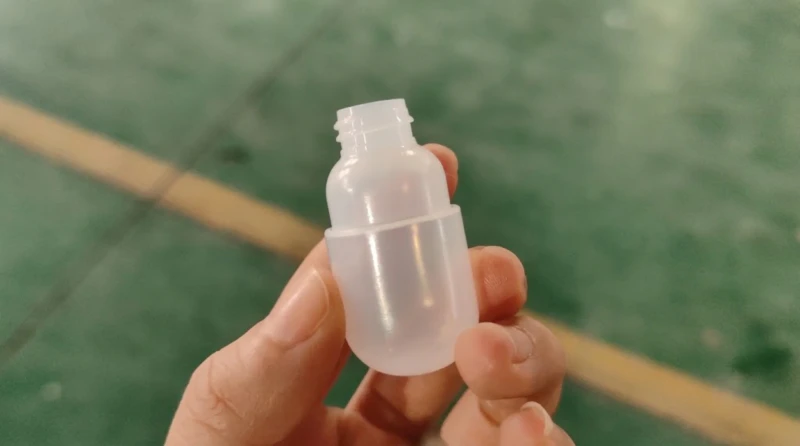
Typical output from 80T-class IBM machines: precision neck threads, uniform wall distribution, and zero-flash bottoms.
The IBM Process Advantage Remains Constant
It is critical for purchasing departments to understand that the physical quality of the bottle is derived from the Injection Blow Molding process itself, not the brand badge on the machine. Both the ZQ80 and the IBM85S deliver the hallmark benefits of IBM:
- Injection-molded neck finishes: Providing ±0.05 mm tolerance for leak-proof sealing, crucial for pharma and cosmetics.
- Scrap-free production: Zero flash at the parting line and no bottom pinch-off tail, eliminating downstream trimming and material waste.
- Superior wall thickness control: Compared to extrusion blow molding (EBM), the core-rod parison allows for highly consistent material distribution, reducing bottle weight while maintaining structural rigidity.
Utility Planning: The Oil-Free Air Requirement
An 80T machine running 14-cavity tooling consumes a substantial volume of compressed air for the blow station. Because the vast majority of 80T machines are deployed in pharmaceutical, food, or cleanroom cosmetic environments, 100% oil-free air is a mandatory utility requirement.
The ZQ80 requires a steady supply of 0.8–1.2 MPa at roughly 1.0 to 1.2 m³/min. Planners must budget for an appropriately sized Class 0 oil-free compressor to support this volume. Integrating a dedicated unit, such as the CM-B Series Oil-Free Screw Air Compressor, is vital to prevent pipeline contamination, ensure GMP compliance, and maintain uninterrupted cycle times.
Navigating the Mold Compatibility Transition
The most common barrier to transitioning from the Jomar IBM85S to the ZQ80 is legacy tooling. Because the ZQ80 uses a landscape platen (720x480mm) and the Jomar IBM85S uses a portrait layout, you cannot directly bolt an IBM85S mold into a ZQ80.
However, the core rods, neck rings, and cavity inserts represent the bulk of a mold’s cost and are often transferable. Transitioning requires engineering a new set of mold bases (backing plates) to accept your existing cavities into the ZQ80 layout. When quoting a ZQ80 as a replacement, buyers must factor in a tooling adaptation budget (typically 15-25% of the cost of an entirely new mold) to seamlessly migrate legacy products to the new platform.
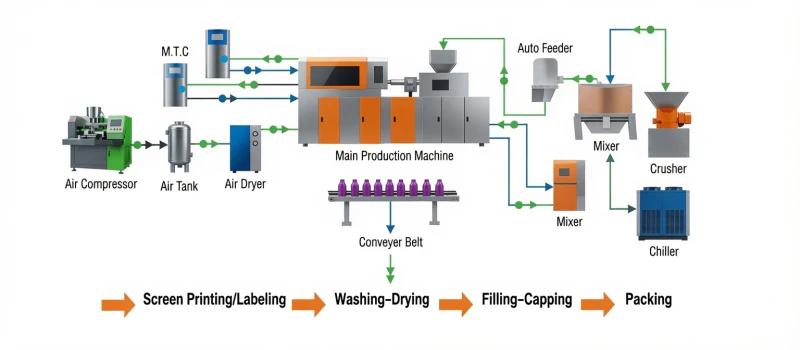
Evaluating an 80T IBM system means reviewing the complete line: the machine platform, customized tooling, and auxiliary utility integration.
Summary: Defining the Best Fit for Your Facility
By stripping away the brand narratives and focusing purely on operational requirements and TCO, the decision matrix between the two machines becomes clear:
✅ The ZQ80 is the optimal choice if:
- You are launching a new product line and ordering new molds, bypassing legacy compatibility issues.
- Acquisition price, fast ROI, and high capital efficiency are primary mandates for your project.
- Your facility has standard ceiling heights (under 3 meters) that cannot accommodate towering vertical designs.
- You require the absolute maximum clamping force (800 kN) and injection capacity for massive cavity counts.
💡 The Jomar IBM85S remains the logical choice if:
- You already operate a fleet of IBM85S machines and possess a deep library of proprietary portrait-format molds.
- Your production strictly requires avoiding requalification of alternative machinery platforms for FDA compliance.
- Your maintenance team is fully trained exclusively on Jomar architecture and spares are already stocked.
A Framework for Capital Equipment Evaluation
If your company is actively tendering for an 80T/85T injection blow molding machine, use this 5-step engineering approach to finalize your decision:
Calculate Required Shot Weight: Multiply bottle weight by desired cavities, add the parison manifold runner weight, and compare against the ZQ80’s 620g and IBM85S limits.
Perform a Tooling Audit: Assess if current molds can be re-plated for a landscape layout. Request adaptation quotes to understand the true cost of switching platforms.
Check Facility Clearances: Verify overhead height in the intended installation space. A towering machine may trigger unexpected HVAC or structural renovation costs.
Analyze Total Cost of Ownership (TCO): Do not just compare invoice price. Combine acquisition cost, installation, electrical efficiency, and mold adaptation to see the 5-year financial picture.
Conduct FAT with Production Tooling: Require a Factory Acceptance Test (FAT) running your specific polymer and mold layout to verify cycle times and flash-free operation before final sign-off.
⚠ Brand Reference Notice: The Jomar brand name and IBM85S model designation are the intellectual property of Jomar Corporation. This comparative article references Jomar IBM85S specifications purely for educational and engineering evaluation purposes. We do not manufacture, distribute, or represent Jomar products. The specification data presented for the Jomar IBM85S is derived from historically published technical sources and may not reflect their latest iterations. Buyers are advised to consult directly with Jomar Corporation for the most current machine specifications.
Evaluating the ZQ80 as Your Next Heavy-Duty IBM Machine?
Explore the complete technical profile of the ZQ80 — including granular parameter tables, cavitation reference charts, detailed platen dimensions, and direct engineering contact to request a formal quotation.