
When procurement teams and Chief Financial Officers (CFOs) evaluate a new One-Step Injection Stretch Blow Molding (ISBM) production line, the boardroom debate almost universally revolves around the invoice price. Negotiating a 10% discount on the capital expenditure (CapEx) feels like a massive strategic victory. However, in the realm of high-volume industrial manufacturing, this is the classic “Iceberg Illusion.” The initial purchase price of an ISBM machine represents, at most, 30% of its Total Cost of Ownership (TCO) over a standard 10-to-15-year lifecycle. The remaining 70%—the submerged part of the iceberg—consists of operational expenditures (OpEx): energy consumption, raw material yield, tooling changeovers, unplanned downtime, and operator labor. A “cheap” machine that consumes 15% more electricity or generates a 2% higher scrap rate will obliterate your profit margins and cost millions of dollars in hidden operational bleed. This comprehensive guide provides process engineers and financial directors with the ultimate framework to calculate, evaluate, and optimize the true Total Cost of Ownership of an ISBM platform.
1. The TCO Framework: Deconstructing the 10-Year Iceberg
To evaluate an ISBM machine objectively, you must project its costs over a standard amortization schedule (typically 10 years). The initial invoice from the manufacturer includes the base machine, the initial mold set, software licenses, and commissioning. This is your CapEx.
However, an ISBM machine operates 24 hours a day, 300+ days a year. It consumes megawatts of electricity to heat polymer to 300°C and compress air to 40 bar. It consumes thousands of tons of PET or PC resin. It requires specialized technicians to maintain it. Over a decade, the capital cost shrinks into insignificance compared to the operational cost.
| Lifecycle Cost Category | Estimated % of 10-Year TCO | Primary Driver |
|---|---|---|
| Raw Material (Resin) | 45% – 55% | Machine precision, scrap rate, preform weight optimization. |
| Initial CapEx (Machine + Tooling) | 20% – 30% | Supplier pricing, financing rates, initial mold complexity. |
| Energy (Electricity) | 12% – 18% | Servo-hydraulics vs. fixed pumps, barrel insulation, compressor efficiency. |
| Maintenance, Spares & Labor | 10% – 15% | MTBF (Mean Time Between Failures), operator wages, downtime cost. |
2. Energy Consumption: The Silent Profit Killer (kWh Economics)
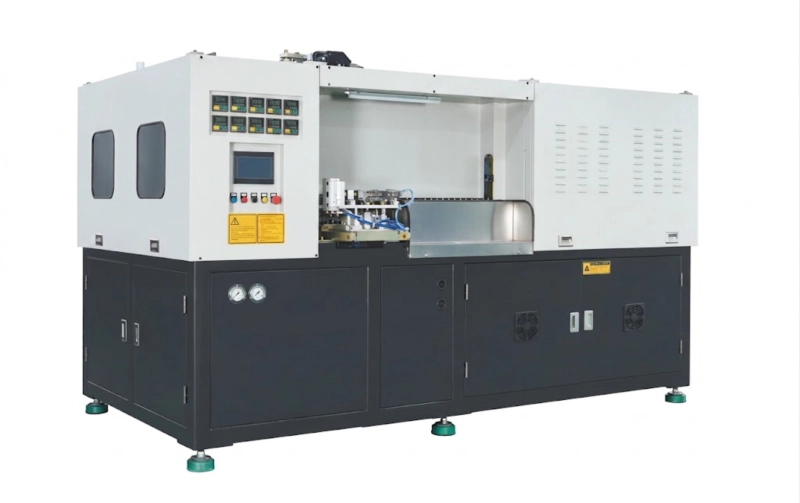
Plastics manufacturing is brutally energy-intensive. Heating polymer from room temperature to 280°C, holding the mold shut with 150 tons of hydraulic force, and cooling it down requires constant power. If a supplier offers a machine that is $30,000 cheaper but utilizes older, inefficient hydraulic architecture, you will lose that $30,000 in electricity bills within the first 18 months.
Legacy machines use asynchronous motors running at 100% RPM constantly, bleeding excess oil over relief valves. Modern ISBM machines must utilize closed-loop Servo-Hydraulic systems, where the motor RPM drops to zero during the cooling phase. This single feature reduces energy consumption by 30% to 50%.
Look at the injection barrel. Are the brass heater bands exposed to the ambient air? High-end machines feature multi-layered ceramic insulation blankets over the barrel. This prevents radiant heat loss, reducing heater band energy consumption by up to 25% while simultaneously lowering the load on your factory’s air conditioning.
3. Material Yield and Scrap Rates: The Mathematics of Waste
Resin is the single largest expense in your TCO. If you are processing premium PETG or Eastman Tritan™, the cost per kilogram is substantial. A “cheap” machine often struggles with process stability. Platen deflection may cause flash on the outer cavities, or poor hot runner PID control may cause yellowing or gate blush.
The Scrap Rate Mathematics: Let’s assume you produce 10 million bottles a year, weighing 50 grams each. That is 500,000 kg of resin. At $2.50/kg for a premium copolyester, your annual resin bill is $1,250,000.
If a premium machine guarantees a 0.5% scrap rate, your waste costs $6,250/year. If a budget machine runs with a 3.0% scrap rate (due to inconsistent heating or flash), your waste costs $37,500/year. Over 10 years, that is a $312,500 penalty simply for choosing a machine with poor process stability.
Furthermore, high-end machines allow for “Lightweighting.” With highly precise servo-driven stretch rods, you can distribute the plastic so evenly that you can reduce the preform weight by 1 or 2 grams without failing drop tests. That 2-gram saving across 10 million bottles is pure profit added directly to your bottom line.
4. Tooling Ecosystems: Mold Compatibility and Changeover Costs
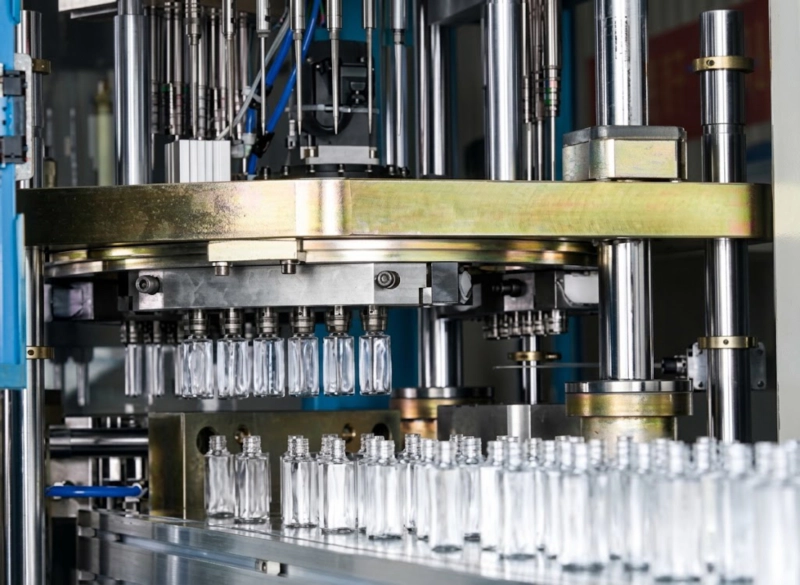
In the cosmetics and FMCG sectors, product lifecycles are getting shorter. Brands demand new bottle shapes constantly. Therefore, the cost of purchasing new ISBM molds over a 10-year period often surpasses the cost of the machine itself.
Proprietary vs. Standard Tooling: Some low-cost machine builders trap you into their ecosystem by designing non-standard platen layouts. You are forced to buy overpriced molds directly from them for the life of the machine. A TCO-friendly machine should feature a standard platen interface (e.g., compatible with Nissei ASB footprints), allowing you to source molds from competitive, independent global toolmakers.
SMED (Single-Minute Exchange of Die): How long does it take to change a mold? If an operator requires 8 hours to align the injection hot runner and the blow mold cavities, you lose an entire shift of production. Premium machines feature quick-release water manifolds, auto-aligning guide pins, and programmable mold-height adjustment, reducing changeover times to under 3 hours.
5. Auxiliary Infrastructure: The 40-Bar Compressor Variable
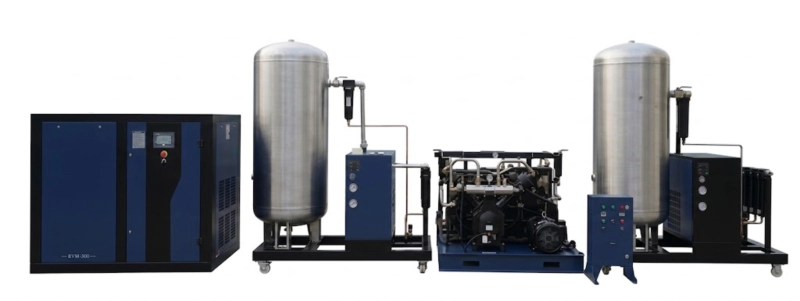
An ISBM machine cannot operate in a vacuum. It requires chillers, resin dryers, and massive amounts of compressed air. Procurement often treats these as separate budgets, but they are intrinsically linked to the machine’s TCO.
The stretch-blow phase requires 3.0 to 4.0 MPa (30-40 bar) of air pressure. Generating 40-bar air is incredibly expensive. If you purchase a cheap, poorly designed piston compressor, it will not only consume excessive electricity but will likely leak compressor oil into the air lines. Oil contamination will instantly ruin the clarity of PET/PC bottles and destroy the machine’s internal pneumatic proportional valves. Integrating a dedicated, highly efficient 40-bar oil-free compressor protects the machine’s lifespan and drastically lowers the auxiliary energy OpEx.
6. Unplanned Downtime: Calculating the Hourly Cost of Idle Steel
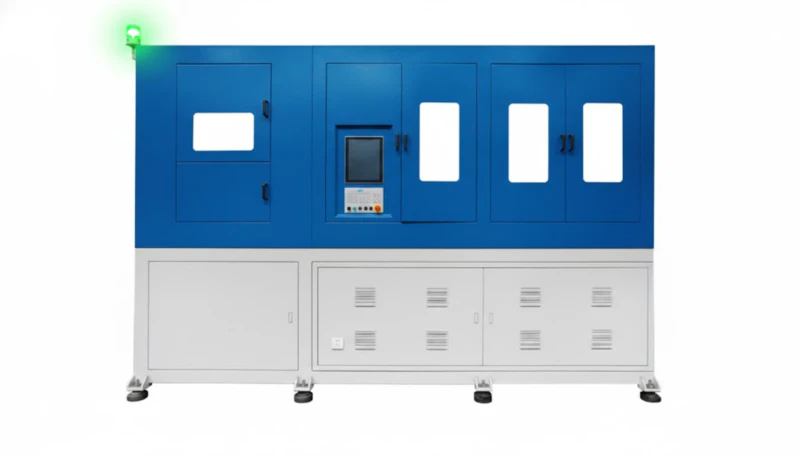
Machine Reliability (measured by MTBF – Mean Time Between Failures) is the ultimate metric. What happens when a cheap servo-drive burns out or a cast-iron toggle link snaps? The machine stops.
If your facility generates $500 of revenue per hour per machine, a breakdown that takes 4 days (96 hours) to resolve because the supplier must ship a part from overseas costs you $48,000 in lost revenue. Furthermore, unreliable machines cause you to miss client delivery deadlines, triggering contractual penalties and loss of future business.
When evaluating TCO, analyze the supplier’s component sourcing. Does the machine use globally available, standardized parts (e.g., Festo pneumatics, Schneider/Techmation PLCs, Yuken hydraulics)? If the machine uses obscure, proprietary electronics, you are held hostage to the supplier’s response time. Standardized components allow you to source replacements locally within 24 hours.
7. Labor, Automation, and Operator Expertise Requirements
Skilled polymer processing engineers are expensive and difficult to retain. A machine with a primitive control system requires constant babysitting. If the machine’s thermodynamics fluctuate with the ambient factory temperature, the operator must manually tweak the barrel heaters and injection speeds every few hours.
Modern, premium ISBM machines lower your labor OpEx by integrating intelligent, closed-loop software. Features like automated PID auto-tuning for the hot runner, intelligent alarm diagnostics that pinpoint exactly which sensor failed, and one-touch recipe loading allow lower-tier operators to run the machine safely. If one skilled engineer can oversee 6 intelligent machines instead of 2 unstable ones, your labor cost per bottle drops dramatically.
8. The Procurement Director’s Master TCO Equation
When reviewing competing machinery quotations, do not look at the bottom-line purchase price. Instead, build a 10-year financial matrix using this simplified TCO equation:
- TCO = CapEx + OpEx
- CapEx = Machine Price + Initial Mold + Auxiliaries (Chiller/Compressor) + Shipping/Commissioning.
- OpEx (10 Years) =
+ (Annual kWh × Power Cost) × 10
+ (Annual Resin Volume × % Scrap Rate × Resin Price) × 10
+ (Annual Hours of Unplanned Downtime × Hourly Revenue Loss) × 10
+ (Number of New Molds/Year × Mold Cost) × 10
+ (Operator Wages + Spare Parts/Maintenance Budget) × 10
When you input real-world data into this equation, the math is undeniable. A premium ISBM machine that costs 20% more upfront but saves 30% in energy, reduces scrap by 2%, and increases uptime by 5% will pay for its price premium within the first 24 months. For the remaining 8 years of its lifecycle, it functions as a highly optimized profit engine, while the “budget” machine bleeds capital daily.
Need Help Calculating the ROI for a New ISBM Line?
Our technical sales engineers can provide a comprehensive TCO audit. Provide us with your target bottle weight, resin cost, and local kWh electricity rates, and we will generate a transparent 10-year financial projection comparing our servo-hydraulic technology against industry standards.