Industry Context
The Shift Towards Premiumisation in Beverage Packaging
The global beverage market has bifurcated. While ultra-high-speed lines churn out commodity water bottles, a rapidly growing, high-margin segment has emerged: craft sodas, cold-pressed juices, functional wellness drinks, and premium mineral waters. In this premium tier, consumers equate packaging quality directly with beverage quality. A flimsy, scuffed bottle with an imperfectly sealed cap immediately erodes brand equity and signals a cheap product.
Brands are moving away from traditional glass due to soaring transport costs and breakage liabilities, demanding plastic alternatives that offer the same heavy-walled, crystal-clear aesthetic. However, standard two-step mass production often yields bottles with micro-scratches from bulk preform storage and imperfect neck finishes that struggle to hold high carbonation.
This is where the One Step Blow Molding Machine excels. By injecting the preform and immediately stretching and blowing it within the same machine, the polymer is never exposed to ambient handling. The result is a pristine, flawless container with a mathematically perfect neck geometry—ensuring your craft cola stays fizzy, your hot-filled tea stays sterile, and your bottle shines on the shelf.
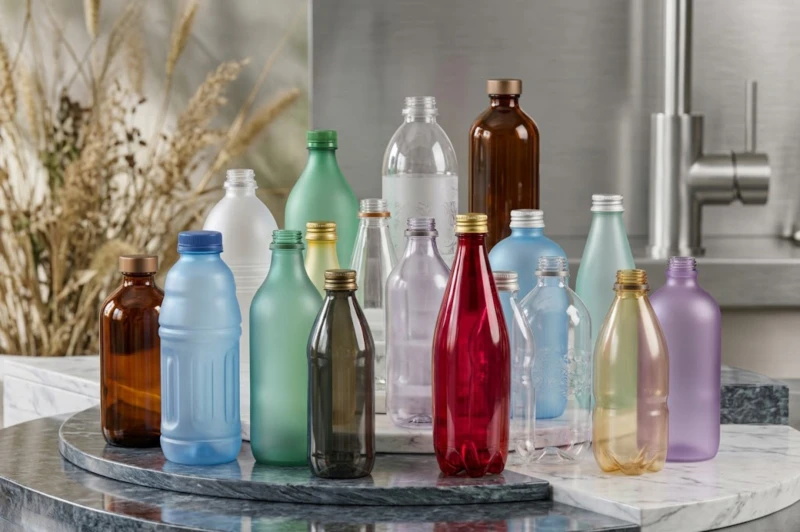
Fig. 1 — Premium beverage bottle samples manufactured on our ISBM platform. From pressure-resistant CSD bottles to sleek, unblemished juice containers, one-step technology ensures unparalleled clarity and structural integrity.
Application Scenes
Core Application Scenes: From Mineral Water to Craft Soda
Beverage packaging encompasses a vast array of thermal and mechanical requirements. A carbonated drink bottle must not expand under internal pressure, while a hot-filled tea bottle must not collapse as the liquid cools and creates a vacuum. The Injection Stretch Blow Molding Machine provides the specialized tooling and process control required to meet these extreme physics, all while maintaining aesthetic perfection.
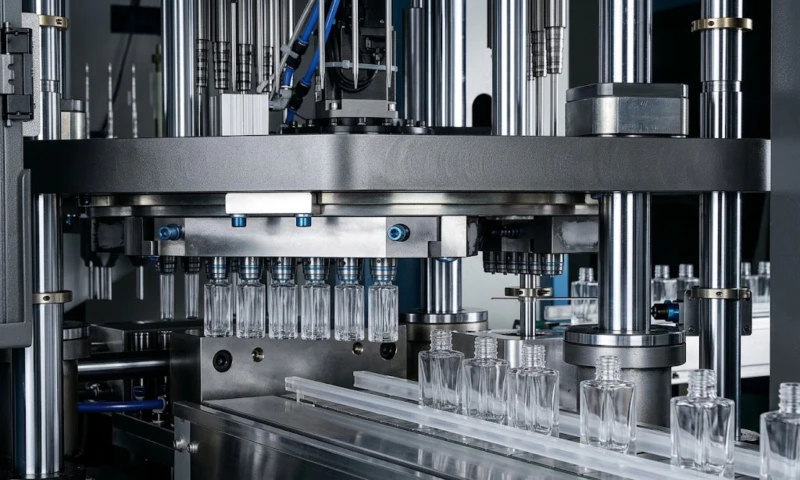
Fig. 2 — A fully automatic One-Step ISBM Machine powering beverage production. The streamlined footprint turns raw resin into finished, pristine bottles ready for immediate filling, preventing any ambient contamination.
Materials Engineering
Material Selection Guide for Liquid Refreshments
Selecting the right polymer for your beverage involves balancing thermal requirements (hot vs. cold fill), gas retention (carbonation), and visual identity. Our ISBM Makinesi platform offers the flexibility to switch between these premium food-grade resins to match your exact portfolio needs.
| Resin | Food Safety | Key Beverage Properties | Primary Applications |
|---|---|---|---|
| Standard PET | ✔ FDA, EU 10/2011 Highly recyclable |
Excellent CO2 barrier, high tensile strength, supreme clarity, perfect for cold/ambient fill environments | Mineral water, craft sodas, cold-pressed juices, energy drinks |
| Heat-Set PET | ✔ FDA, EU 10/2011 High thermal tolerance |
Resists deformation at filling temperatures up to 85°C–90°C. Requires specialized heat-set molds to crystallize the polymer structure. | RTD Teas, pasteurized juices, coffee beverages, sports drinks |
| PETG | ✔ FDA Compliant Ultra-pure |
Unmatched optical depth, heavy-wall capability for “glass-like” feel, excellent impact resistance. | Ultra-premium waters, luxury juices, wellness shots, limited edition spirits |
| Tritan™ | ✔ FDA, EU 10/2011 BPA/BPS/BPF free |
Dishwasher-safe, reusable, completely shatterproof, retains clarity through hundreds of wash cycles. | Reusable water bottles, premium shaker cups, high-end promotional beverage gear |
Thermal Performance Note: When manufacturing bottles for hot-filled beverages, traditional PET will begin to relax and deform at around 65°C. By implementing an ISBM process with heat-set mold technology, the polymer chains are thermally stabilized during the blow phase, drastically raising the Glass Transition Temperature (Tg). This allows brands to hot-fill teas and juices safely up to 85°C without compromising the bottle’s aesthetic shape or base stability.
Technical Advantages
Technical Advantages That Safeguard Liquid Integrity
For beverage manufacturers, a bottle failure—whether it’s a flat soda, a collapsed hot-fill bottle, or an unsightly scuffed surface—is unacceptable. The ISBM process provides critical structural and aesthetic advantages that commodity manufacturing cannot match.
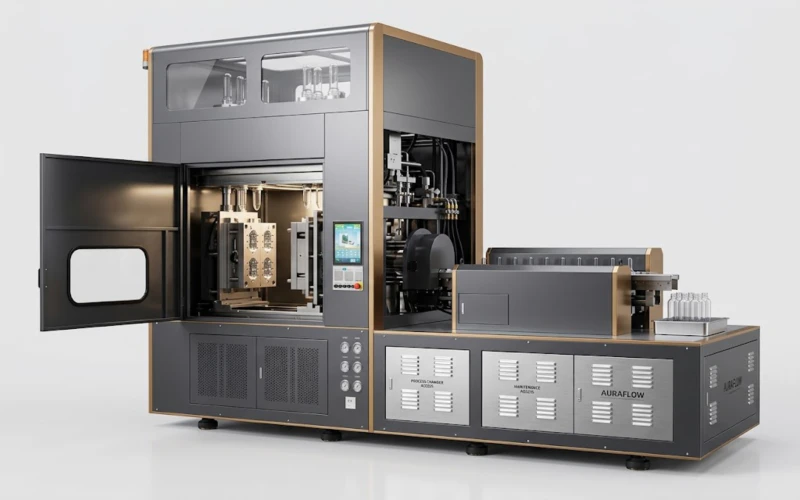
Fig. 3 — Precision tooling within the ISBM machine ensures that the injection-molded preform transitions perfectly into a stretched, biaxially oriented beverage bottle. This controlled process is the secret to high burst resistance and exact wall distribution.
Superior Carbonation Retention
For CSDs, maintaining CO2 volume is paramount. The extreme biaxial stretching of the ISBM process aligns the polymer chains tightly, reducing gas permeability significantly compared to standard molding. This ensures craft sodas stay highly carbonated throughout their entire shelf life.
Blemish-Free Aesthetics
Because the hot preform never leaves the machine to be dumped into a gaylord box (as it does in 2-step manufacturing), there is zero opportunity for the plastics to scrape against one another. The final beverage bottle possesses a pristine, mirror-like finish.
Precision Neck Sealing
The bottle neck is injection-molded to an exacting tolerance of ±0.05 mm and shielded from reheat deformation. This guarantees that standard beverage closures (like PCO 1881) fit perfectly every time, eliminating leakers on the pallet and protecting beverage integrity.
Optimal Lightweighting
Precise thermal conditioning allows the plastic to be stretched evenly across complex bottle shapes. This uniform wall thickness allows engineers to safely lightweight the container without creating weak spots—saving resin costs without sacrificing the premium, rigid feel.
Process Comparison
One-Step vs. Two-Step: Why Preform Scuffs Ruin Premium Brands
While two-step (Reheat Stretch Blow Molding or RSBM) is the king of commodity, ultra-high-volume water lines, it poses severe quality issues for premium products. The friction from shipping bulk preforms creates micro-scratches that expand into highly visible cloudy streaks during blowing. For a premium beverage brand, that loss of clarity is unacceptable.
| Parameter | One-Step ISBM Machine ✦ | Two-Step RSBM |
|---|---|---|
| Aesthetic Clarity | ✔ Perfect, glass-like transparency. No preform transport means zero scuffs. | ✘ Preforms rub together in gaylord bins, leading to visible striations on the blown bottle. |
| Shape Complexity | ✔ Excels at non-round, asymmetrical, and deeply contoured premium designs. | ✘ Best suited for simple, symmetrical cylindrical bottles due to even reheat limitations. |
| Neck Integrity | ✔ Neck is shielded from heat, retaining exact injection dimensions for perfect seal. | ✘ Reheating ovens can slightly warp the neck, causing minor leaks in highly carbonated drinks. |
| Energy Efficiency | ✔ Uses latent heat from injection directly for blowing, slashing energy costs. | ✘ Requires massive NIR lamp arrays to reheat cold preforms back up to blowing temperature. |
“You cannot sell a $5 cold-pressed wellness juice in a bottle that looks like a 50-cent vending machine water. The container needs to feel robust and look like glass. Our shift to one-step ISBM completely eliminated the hazy, scratched look we were getting from our old two-step suppliers.”
— VP of Operations, Premium Cold-Pressed Juice Brand
Procurement Guide
Procurement Guide: Specifying an ISBM Machine for Drinks
If you are a beverage manufacturer or a co-packer looking to internalize your premium bottle production, evaluating an ISBM Makinesi requires looking past basic output numbers. Focus on the machine’s ability to handle the specific thermal and mechanical stresses your liquid requires.
If you produce CSDs, kombuchas, or sparkling waters, your bottle must survive internal pressure buildup and thermal expansion during transport. Ensure the machine vendor can design petaloid bases and specify stretch ratios that guarantee high burst pressure resistance specific to your CO2 volume requirements.
For teas, coffees, and pasteurized juices, standard PET bottles will shrink and warp. Validate that the machine platform supports heated molds (heat-set processing) which crystallize the PET, raising its thermal tolerance to withstand filling temperatures up to 85°C-90°C.
Beverage sealing is merciless—a millimeter off and you have flat soda or leaking juice. Ensure the machine produces standard beverage necks (like PCO 1881 for carbonated drinks or 38mm wide mouths for juices) via injection molding without any secondary thermal distortion.
While giant two-step lines produce 50,000 bottles an hour, premium beverage producers often need agile, highly flexible runs. Look for ISBM machines with optimized cavitation (e.g., 4 to 12 cavities) that allow for fast mold changeovers when switching between different SKUs like a 250ml energy shot and a 500ml cold-pressed juice.
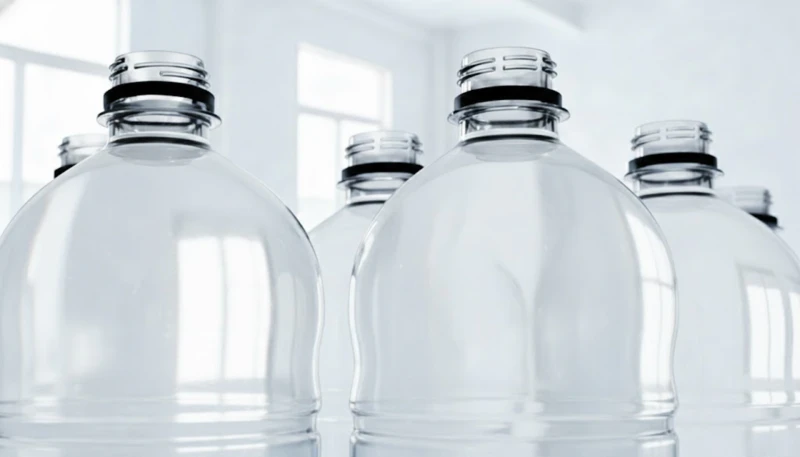
Fig. 4 — The robust, industrial architecture of a modern ISBM platform. Engineered for agile SKU changeovers, it provides beverage manufacturers the flexibility to run multiple premium bottle designs without compromising on speed or quality.
The beverage aisle is crowded, and consumers increasingly “drink with their eyes” first. A premium liquid inside a sub-par, scuffed, or poorly sealed bottle undermines your entire marketing investment. The Injection Stretch Blow Molding Machine secures your brand’s reputation by ensuring that every bottle leaving the line is as flawless and resilient as the product it holds. For craft beverage producers and co-packers demanding quality over sheer commodity volume, this technology is the definitive competitive edge.
Beverage & RTD Packaging · 20+ Years Industry Experience
Specializing in ISBM machine applications for hot-fill, carbonated, and premium RTD beverage packaging. Experience spans pressure-resistant bottle development, heat-set mold qualification, and custom aesthetic designs for craft soda and wellness drink brands. Published in association with injectionstretchblowmolding.com — a leading One-Step Injection Stretch Blow Molding Machine manufacturer backed by 20+ years of manufacturing excellence (est. 2003), providing reliable packaging solutions for global beverage and consumer brands.