
Direct Hardware Comparison
Mechanical Evolution: 3-Station vs. 4-Station Hardware
Understanding the difference between 3-station and 4-station machines begins with a physical look at their rotary indexing architecture. While the 3-station model is built for high-speed, direct-path production, the 4-station model introduces the critical “conditioning station” that unlocks premium container quality.
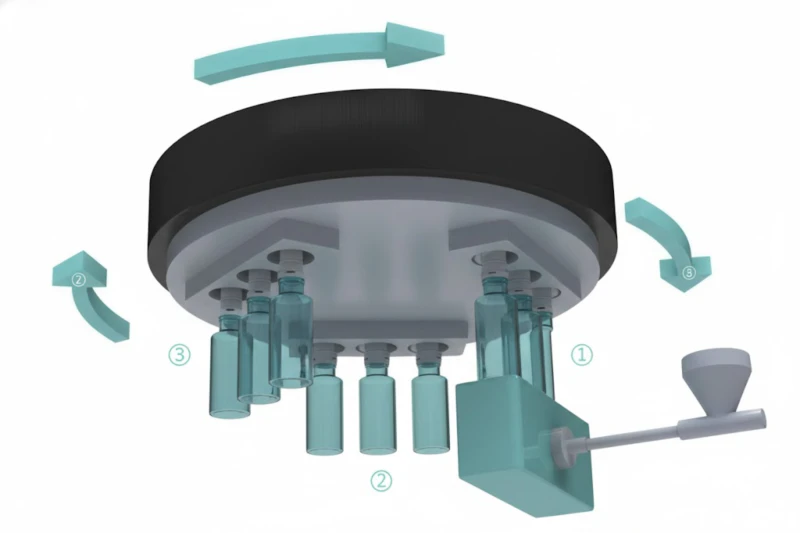
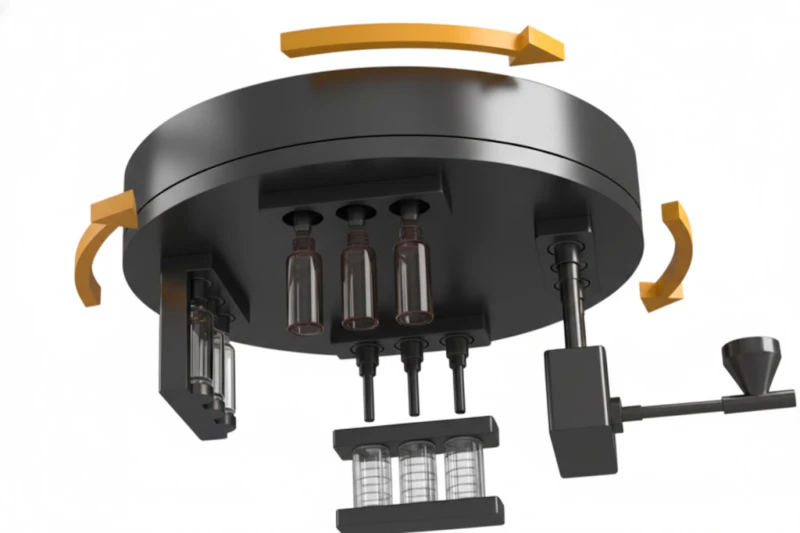
Fig. 1 — Hardware Contrast: The 3-station machine (Left) offers a lean 120-degree path for standard PET, while the 4-station machine (Right) integrates a specialized conditioning station for precision thermal control.
For factories focusing on mass commodities, the 3-station’s compact design and faster indexing provide the lowest per-unit cost. However, for those aiming at the Luxury Cosmetic or Pharmaceutical sectors, the 4-station’s ability to “Condition” the preform is the only way to achieve the scratch-free, high-precision results that global brands demand.
The One-Step Cycle
The Conditioning Secret: Station-by-Station Workflow
What happens inside a One-Step machine is a masterpiece of thermodynamic engineering. In a 4-station setup, the preform doesn’t just “wait” after injection; it is actively profiled. This is critical for non-round containers (oval or square) where wall thickness must be perfectly balanced.
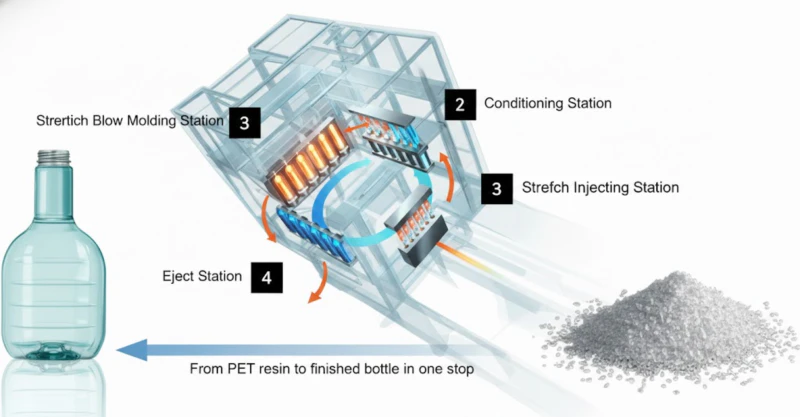
Fig. 2 — One-Step Process Logic: From injection to the final crystal-clear bottle, the conditioning station (Station 2) serves as the “brain” for wall thickness and clarity control.
Key Benefits of the Conditioning Phase:
- Internal Conditioning: Stabilizes the temperature of the preform’s inner wall to prevent haze in Tritan™ and PC.
- Preferential Heating: Heats specific sides of a preform for oval or flat containers.
- Base Cooling: Prevents “sink marks” and deformation in thick-walled cosmetic jars.
Thermal Analysis
Conditioning vs. Direct Blowing: Stability Comparison
In a 3-station machine, the “process window” is extremely narrow. Since blowing happens immediately after injection, any small shift in chiller water or ambient air can ruin your yield. The 4-station machine provides a “thermal buffer” that widens the processing window by 40-60%.
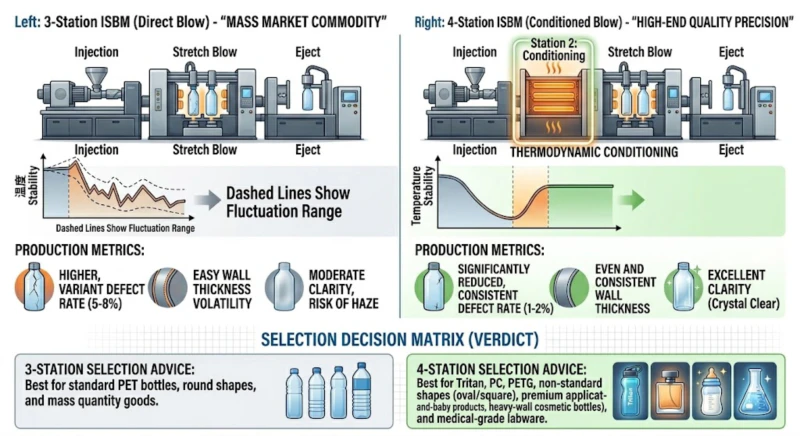
Fig. 3 — Yield Data: The 4-station architecture (Station 2 active) delivers a significantly more stable temperature profile, translating to a lower rejection rate (typically <1%) for high-value resins.
Resin Science
Material Performance: Tritan, PETG, and PC
Standard PET is forgiving, but modern specialty resins like **Tritan™ (BPA-free)** and **PETG** are highly sensitive to thermal stress. If your goal is “Glass-Like” transparency, the choice is driven by the material requirements.
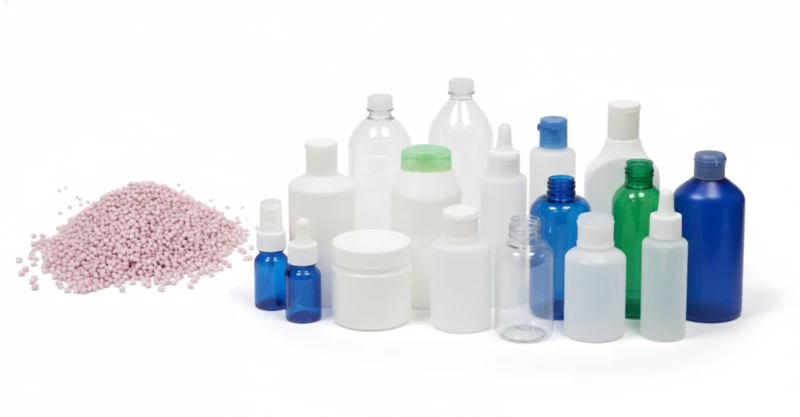
Fig. 4 — Sample Portfolio: High-gloss, scratch-free, and dimensionally accurate containers produced on our fully servo-controlled 4-station ISBM lines.
Procurement FAQ
Common Questions for Factory Managers
Q: Can I run my existing Nissei ASB molds on your 4-station machine?
A: Yes. Our 4-station fully servo ISBM machines are designed to be 100% compatible with ASB and Aoki mold standards. You can migrate your existing tooling sets directly into our platform.
Q: Which station count is better for oval cosmetic bottles?
A: Definitely ”4-station”. The conditioning station allows for preferential heating, which is the only way to ensure uniform wall thickness in oval or square designs.
The Final Verdict: Your Production Strategy
3-Station: Best for Commodities
High volume, standard PET, round shapes, and minimum factory footprint. The workhorse of the water and basic pharma sectors.
4-Station: Best for Premium Packaging
Complex shapes, luxury materials (Tritan/PETG), and thick-wall cosmetic applications. Your guarantee for the highest yield and zero-defect quality.
At injectionstretchblowmolding.com, we bring 20+ years of manufacturing excellence (est. 2003) to your production floor. Our engineers provide full ROI studies and technical feasibility analyses for every project. Contact us today to select the ideal machine for your factory’s next decade of growth.
Consult with an ISBM Expert Engineer
Send us your bottle drawings for a free technical assessment and station count recommendation.