In the heavy machinery procurement cycle, the Factory Acceptance Test (FAT) is your final line of defense. The moment an ISBM machine is loaded into a shipping container and leaves the supplier’s facility, 90% of your negotiating leverage vanishes. Discovering a hydraulic leak, a software bug in the PLC, or severe platen deflection after the machine arrives at your factory in Russia, Europe, or the Americas is a multi-million-dollar disaster. Resolving these issues remotely across time zones and language barriers can delay your production launch by months. A true FAT is not a polite factory tour where the supplier blows 50 perfect bottles and takes you to lunch. It is an aggressive, multi-day engineering audit designed to push the machine to its absolute thermal and mechanical limits. This comprehensive guide outlines the uncompromising protocols, mechanical checks, and endurance tests that Chief Engineers and Procurement Directors must execute before signing the final FAT approval document.
1. Pre-FAT Preparation: Bringing Your Own Reality
The most common mistake buyers make is allowing the supplier to dictate the terms of the FAT. If a supplier uses their own “easy-to-run” high-flow PET resin, their own optimized test mold, and runs the machine for only 2 hours, any machine will look perfect. You must force the machine to operate under your specific production reality.
The Material Mandate: Ship 500 kg of your exact production resin (e.g., specific IV grade PET, Tritan™, or high-viscosity Polycarbonate) and your specific color masterbatch to the supplier’s factory a week before the FAT. The machine must prove it can melt and homogenize your material without degradation.
The Mold Mandate: If the supplier also built your ISBM injection and blow molds, the FAT must be conducted using your most difficult, thick-walled, or asymmetrical bottle design. Do not accept FATs run on a simple, round 500ml water bottle test mold.
2. Phase 1: Static Mechanical & Hydraulic Verification
Before the machine is even turned on, perform a rigorous static audit of the mechanical and fluid systems. This separates high-tier engineering from low-quality assembly.
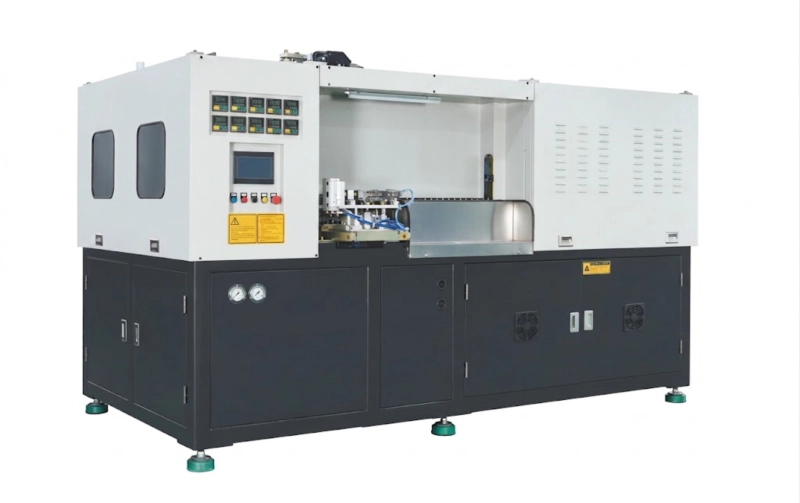
Lock the injection clamping unit to its maximum rated tonnage. Mount a magnetic dial indicator to the tie-bars and measure the gap across all four corners of the platens. If the deviation exceeds 0.05mm, the machine frame is flexing. Reject the machine until the tie-bars are recalibrated.
Crawl under the machine with a flashlight. Look for any oil weeping from hydraulic fittings. Verify that high-pressure hoses are securely clamped to the frame. Hoses that vibrate freely will eventually chafe, burst, and cause catastrophic downtime.
3. Phase 2: Dry Cycle Testing (Speed and Vibration)
The “Dry Cycle” test runs the machine at its maximum theoretical speed without plastic or air. The supplier’s brochure might claim a “12-second dry cycle,” but the FAT is where this marketing claim is proven or debunked.
Run the machine in continuous dry cycle mode for 1 hour at maximum speed. Observe the machine frame. Is it shaking violently? Do the leveling pads lift off the floor? Excessive vibration indicates undersized cast-iron frames or poorly tuned servo-hydraulic acceleration/deceleration ramps. Furthermore, listen to the toggle mechanism—it should lock with a firm, smooth thud, not a violent, high-pitched metal-on-metal crash.
4. Phase 3: The 24-Hour “Wet Cycle” Endurance Run
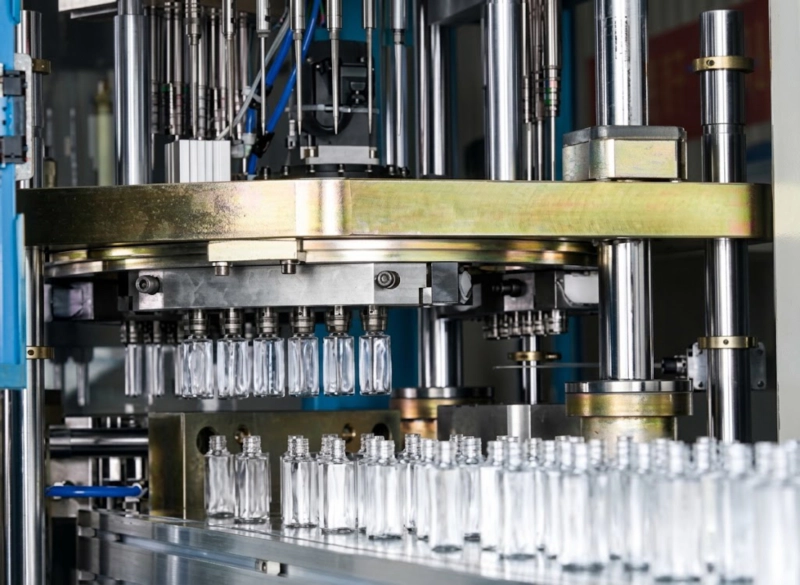
A 2-hour production run is meaningless. Thermal saturation—where the hot runner, the hydraulic oil, and the mold cooling channels reach their maximum sustained temperatures—takes at least 4 to 6 hours. Many inferior machines run perfectly for 3 hours, but once the hydraulic oil surpasses 55°C, the servo-pumps lose efficiency, injection pressure drops, and short shots begin to occur.
Demand an 8-hour to 24-hour continuous “Wet Cycle” (full production) run. During this endurance test, monitor the following:
- ✓Hot Runner PID Stability: Watch the PLC screen. The hot runner nozzle temperatures should not fluctuate by more than ±1°C from the setpoint. Wider fluctuations indicate cheap solid-state relays (SSRs) or poor thermal isolation in the mold.
- ✓Cycle Time Consistency: If the contract promised a 14-second cycle time, verify it with a stopwatch at hour 1, hour 4, and hour 8. If the supplier has to slow the machine down to 18 seconds to keep the bottles from sticking, the machine’s cooling capacity is undersized.
- ✓Scrap Rate: Collect all rejected bottles. The scrap rate during the continuous run must not exceed the contracted limit (typically < 1% for standard PET, < 3% for complex PC/Tritan).
5. Product Quality Inspection: The Micro-Measurements
Do not just look at the bottles—measure them. Pull 10 consecutive bottles from each cavity of the mold and take them to the supplier’s QC lab.
| Quality Metric | Testing Methodology | Acceptable FAT Tolerance |
|---|---|---|
| Weight Consistency | Weigh 10 bottles per cavity on an analytical balance. | ± 1.5% max variance between cavities. |
| Wall Thickness | Section the bottle; measure top, mid, and base with a micrometer. | Must match your approved CAD 2D drawing. |
| Internal Stress | Place bottle between cross-polarized light filters (Birefringence). | No tight rainbow bands (indicates high stress). |
| Drop Test | Fill with water, drop from 1.5m onto concrete (base and side). | Zero ruptures across 10 samples. |
6. Safety Systems and Emergency Scenario Simulations
An ISBM machine contains severe pinching hazards, 300°C molten plastic, and explosive 40-bar air pressure. The FAT must verify that the machine fails safely.
Execute these Emergency Drills:
1. The E-Stop Test: Hit the Emergency Stop button during the high-speed injection phase. The screw must halt instantly, and the hydraulic pumps must disengage. The machine should recover gracefully upon reset without crashing.
2. Door Interlocks: Open the front safety gate while the machine is running in auto. The mechanical safety drop-bar must engage instantly, physically preventing the clamping platen from closing.
3. Air Pressure Loss: Shut off the main air supply valve mid-cycle. The machine must detect the pressure drop and trigger a controlled alarm shutdown, preventing unblown preforms from jamming the rotary table.
7. Evaluating Auxiliaries: 40-Bar Compressors and Chillers
If you purchased a turnkey line including auxiliary equipment, the FAT must encompass these systems. The most critical component is the high-pressure air system.
Verify that the 40-bar oil-free compressor is properly sized to handle the peak volumetric flow required during the simultaneous blow phase of multi-cavity molds. Watch the pressure gauge on the air receiver tank during the blow cycle—if the pressure drops below 35 bar and struggles to recover before the next cycle, the compressor is undersized, and your bottles will suffer from incomplete details (like soft bottom radii).
Similarly, verify the chiller. Check the return water temperature from the injection mold. If the water leaving the chiller is 10°C, but the return water is 25°C, the chiller’s flow rate (gallons per minute) is too low to efficiently extract heat from the tool.
8. The Final Handover: PLC Passwords and Documentation
The FAT is your only leverage to secure the intellectual property necessary to maintain the machine independently over the next 15 years. Never sign the FAT approval document until the supplier hands over the following:
- ✓PLC Master Passwords: Many suppliers lock the deepest PLC parameter screens (like servo tuning or absolute zero-point calibration) behind “Manufacturer Only” passwords to force you to pay for service calls. Demand the highest-level administrator passwords.
- ✓Unencrypted Schematics: Ensure you receive the electrical wiring diagrams, hydraulic schematics, and pneumatic routing diagrams in English (or your native language), fully detailed with the original OEM part numbers (e.g., specific Rexroth or Festo model numbers, not the supplier’s internal codes).
- ✓Parameter Backup: Export the finalized, optimized processing recipe from the FAT onto a USB drive. You will need to load this exact recipe when the machine arrives at your factory.
A rigorous Factory Acceptance Test transforms an equipment purchase from a gamble into a calculated, engineered certainty. By demanding 24-hour endurance runs, measuring platen deflection, and securing unrestricted access to PLC logic, procurement directors ensure that the machine hitting their factory floor is ready for decades of profitable, uninterrupted production.
Need Expert Representation for Your Next Machine FAT?
Our veteran ISBM engineers can act as your technical representatives in China. We fly to the supplier’s facility, execute rigorous 24-hour wet cycles, audit mechanical tolerances, and ensure you get exactly the machine you paid for.