
China is the undisputed epicenter of global machinery manufacturing. When sourcing a One-Step Injection Stretch Blow Molding (ISBM) machine, partnering with a top-tier Chinese supplier can deliver world-class European engineering performance at a fraction of the capital expenditure. However, the market is also flooded with low-tier “assembly workshops” that slap generic components onto poorly cast frames and market them under glossy brochures. For a Chief Engineer or Procurement Director, buying a blow molding machine based solely on an Alibaba specification sheet or a slick WeChat video is a multi-million-dollar gamble. The difference between a machine that runs flawlessly for 15 years and one that suffers daily breakdowns lies entirely in the underlying thermodynamic, mechanical, and pneumatic engineering. This guide equips you with the technical X-ray vision required to separate genuine ISBM innovators from rudimentary assemblers. Here are the 8 technical red flags you must watch for when evaluating a Chinese blow molding machine supplier.
1. Red Flag 1: The “Weight vs. Tonnage” Illusion
The foundation of any ISBM equipment is its mechanical frame. During the injection phase, the machine applies immense hydraulic pressure to force molten polymer into the cavities. To keep the mold shut, the clamping platens must apply counter-force (tonnage). Low-tier suppliers will often market a “150-ton” machine that weighs significantly less than a premium supplier’s 150-ton machine.
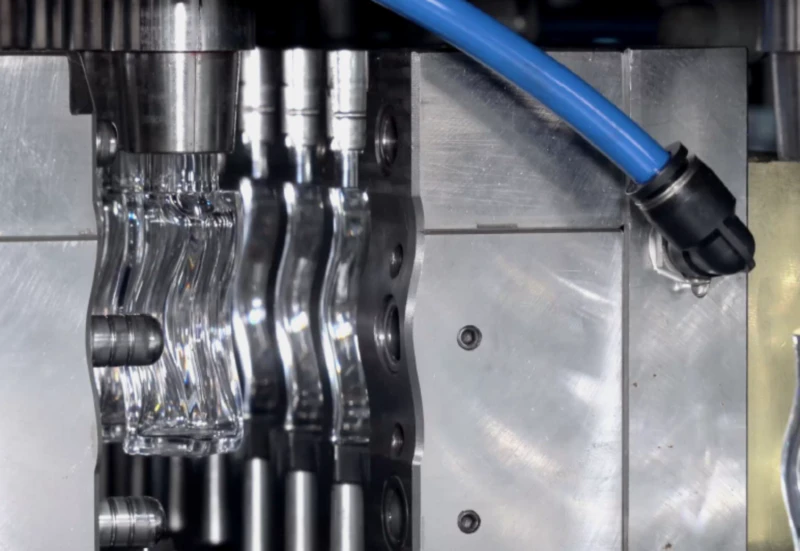
How is this possible? Cheap manufacturers use thinner cast iron platens, smaller diameter tie-bars, and hollow frame structural steel. When the 150-ton clamping force is actually applied, the thin platens physically bow outward in the center (platen deflection). This micro-deflection causes the center cavities of your mold to flash with plastic, while the outer cavities seal fine. Check the machine’s Net Weight. A rigid, vibration-absorbing 150-ton ISBM machine should weigh between 14 to 18 metric tons. If a supplier quotes 9 tons for the same clamping force, walk away—they have hollowed out the iron.
2. Red Flag 2: Generic PLCs vs. Dedicated High-Speed Controllers
The brain of the machine is the Programmable Logic Controller (PLC). ISBM is a highly dynamic process requiring microsecond reactions. The exact moment the injection screw stops moving forward under velocity and switches to holding pressure (the V-P Switchover Point) determines whether your bottles are perfect or full of flash.
The Scan Time Trap: Low-cost suppliers use generic, off-the-shelf industrial PLCs designed for conveyor belts, which have scan times of 5 to 10 milliseconds. At 150mm/second injection speed, a 10ms delay means the screw travels an extra 1.5mm after you told it to stop. This smashes the mold with excessive pressure. Premium Chinese suppliers use dedicated plastics controllers (like Techmation, B&R, or Beckhoff) with sub-millisecond scan times and dedicated closed-loop servo control cards.
3. Red Flag 3: The Hot Runner System “Black Box”
The hot runner manifold inside the injection mold keeps the polymer molten before it enters the cavities. Cheap suppliers treat the hot runner as a black box to cut costs. They will use “Group PID Control” (wiring 4 nozzles to a single temperature sensor) instead of individual thermocouple feedback for each nozzle.
If you process sensitive materials like PETG, PC, or Tritan, a temperature variation of just ±3°C between nozzles will cause one cavity to shoot white haze (gate blush) while the neighboring cavity runs perfectly. Always demand to see the hot runner electrical schematic. Ensure that every single drop (nozzle) has its own dedicated J-type or K-type thermocouple and its own dedicated solid-state relay (SSR) on the PLC screen.Fig. 2 — Individual PID Hot Runner Control. A premium machine allows the operator to micro-adjust the temperature of every single injection cavity nozzle, preventing dead zones and material degradation.
4. Red Flag 4: Off-Brand 40-Bar Pneumatic Valve Blocks
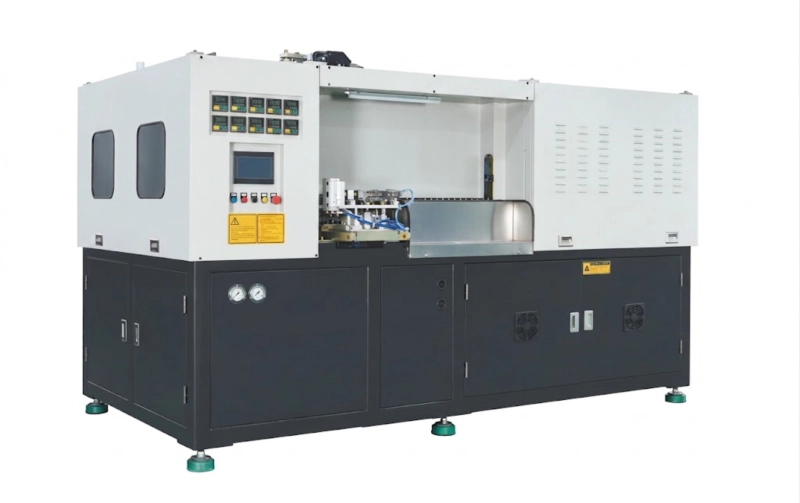
To stretch and form thick-wall cosmetic jars or PET bottles, the machine utilizes 3.5 to 4.0 MPa (35-40 bar) high-pressure air. Handling 40-bar air requires incredibly robust, precision-machined blowing valve blocks capable of surviving millions of violent decompression cycles.
A major red flag is opening the pneumatic cabinet and finding unbranded, generic aluminum valve blocks, or cheap knock-offs of European brands. When a cheap 40-bar blow valve starts leaking internally (which it will after 3 months), the machine loses blow pressure mid-cycle, resulting in deformed bottles, “rocker bottoms,” and massive air wastage. Top-tier suppliers will explicitly list authentic Festo (Germany), SMC (Japan), or Seitz (Switzerland) high-pressure blowing blocks. Additionally, this system must be fed by a reliable, matched 40-bar oil-free compressor to prevent valve fouling.
5. Red Flag 5: Pneumatic vs. Servo-Driven Stretch Rods
At the blow station, the stretch rod pushes the hot preform to the bottom of the mold before the air inflates it. The speed of this stretch rod dictates the wall thickness distribution of your bottle.
Driven by air cylinders. You can only control them with simple flow restrictors. The speed is highly inconsistent depending on factory air pressure fluctuations, causing uneven bottle bottoms and poor drop-test results.
Driven by electric servo motors and ball screws. The PLC can program exact multi-stage velocity profiles (e.g., fast descent, slow down right before hitting the base). Essential for complex, asymmetrical, or thick-walled PETG bottles.
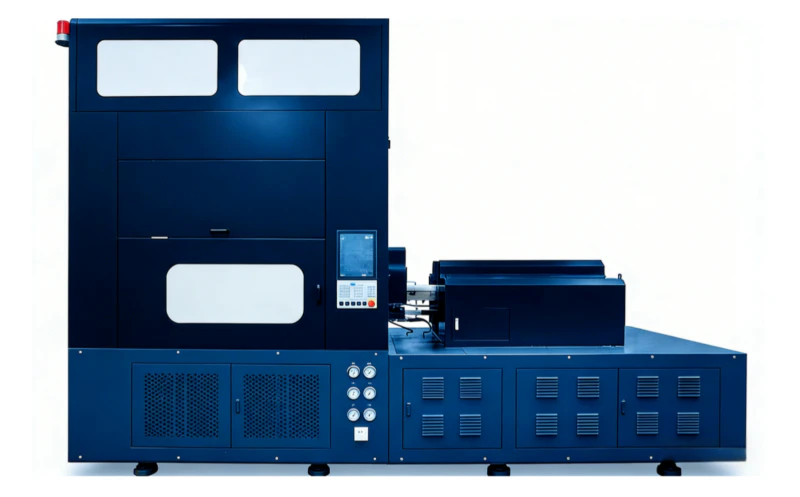 Fig. 3 — Servo-driven stretch rods. The ability to program the exact descent speed and stopping millimeter of the stretch rod is what allows top-tier manufacturers to guarantee perfectly uniform wall thickness.
6. Red Flag 6: Primitive Tooling and Cooling Channel Deficiencies
Many machine builders treat the ISBM injection and blow molds as an afterthought, outsourcing them to the cheapest local tool shop. A machine’s cycle time is primarily determined by how fast the mold can cool the plastic. If a supplier promises a 12-second cycle time but uses straight-drilled cooling lines that completely miss the neck ring or the bottom core inserts, the preform will stick to the mold upon ejection.
Demand tooling drawings during the evaluation phase. Premium molds utilize Conformal Cooling—where the water channels curve and wrap around the exact 3D contour of the bottle cavity. Furthermore, ask the supplier to state their Reynolds number calculations for the water flow; turbulent flow (Re > 4000) is necessary for efficient thermal transfer, which cheap mold manifolds often fail to achieve due to narrow internal restrictions.
7. Red Flag 7: Missing or Rudimentary Thermal Conditioning Stations
If you plan to manufacture standard water bottles, a 3-station machine (Inject → Blow → Eject) is sufficient. However, if your business plan involves premium, thick-walled cosmetic jars made from PETG, Tritan, or Polycarbonate, attempting to use a 3-station machine is a massive red flag.
Thick preforms hold immense residual heat. They must pass through a dedicated Station 2: Thermal Conditioning before blowing. This station utilizes heated/cooled pots and core pins to equalize the temperature across the 5mm thick plastic wall. Cheap suppliers will sell you a 3-station machine and tell you “you can just adjust the cooling time.” You will spend months trying to eliminate pearlescence and rocker bottoms, ultimately realizing the machine simply lacks the thermodynamic capability to process thick walls.
8. Red Flag 8: Vague Factory Acceptance Test (FAT) Protocols
The final red flag occurs just before you pay the remaining balance. Low-tier suppliers will conduct a Factory Acceptance Test (FAT) by running the machine “dry” (without plastic) for 2 hours, or they will blow 50 bottles by hand, show you a video, and ask for payment.
- Continuous Run: The machine must run your specific mold, with your specific resin grade, in fully automatic mode for a continuous 8 to 24 hours without a single operator intervention or stoppage.
- Cycle Time Verification: The machine must hit the contracted cycle time consistently. Dropping the speed by 30% to make the machine run “stable” during the test means they undersized the hydraulics.
- Weight and Thickness Checks: Bottles from the FAT must be cut and measured. The weight deviation between Cavity 1 and Cavity 6 must be less than ±1.5%. Wall thickness distribution must match the engineering CAD approvals.
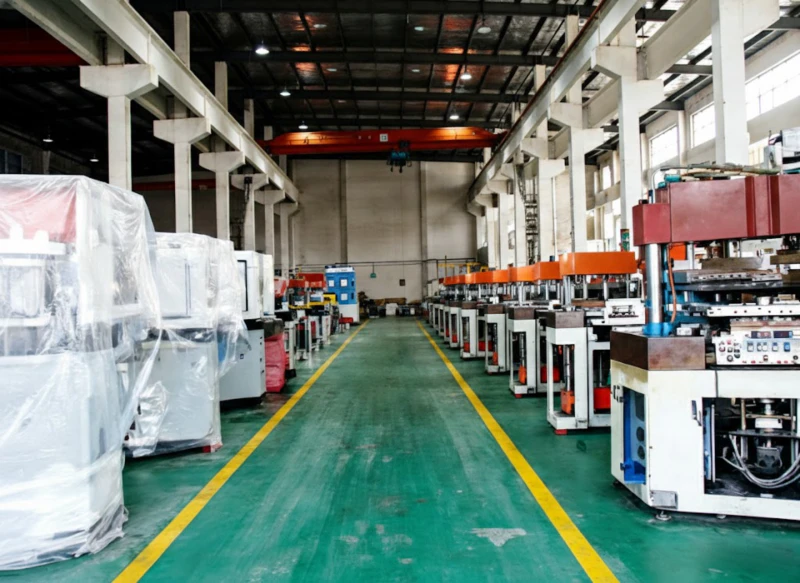
Evaluating a Chinese ISBM supplier is not about finding the lowest price; it is about finding the highest engineering integrity. By scrutinizing the machine’s net weight, demanding high-speed dedicated PLCs, verifying hot runner PID controls, and enforcing strict FAT protocols, procurement teams can bypass the assemblers and partner directly with true innovators.
Need Help Evaluating an ISBM Machine Proposal?
Send us your technical specifications or supplier quotations. Our veteran process engineers will review the hydraulic, pneumatic, and control system schematics to ensure you are investing in top-tier machinery, not generic red flags.