
Process Evaluation Guide • Medical & Pharmaceutical Packaging
An exhaustive engineering and economic analysis of the two dominant plastics manufacturing technologies. We dissect mechanical architectures, cleanroom GMP compliance, tooling economics, and precision tolerances to determine the definitive platform for medical vials, eye droppers, and supplement packers.
In the highly regulated world of pharmaceutical and medical packaging, the margin for error is absolute zero. A micro-leak in a sterile eye-dropper bottle, an imperfect thread on a child-resistant (CR) closure, or particulate contamination inside a cleanroom can result in catastrophic product recalls, regulatory audits, and compromised patient safety. Consequently, the method by which a plastic bottle is manufactured is subjected to intense scrutiny by packaging engineers and quality assurance teams.
When establishing a new production line for small-to-medium rigid containers (1ml to 1,000ml), manufacturers inevitably face a fork in the road: Extrusion Blow Molding (EBM) or One-Step Injection Blow Molding (IBM). Historically, EBM has been the default for general household and industrial packaging due to lower tooling costs and the ability to form handles. However, as medical standards have tightened, IBM has decisively seized the pharmaceutical sector.
This comprehensive guide strips away the marketing jargon and dives deep into the physics, mechanical tolerances, operational expenses (OPEX), and cleanroom compatibility of both processes. By understanding exactly how polymer behaves in an EBM die head versus an IBM injection cavity, procurement teams can make data-driven decisions that safeguard their product integrity while optimizing long-term Total Cost of Ownership (TCO).
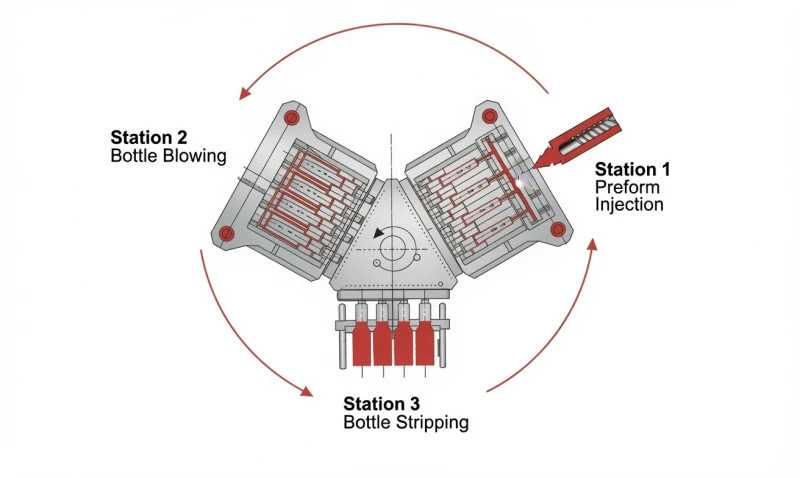
Figure 1: The core three-station IBM process. Unlike EBM, the IBM process begins with a high-pressure injection stage that perfectly defines the neck finish before blowing.
1. Fundamental Mechanics: How the Processes Differ at a Molecular Level
The easiest way to understand the difference between the two technologies is to look at how the initial “preform” (the unblown shape of the plastic) is created. This single mechanical difference dictates every downstream characteristic of the finished bottle.
Extrusion Blow Molding (EBM): The Free-Falling Tube
In EBM, an extruder continuously (or intermittently) pushes molten plastic through an annular die head, creating a free-hanging hollow tube called a parison. Once this tube reaches the correct length, two halves of a blow mold clamp shut around it, pinching off the top and the bottom. A blow pin is then inserted (usually into the neck area) to inflate the tube against the chilled mold walls.
- The Weakness: As the plastic tube drops, gravity acts upon it, causing the material to sag. This results in “die swell” and vertical thinning, making it difficult to control wall thickness perfectly. Furthermore, the action of the mold clamping closed inherently creates “pinch-off” seams at the base and neck, which must be physically torn or trimmed away, leaving a rough scar.
One-Step Injection Blow Molding (IBM): The Engineered Core Rod
In IBM, the process begins much like standard injection molding. Molten polymer is injected under massive hydraulic pressure (often exceeding 50+ MPa) into a closed steel mold cavity over a solid steel core rod. This precisely packs the plastic, forming a perfect, flash-free preform with fully molded neck threads. The core rod then transports this hot preform to the blow station, where air is introduced through the center of the rod to expand the plastic into its final shape.
- The Advantage: The plastic is fully supported by the steel core rod throughout the transport phase—gravity cannot cause it to sag. The neck is injection-molded, not blown, meaning its dimensions are mathematically exact. Because the preform is a closed shape, there is no bottom pinch-off, no flash, and zero material waste.

Figure 2: Medical bottle samples produced via IBM. Note the flawless clarity, lack of a bottom pinch-off scar, and mathematically precise neck threads.
2. Neck Finish Precision & Sealing Integrity
In the pharmaceutical sector, the container’s neck finish is arguably its most critical feature. It must interface perfectly with complex closures, child-resistant (CR) caps, tamper-evident bands, and induction seals to maintain strict Moisture Vapor Transmission Rate (MVTR) standards.
| Feature | Extrusion Blow Molding (EBM) | Injection Blow Molding (IBM) |
|---|---|---|
| Neck Formation | Formed by a blow pin calibrating the inside of a pinched tube. | High-pressure injection molding into a hardened steel neck ring. |
| Dimensional Tolerance | ± 0.20 mm to ± 0.30 mm | ± 0.05 mm (Injection Molding Tolerances) |
| Top Sealing Surface (T-Dimension) | Often requires secondary facing/trimming. Can suffer from micro-scratches causing induction seal failure. | Perfectly flat, glass-smooth finish molded directly into the steel. Induction seals adhere flawlessly. |
| Inside Neck Bore (I-Dimension) | Prone to ovality as the parison cools unevenly. | Mathematically concentric, defined permanently by the solid steel core rod. Ideal for plug-fit dropper tips. |
3. Cleanroom Compliance: The Flash and Particulate Problem
Medical packaging lines are typically housed in ISO Class 7 or Class 8 cleanrooms. The presence of dust, airborne particulates, or operator intervention directly threatens GMP (Good Manufacturing Practice) compliance.
The EBM Reality: Because EBM pinches a tube of plastic, it inherently creates “tails” or “moils” (flash) at the top and bottom of every single bottle. This flash must be mechanically trimmed off. Even on fully automated EBM lines with integrated trimming stations, the physical act of cutting or snapping plastic generates micro-dust and static-charged particulates. Furthermore, the scrap plastic must be conveyed away, ground up, and recycled back into the hopper. This scrap loop introduces massive risks for contamination, heat degradation, and cleanroom particulate pollution.
The IBM Standard: IBM is a 100% scrap-free process. The exact amount of plastic needed for the bottle is injected over the core rod. There are no tails, no moils, and no pinch-off waste. The bottle that ejects at Station 3 is completely finished and ready for automated inspection and bagging. There is no trimming dust, no recycling loop, and no operator intervention required, making IBM the undisputed gold standard for cleanroom operation.
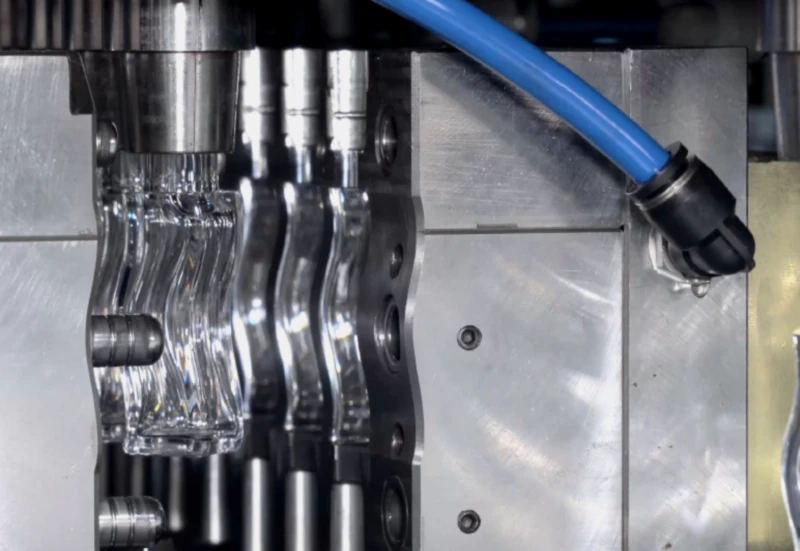
Figure 3: Precision IBM Tooling. The intricate, high-pressure injection cavities guarantee exact dosing of material, eliminating all flash and scrap.
4. Wall Thickness Control and Structural Integrity
Controlling the distribution of plastic across the bottle walls dictates both the structural rigidity of the container and its raw material costs.
EBM: The Gravity Challenge
As an EBM parison drops, gravity pulls more material toward the bottom, causing the tube to taper. EBM machines combat this using complex, expensive Parison Programming (WDS), which shifts the die core rapidly during extrusion to modulate thickness. Despite this, the bottom pinch-off remains a severe structural weak point. A dropped EBM bottle will almost always rupture at the bottom seam.
IBM: The Engineered Profile
In IBM, the core rod is machined precisely down to the micron. The injection cavity defines exactly how thick the preform will be at the neck, shoulder, body, and base. When blown, the material expands symmetrically. Because there is no bottom seam, the base is immensely strong. This exact control allows engineers to aggressively “lightweight” the bottle, saving up to 10-15% in resin costs per unit while maintaining structural rigidity.
5. Tooling Economics and Cavitation Potential
If IBM offers superior quality in every metric, why does EBM still exist? The answer lies heavily in tooling costs and shape limitations.
EBM Molds: An EBM mold is relatively simple. It consists of two halves of a blow cavity (often made from highly conductive, cheaper aluminum or beryllium copper alloys) and a pinching mechanism. Tooling is fast to manufacture and relatively inexpensive. This makes EBM viable for short production runs, rapid prototyping, or products requiring complex handles (like detergent jugs), which IBM cannot produce.
IBM Molds: An IBM mold is an intricate, highly engineered masterpiece. A complete set requires three specific sub-assemblies: the high-pressure injection cavity (tool steel), the blow cavity, and the precision core rods/neck rings. The initial capital expenditure (CAPEX) for IBM tooling is significantly higher, and lead times are longer.
However, the ROI flips at scale. A high-end injection blow molding machine (such as the 135-ton tier) can easily accommodate 24 to 32 cavities simultaneously. Running 32 cavities on an 11-second cycle yields staggering output rates (over 10,000 bottles per hour) that multi-head EBM machines struggle to match reliably without immense scrap generation.
6. Utility Demands: The Crucial Oil-Free Air Requirement
When evaluating process technologies, infrastructure planning cannot be ignored. Both EBM and IBM rely heavily on compressed air to expand the parison inside the mold.
In pharmaceutical and medical applications, this blow air comes into direct contact with the internal, sterile surfaces of the container. If there is even trace aerosolized lubricating oil in the air line, it will coat the inside of the bottle, destroying batch sterility and resulting in immediate FDA or EMA audit failure.
⚙ Mandatory Utility Requirement: ISO 8573-1 Class 0 Air
Whether you choose an advanced EBM line or a high-cavitation IBM platform, standard oil-lubricated compressors equipped with inline filtration are unacceptable for medical packaging. The risk of filter breakthrough is too severe.
To guarantee compliance, facilities must install a dedicated Class-0, 100% oil-free system. Integrating a heavy-duty, continuous-operation unit like the CM-B Series Oil-Free Screw Air Compressor ensures absolute air purity. Furthermore, it provides the massive, uninterrupted pneumatic flow necessary to simultaneously blow 24+ cavities at high speed without pressure drops.
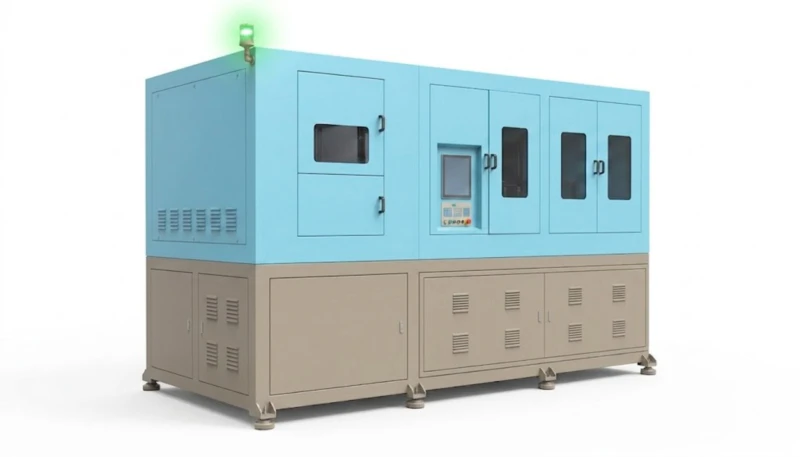
Figure 4: A modern IBM production cell. Achieving maximum output requires seamless integration of the machine with industrial chillers, resin dryers, and dedicated oil-free air compressors.
7. Resin Compatibility and Process Constraints
The choice between IBM and EBM is often heavily influenced by the specific polymer dictated by the product requirements.
- EBM Resin Profiles: EBM requires resins with extremely low Melt Flow Indices (MFI) (typically fractional melt). The plastic must have high “melt strength” so the heavy parison tube does not stretch, tear, or collapse under its own weight while hanging from the die head. This limits the use of highly crystalline or high-clarity resins. While it excels at HDPE, LDPE, and PP, running high-clarity styrenics or polycarbonates is difficult.
- IBM Resin Profiles: IBM thrives on high-MFI, easily flowable resins because the material must be rapidly injected under high pressure into intricate neck ring designs. IBM effortlessly processes standard polyolefins (HDPE, LDPE, PP) but is also vastly superior for processing highly transparent, rigid, and premium resins like Polystyrene (PS), Polycarbonate (PC), ABS, and PCTG (common in luxury cosmetic jars and medical diagnostics).
8. Total Cost of Ownership (TCO) and ROI Analysis
Procurement teams must look beyond the invoice price of the machine and tooling. A comprehensive 5-to-10 year TCO analysis reveals a stark contrast between the two processes in a pharmaceutical environment.
EBM Economic Profile
Lower CAPEX, Higher OPEX. While the initial machine and mold investments are cheaper, operating costs scale rapidly. EBM creates 15% to 35% scrap (tails/flash) per cycle. This requires energy to grind, operator time to manage, and heat energy to re-melt. Furthermore, the inherent variability in wall thickness often requires manufacturers to run heavier bottle weights to guarantee minimum drop-strength requirements, artificially inflating raw material resin costs.
IBM Economic Profile
Higher CAPEX, Drastically Lower OPEX. The initial barrier to entry is high due to complex 3-station tooling and rigid machine frames. However, the operational economics are highly favorable at scale. With zero flash, 100% of melted resin goes into sellable product. The extreme precision of the core rod allows for aggressive “lightweighting” (saving millions of grams of resin annually). The lack of trimmers and grinders reduces cleanroom footprint, operator headcount, and particulate-related quality assurance (QA) failures.
9. Decision Matrix: Which Process Wins?
To finalize your manufacturing strategy, apply your project parameters to this straightforward decision matrix:
⚠ Extrusion Blow Molding (EBM) is the correct choice if:
- Your bottle volume exceeds 1,500ml (e.g., gallon jugs, industrial chemicals).
- Your design requires an integrated, molded-in handle.
- The bottle design is highly asymmetrical (e.g., an angled neck or offset spout).
- Production volumes are low, and rapid, inexpensive mold changes are required.
- Slight dimensional variations in the neck finish are acceptable for your closure type.
✅ Injection Blow Molding (IBM) is the mandated choice if:
- You are producing medical, pharmaceutical, or premium cosmetic containers (1ml to 1,500ml).
- Your closure requires mathematically perfect, injection-molded ±0.05mm tolerances (Child-Resistant, droppers, induction seals).
- Your cleanroom standards forbid the dust and particulate generation associated with flash trimming.
- You require a completely seamless bottom base for structural integrity or high-end aesthetics.
- Annual production volumes are exceptionally high, justifying multi-cavity (12 to 32 cavity) tooling.
Conclusion: Engineering for Certainty
While Extrusion Blow Molding remains the backbone of the consumer detergent, dairy, and industrial packaging markets, it simply cannot match the mechanical precision demanded by the medical sector. In pharmaceutical packaging, quality cannot be inspected into a product; it must be inherently engineered into the process. By utilizing high-pressure injection to dictate the neck finish and eliminate all material scrap, One-Step Injection Blow Molding provides the absolute certainty that high-stakes packaging requires.
Transitioning Your Production to IBM?
Our engineering team can help you map your transition. Whether you are launching a specialized eye-dropper line on a compact 40-ton platform or expanding into 32-cavity mega-volume production, explore our complete portfolio of advanced machinery to find your perfect fit.