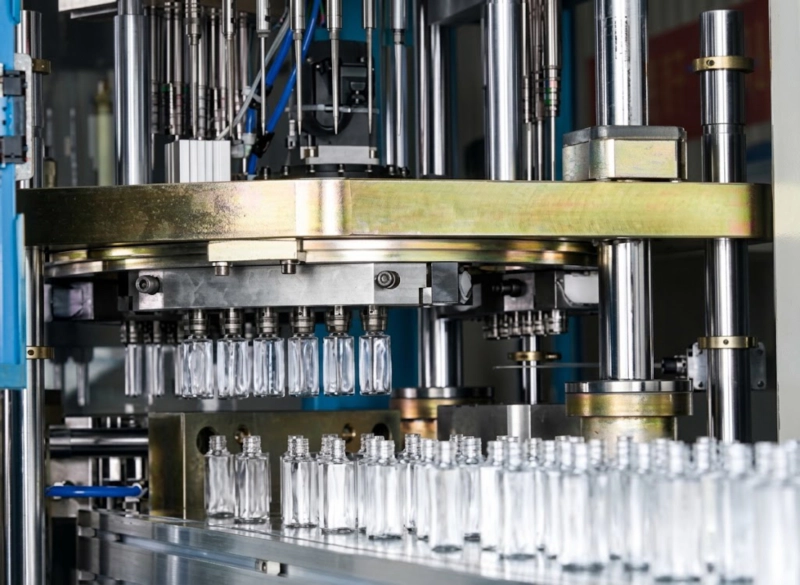
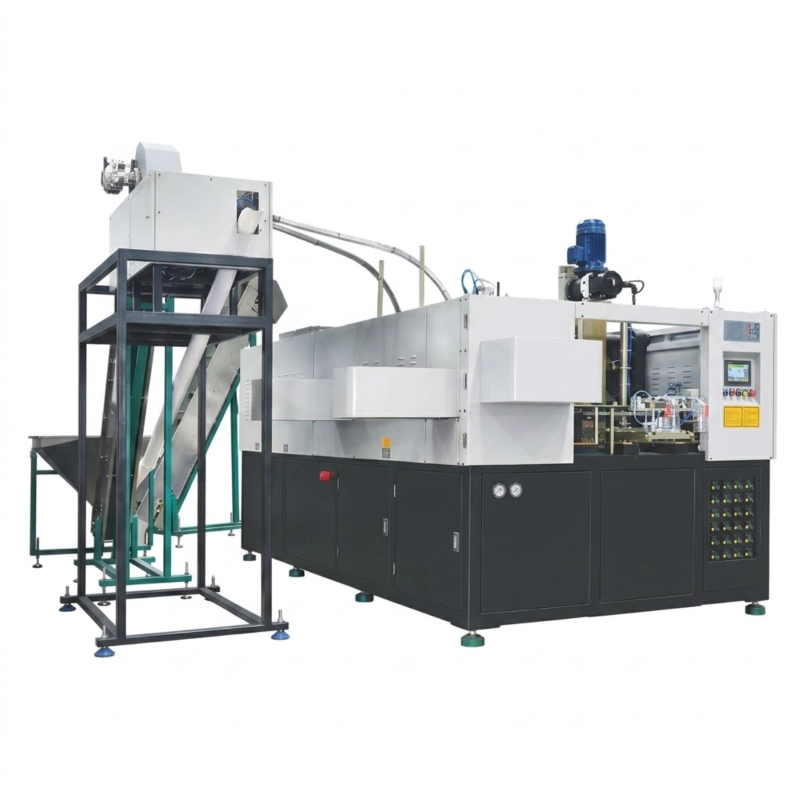
Edible Oil Bottle & Handle Bottle Series Blow Molding Machines
PET blow molding machines for edible oil & handle bottles. 7 models, 1.5 L–22 L, front/rear handle platform, centralised heating, large-format oil drums up to 22 L. CE certified. Get a quote.
Edible Oil Bottle & Handle Bottle Series
Blow Molding Machines — Complete Model Guide
► 1.5 L – 22,000 ml
► 700 – 1,800 bph
► Front & Rear Handle Platform
► CE Certified
1. Product Overview
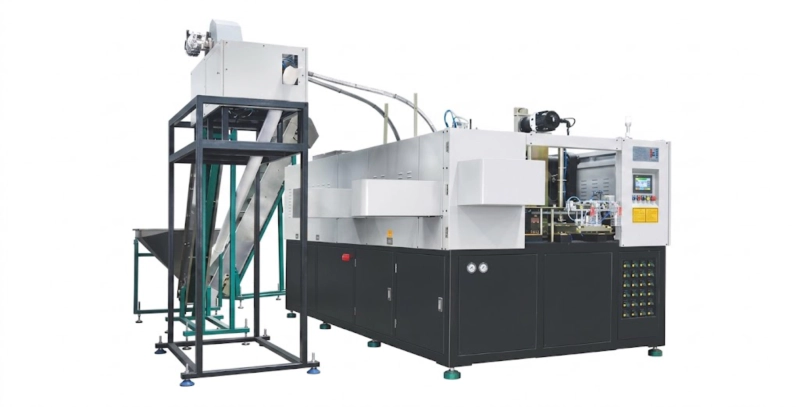
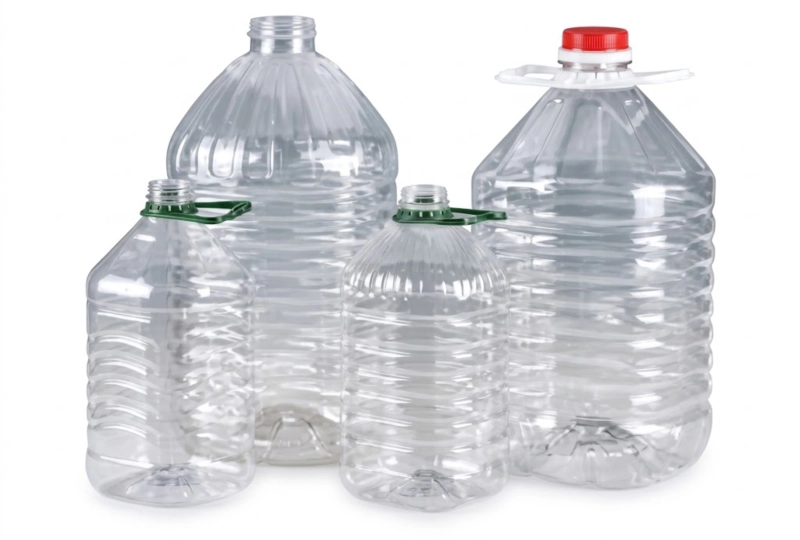
The Edible Oil Bottle & Handle Bottle Blow Molding Machine Series comprises 7 models across the ES, FS, and JS sub-series, purpose-developed for the specific geometric and production requirements of cooking oil, condiment, and handle-bottle packaging. These machines address three distinct market segments within the edible oil sector: standard cooking oil formats (1.5–5 litres, ES series), front-and-rear integrated handle bottles (JS-2CB152), and large-capacity family and institutional oil containers (5–22 litres, JS and J series with centralised-heating distributed-blow architecture).
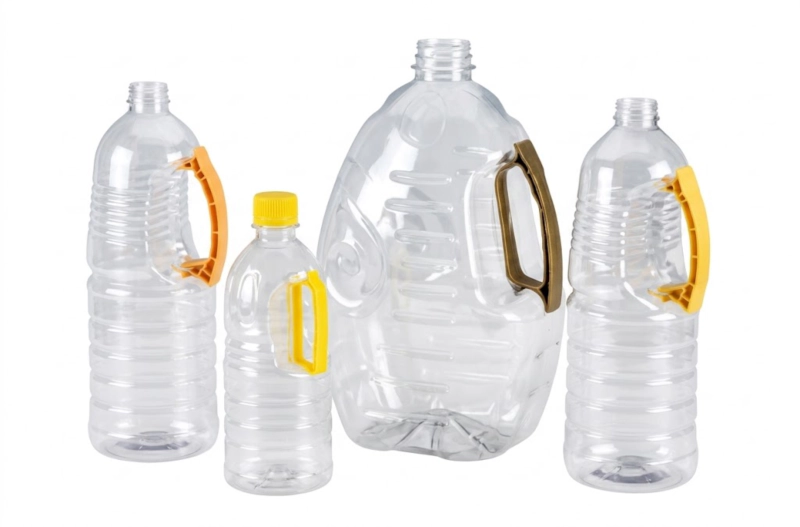
Handle bottle production represents one of the most technically demanding applications in PET stretch blow molding. The integrated carrying handle — formed as part of the blown bottle rather than attached as a separate component — requires precise control of preform wall-temperature distribution to ensure complete handle-zone inflation without webbing, thinning, or stress whitening. The JS-2CB152 dedicated handle bottle platform is purpose-engineered for this geometry, with front-handle and rear-handle mold configurations available and a 128-position integrated heating buffer that provides the extended preform conditioning time required for consistent handle-zone formation.
For large-format oil containers of 5, 10, and 20 litres, the JS and J series introduce a centralised-heating distributed-blow system — an integrated architecture where a large-capacity heating carousel conditions heavy-wall preforms continuously while the blow station operates at its independently optimised rate, achieving commercially viable throughput on formats where standard conveyor-oven machines would be uneconomical.
Applicable Industries & Applications
✓ Front & Rear Handle Oil Bottles
✓ 5 L / 10 L Large Capacity Oil Containers
✓ 20 L Institutional Oil Drums
✓ Condiment & Sauce Bottles
✓ Vinegar & Soy Sauce Containers
✓ Professional Kitchen & Catering Supply
✓ Specialty Oils & Premium Condiments
2. Working Principle
All ES-series models in this range use the standard two-step reheat stretch blow molding (RSBM) process. PET preforms are automatically fed and conveyed through a multi-zone NIR oven. Edible oil and condiment preforms are typically heavier-walled than equivalent beverage preforms — oven zone configurations are adjusted for the specific preform weight and the elevated wall-thickness required for top-load stability under filled-bottle stacking conditions in distribution.
The JS-2CB152 handle bottle platform uses a unique blow station with front-handle and rear-handle mold configurations and a 128-position integrated heating carousel (10 blow positions + 128 heating positions). Handle bottle preforms require extended heating dwell to ensure the handle-zone body wall reaches full biaxial-stretch temperature without neck-zone overheating. The decoupled carousel provides this conditioning time independently of the blow cycle, enabling consistent handle geometry across all production positions.
The JS-2C200 and J-2C366 large-format platforms use a centralised-heating distributed-blow architecture. A large-capacity heating carousel (128 preform positions) conditions heavy-wall 5-litre to 22-litre preforms continuously at the extended dwell time required for full-wall thermal conditioning. The blow station operates at its independently optimal rate — eliminating the throughput penalty that standard conveyor-oven machines suffer when forced to run at the slow conveyor speed required for heavy-wall large-format preforms.
Key structural components: servo-electric toggle-link clamping • per-cavity servo stretch rod • multi-zone NIR oven with neck-protection cooling • integrated heating carousel (JS/J series) or standard inclined feeder (ES series) • Siemens/Mitsubishi PLC with HMI and recipe storage • inline rejection system before filling conveyor.
3. Core Advantages
Dedicated Front & Rear Handle Bottle Platform
The JS-2CB152 is purpose-engineered for integrated-handle PET oil bottles — with front-handle and rear-handle mold configurations available on the same machine base. The 128-position heating carousel provides the extended preform conditioning time required for consistent handle-zone inflation across all 10 blow positions.
Centralised Heating Distributed Blow — Large Format
JS-2C200 and J-2C366 use a centralised-heating distributed-blow system purpose-built for 5–22 litre heavy-wall oil containers. The decoupled 128-position heating carousel eliminates the throughput penalty of standard conveyor-oven machines on large-format preforms — achieving commercially viable 700–1,000 bph at container sizes that standard machines cannot economically produce.
PET Superiority for Edible Oil Packaging
Biaxially oriented PET provides superior oxygen barrier versus HDPE — extending oxidative shelf life of cooking oils by slowing rancidity development. Crystal clarity enables consumers to verify oil colour and clarity before purchase. 30–40% weight saving versus glass at equivalent structural performance reduces shipping costs across high-volume edible oil distribution.
Up to 35% Energy Saving — Servo Drive
Full-series servo-electric mold clamping eliminates hydraulic circuits, reducing energy cost per 1,000 containers by up to 35% versus pneumatic-cam alternatives. For large-format oil container production where heating power is already significant, servo drive delivers meaningful utility savings across extended production campaigns.
Top-Load Stability for Filled-Bottle Stacking
Per-cavity servo stretch-rod control maintains consistent base-panel geometry and shoulder-panel wall thickness — the two critical factors determining top-load crush resistance in filled-bottle pallet stacking. Biaxial orientation delivers the creep resistance required for 5-litre and 10-litre edible oil bottles under sustained stacking loads in warehouse storage.
Complete Turnkey Supply
We supply blow molds (including handle-bottle molds with front/rear handle configurations), preform injection molds, industrial chillers, and oil-free compressor packages from a single source — ensuring food-grade compressed air compliance for direct-contact edible oil packaging and simplifying procurement for international buyers.
4. Technical Specifications
▶ ES Series — Standard Servo Edible Oil & Condiment Bottles (2 Cavity, PET)
3 models covering 1.5 L to 5 L. Standard servo two-step stretch blow molders for cooking oil, condiment, vinegar, and soy sauce bottle formats. Servo-electric drive, variable blowing pressure for different wall-weight targets.
| Parameter / Unit | ES-2C130 | ES-2C150 | ES-2C200 |
|---|---|---|---|
| Cavities | 2 | 2 | 2 |
| Max. Container Volume (ml) | 1,500 | 2,500 | 5,000 |
| Output (bph) | 1,800 | 1,800 | 1,600 |
| Max. Neck Diameter (mm) | 98 | 110 | 138 |
| Max. Body Diameter (mm) | 110 | 130 | 180 |
| Max. Container Height (mm) | 250 | 250 | 350 |
| Clamping Stroke (mm) | 160 | 190 | 215 |
| Mold-Open Distance (mm) | 360 | 440 | 499 |
| Stretching Stroke (mm) | 350 | 450 | 500 |
| Preform Holder | 60 | 60 | 50 |
| Max. Heating Power (kW) | 42.5 | 42.5 | 85 |
| Normal Heating Power (kW) | 8–13 | 18 | 35 |
| Blowing Pressure (kg/cm²) | 26–35 | 26–35 | 30 |
| HP Air Consumption (L/min) | 1,000–1,500 | 1,000–1,500 | 6,000 |
| Cooling Water Flow (L/min) | 30 | 30 | 91.4 |
| Machine Size L×W×H (mm) | 3600×1800×1980 | 4290×1800×2220 | 4300×2100×2500 |
| Machine Weight (kg) | 3,000 | 3,500 | 4,500 |
▶ FS / JS / J Series — Handle Bottle & Large-Format Oil Container Specialists (2 Cavity)
4 models. Integrated heating carousel systems for handle bottles and large-capacity containers. FS-2C200 for 5 L small-mouth; JS-2CB152 for front/rear handle bottles; JS-2C200 for 5–18.9 L; J-2C366 for up to 22 L drums.
| Parameter / Unit | FS-2C200 (5 L) | JS-2CB152 (Handle) | JS-2C200 | J-2C366 (20 L) |
|---|---|---|---|---|
| Cavities | 2 | 2 | 2 | 2 |
| Special Feature | 5 L small-mouth centralised heating |
Front & rear handle 10 blow + 128 heat |
Large-format 8 blow + 128 heat |
20 L drum 8 blow + 128 heat |
| Max. Container Volume (ml) | 5,000 | 3,000 | 5,000 | 22,000 |
| Output (bph) | 1,200 | 1,600 | 1,000 | 700 |
| Max. Neck Diameter (mm) | 50 | 46 | 58 | 90 |
| Max. Body Diameter (mm) | 180 | 140 | 180 | 300 |
| Max. Container Height (mm) | 330 | 330 | 340 | 480 |
| Clamping Stroke (mm) | 225 | 190 | 225 | 332 |
| Stretching Stroke (mm) | 500 | 450 | 450 | 620 |
| Integrated Heating Buffer | 76 preforms | 128 preforms | 128 preforms | 128 preforms |
| Max. Heating Power (kW) | 72 | 48 | 65 | 86 |
| Normal Heating Power (kW) | 24 | 12 | 26 | 45 |
| Blowing Pressure (kg/cm²) | 30 | 35 | 35 | 35 |
| HP Air Consumption (L/min) | 3,600 | 2,800 | 5,000 | 12,500 |
| Cooling Water Flow (L/min) | 60 | 30 | 91.4 | 120 |
| Machine Size L×W×H (mm) | 3450×2150×2290 | 4200×2100×2260 | 4100×2150×2350 | 4090×2660×3040 |
| Machine Weight (kg) | 3,500 | 3,000 | 2,500 | 7,000 |
5. Structure & Material Engineering
🛠 Handle Bottle Mold Station
The JS-2CB152 handle bottle blow station is engineered with an extended mold-open stroke and a wider platen to accommodate front-handle and rear-handle mold geometries. Handle channel geometry is precision-machined with conformal cooling channels that solidify the handle web immediately after inflation — preventing handle deformation during de-moulding and ensuring dimensional stability of the grip geometry.
⚙ Servo-Electric Clamping
Toggle-link servo-electric clamping with no hydraulic fluid — eliminating contamination risk in food-grade edible oil production environments. Fast servo response enables the shorter cycle times achievable with lighter ES-series oil bottle formats while providing the sustained clamping force required for large-format JS-series container molds.
🛋 Integrated Heating Carousel
The FS, JS, and J series use a large-capacity heating carousel (76–128 preform positions) decoupled from the blow station cycle. Large-format edible oil preforms (5–22 litres) require 3–5× longer NIR heating dwell than standard 500 ml beverage preforms. The carousel provides this extended conditioning time without slowing the blow station — sustaining 700–1,200 bph at container sizes that standard conveyor-oven machines cannot economically produce.
🌡 Distributed Blow System
The centralised-heating distributed-blow architecture routes heated preforms from the carousel to the blow station via a servo-controlled transfer mechanism. Preform transfer timing is synchronised to the blow cycle to maintain consistent preform temperature at the blow station entry — preventing cycle-to-cycle temperature variation that causes weight and wall-thickness inconsistency in large-format containers.
🔓 Mold Materials
Blow mold cavities machined from high-strength aluminium alloy with 3D CAD conformal cooling channels. Handle bottle molds incorporate dedicated handle-channel insert designs for rapid switching between front-handle and rear-handle configurations. Large-format molds (JS/J series) use reinforced base-insert designs for the higher clamping forces of 5–22 litre container production. All water-circuit fittings are rated for food-compatible chilled-water treatment.
📱 PLC & Recipe System
Siemens or Mitsubishi PLC with colour HMI touchscreen. Up to 50 bottle-format recipes on-board — covering different oil bottle capacities, handle configurations, and wall-weight targets for various cooking oil grades and condiment formulations. Recipe changeover restores all oven zone, carousel timing, and blow-pressure parameters in minutes.
6. Typical Application Scenarios
7. Our Machines vs. European Brand Platforms — Objective Comparison
| Comparison Item | Sidel SBO Series | Krones Contiform | SMI Smiflexi | Sipa SFR EVO | Our Series |
|---|---|---|---|---|---|
| Origin | France | Germany | Italy | Italy | Asia |
| Integrated Handle Bottle Platform | Selected models | Selected models | Limited | Limited | JS-2CB152 — dedicated |
| Large-Format Oil Container Platform | Selected models | Selected models | Limited | Limited | JS/J series — dedicated |
| Approx. Entry CapEx (2-cav.) | USD 180K – 280K | USD 160K – 260K | USD 120K – 200K | USD 130K – 210K | Significantly lower — direct |
| Servo Drive (standard) | Yes | Yes | Yes | Yes | Yes — all models |
| Spare Parts Lead Time | 4–12 weeks | 4–10 weeks | 4–10 weeks | 4–10 weeks | 3–7 days (stocked) |
| After-Sales Service | Regional agents | Regional agents | Regional agents | Regional agents | Direct + remote video |
| CE Certification | Yes | Yes | Yes | Yes | Yes |
CapEx figures are indicative market estimates. Our pricing is provided by confirmed quotation only.
8. Model Selection Guide
| Your Requirement | Recommended Model |
|---|---|
| 1–1.5 L cooking oil / condiment, standard format | ES-2C130 (2 cavity, 1,800 bph) |
| 2–2.5 L cooking oil / condiment bottle | ES-2C150 (2 cavity, 1,800 bph) |
| 5 L cooking oil, wide-neck (138 mm), 1,600 bph | ES-2C200 (2 cavity, 1,600 bph) |
| 5 L cooking oil, small-mouth (50 mm) pour format | FS-2C200 (2 cavity, 1,200 bph) |
| Integrated front or rear handle oil bottle, 1–3 L | JS-2CB152 (dedicated handle platform, 1,600 bph) |
| 10–18.9 L institutional oil container / drum | JS-2C200 (centralised heating, 1,000 bph) |
| 20–22 L large-format oil drum, institutional | J-2C366 (centralised heating, 700 bph) |
9. Frequently Asked Questions
Explore our full range of two-step and one-step blow molding machines for all packaging categories:
► Browse All Blow Molding Machines
✉ Request a Free Quotation
10. Work with a Specialist Manufacturer
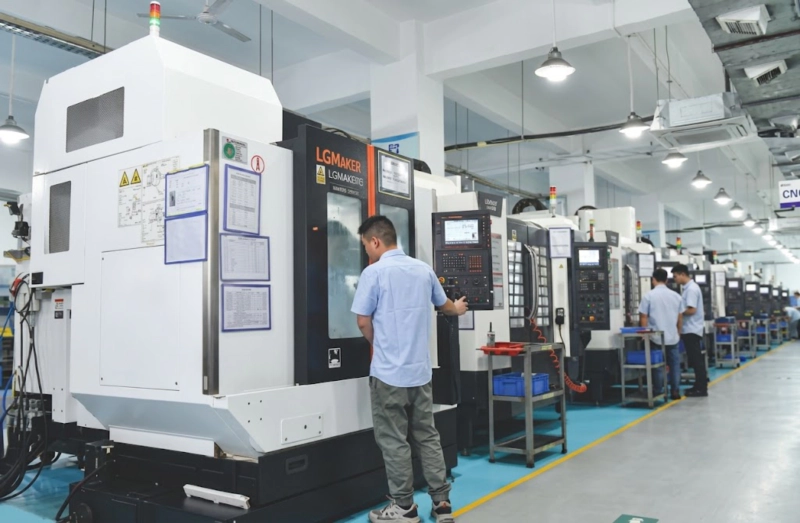
With over two decades of dedicated experience in blow molding machine design, manufacturing, and after-sales service, we supply automatic PET edible oil bottle and handle bottle blow molding machines to cooking oil brands, condiment producers, food-service packaging companies, and contract filling operations across more than 20 countries. Our production facility operates dedicated CNC machining, mold fabrication — including specialist handle bottle tooling — machine assembly, and quality-control departments. Our engineers are available globally for installation, commissioning, and after-sales support.
Whether you are specifying your first edible oil blow molder, adding a dedicated handle bottle platform, upgrading from a standard 2-litre format to 5-litre and 10-litre large-format production, or replacing an ageing European machine, our technical team will provide a no-obligation specification review and delivered-cost comparison within 48 hours of enquiry.