Two-Step ISBM Technology

Two-Step
ISBM Machine

Reheat stretch blow molding separates preform injection from bottle blowing. For single-SKU volumes above 20 million units per year, it delivers the lowest per-bottle cost of any blow molding technology. Below that threshold, one-step ISBM wins on total economics.

20M+ Units/yr
where it wins
60,000 Max BPH
(rotary RSBM)
PET Primary
resin
2–3× Floor space
vs one-step
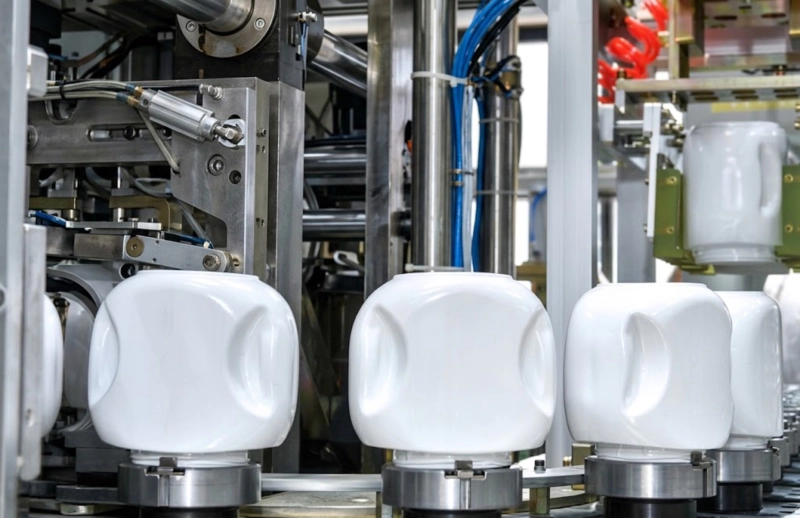
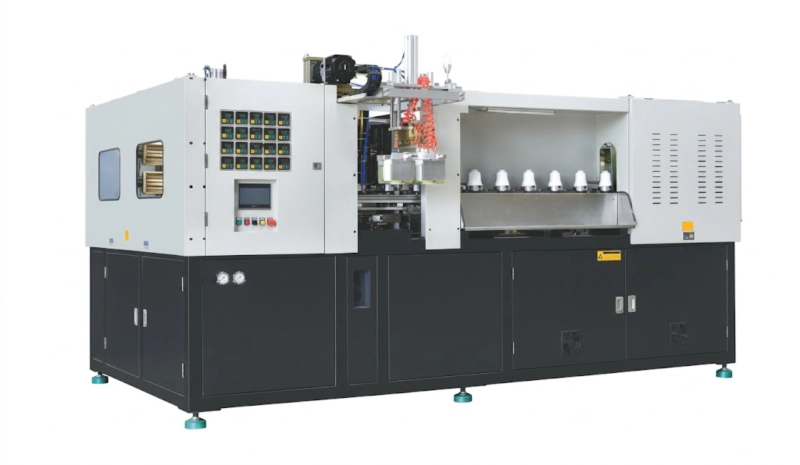
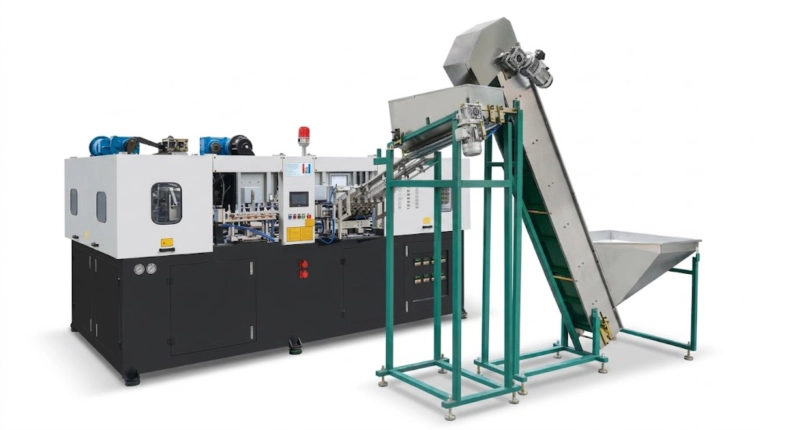
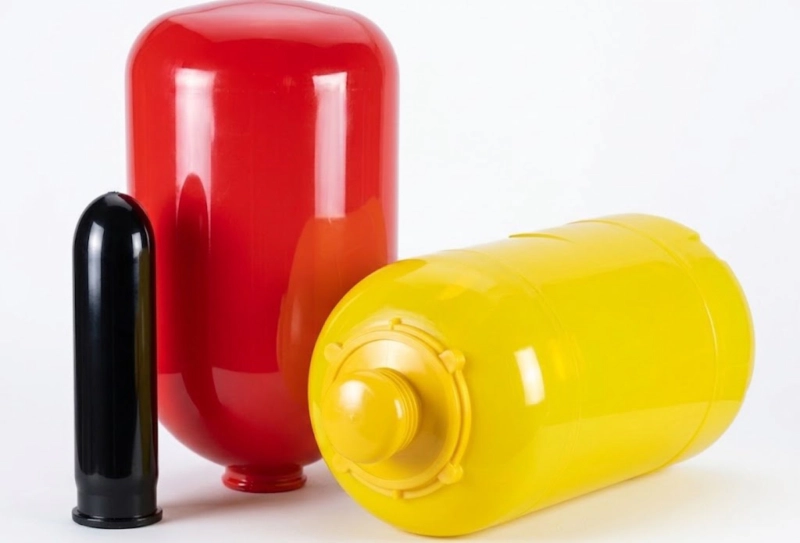
Two-step ISBM production line — PET preform injection and reheat stretch blow molding process overview
Step 1 — Preform Injection: PET preforms produced and stored at ambient temperature
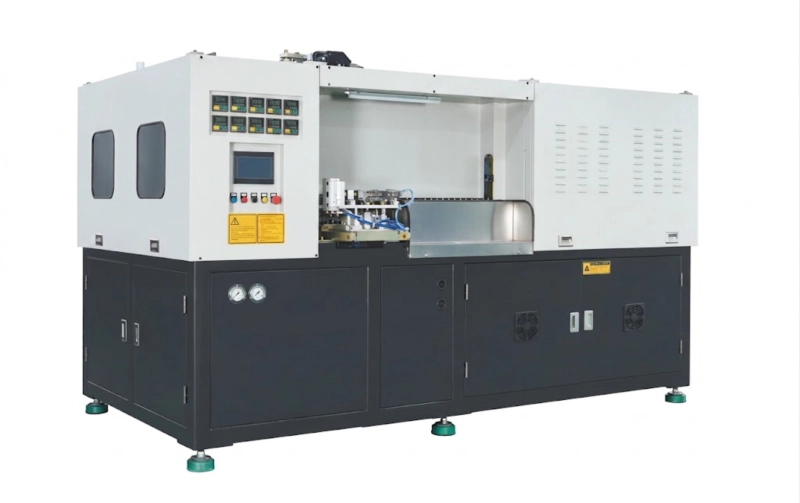
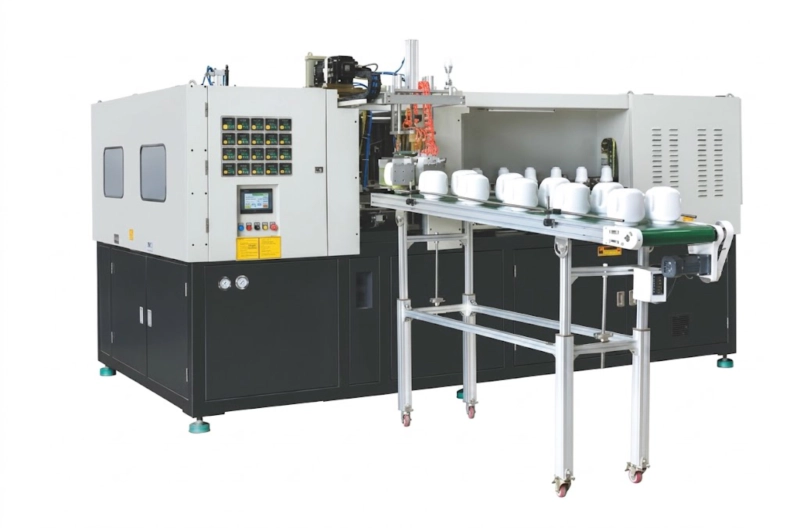
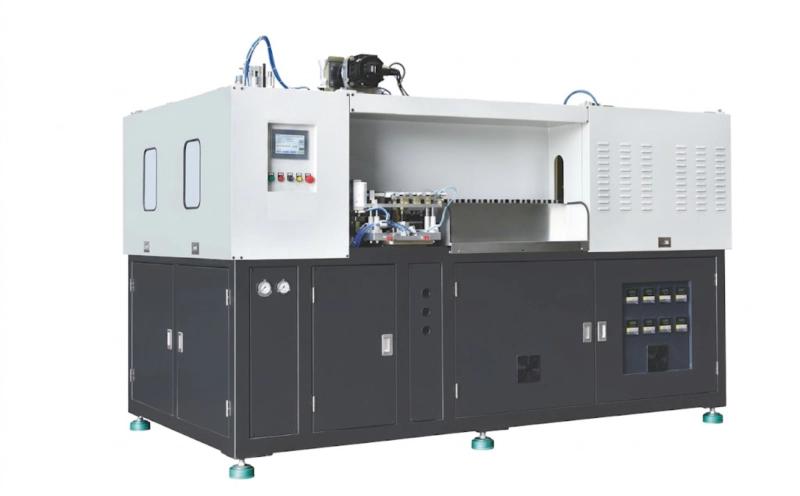
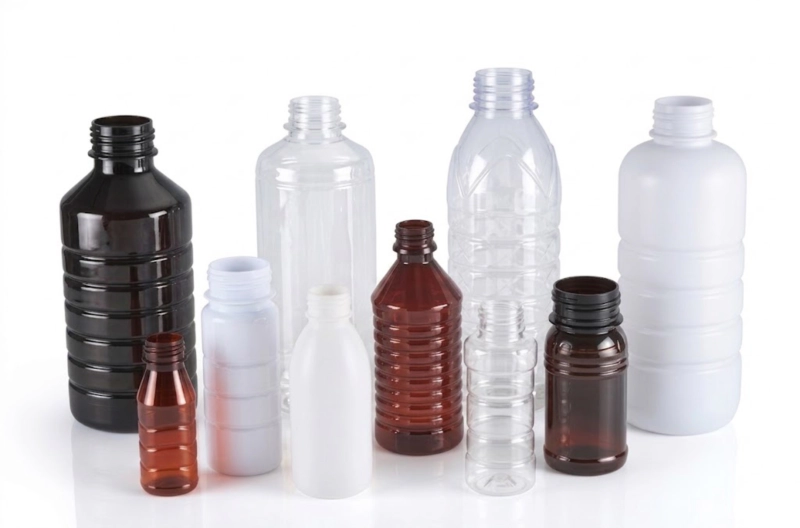
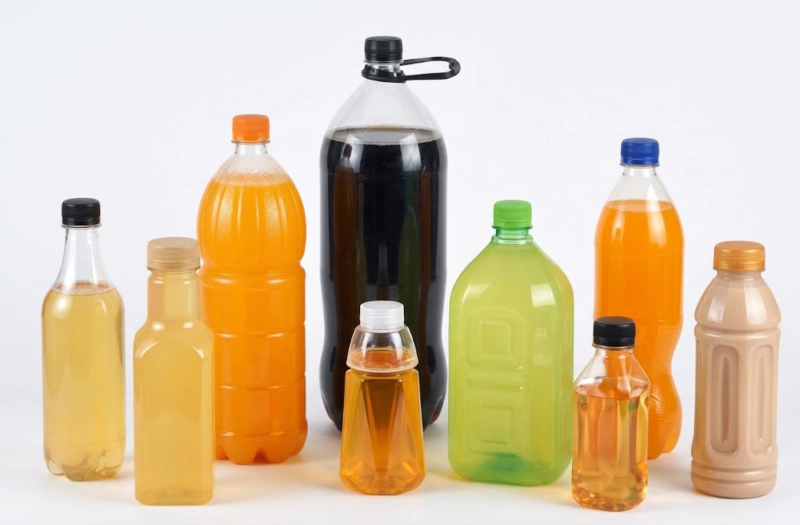
High-volume PET bottle production line — RSBM reheat stretch blow molding machine for beverage, food and personal care PET formats
Step 2 — Reheat Blow: IR oven reheats preforms to 90–110°C, then stretch blow molds finished bottles
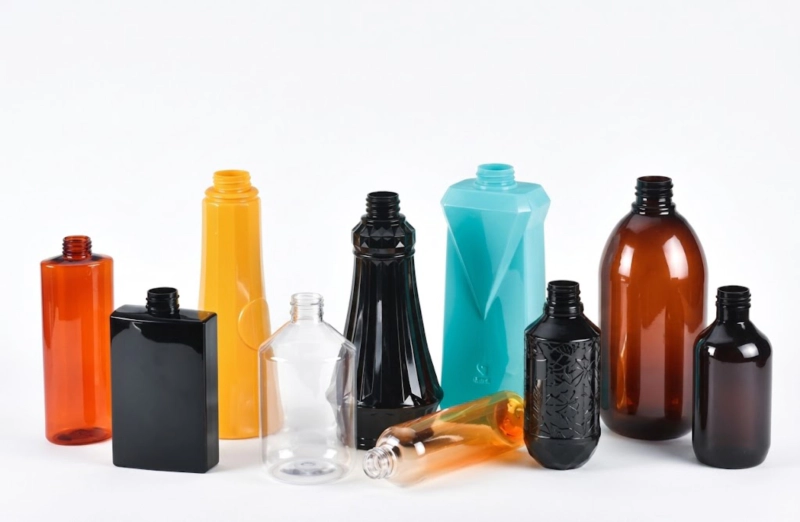
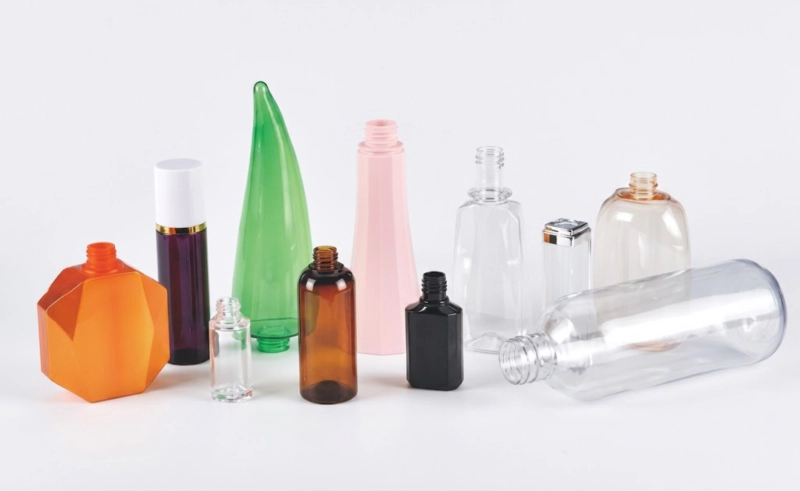
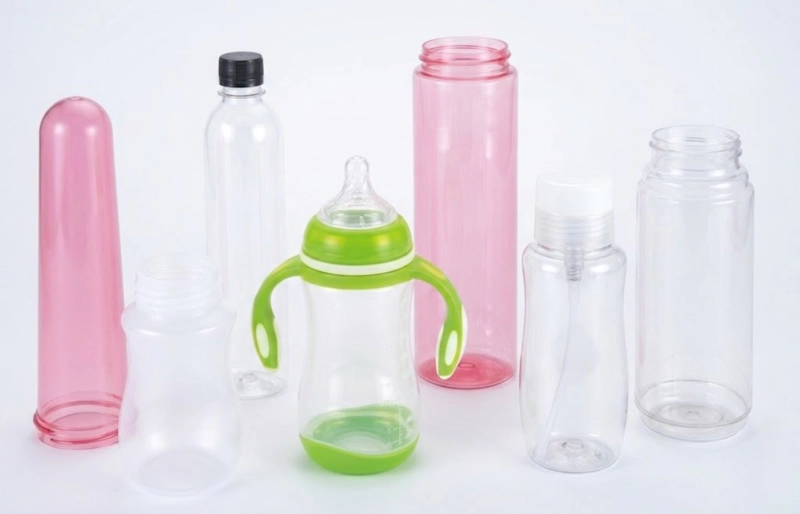
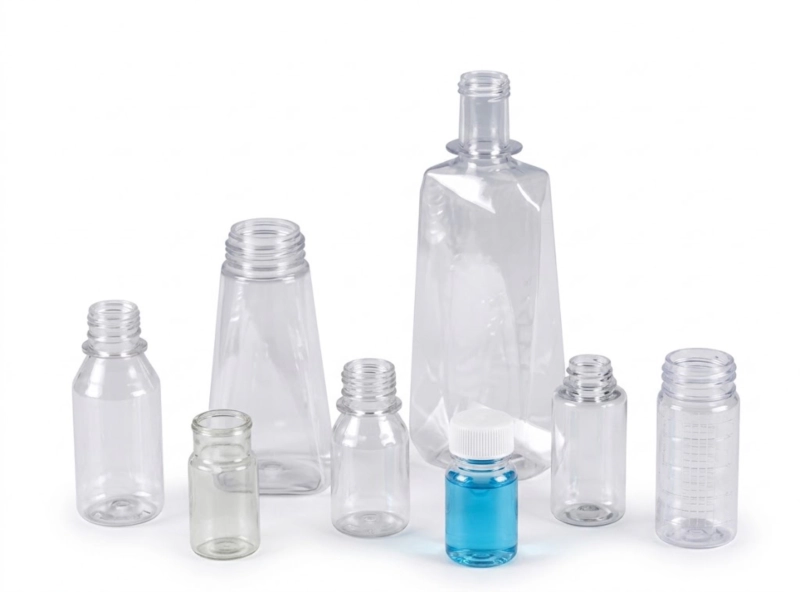
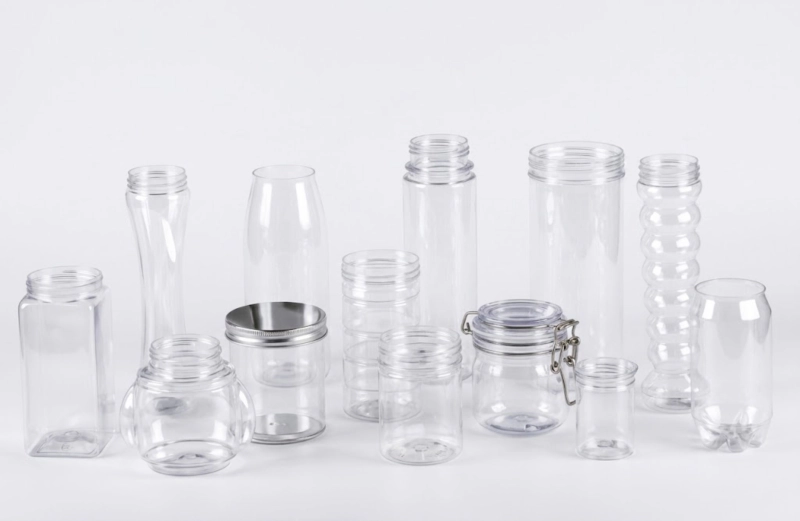
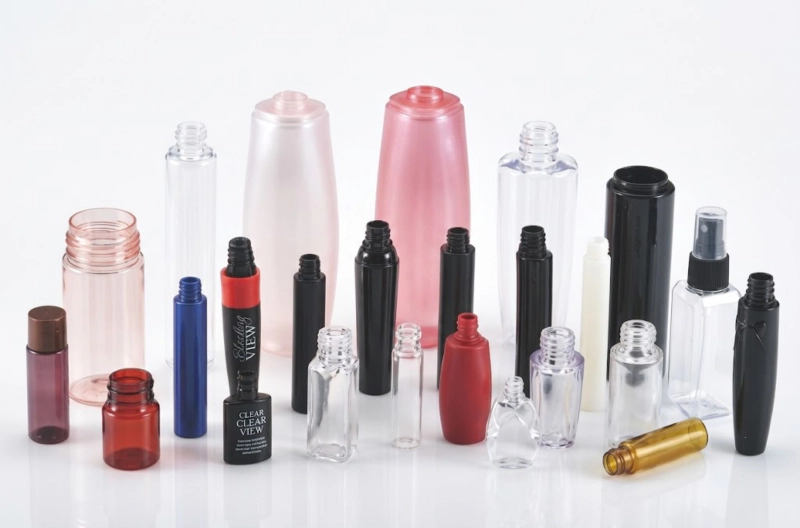
Finished PET bottle samples — clear, standard round format produced by two-step reheat stretch blow molding for cosmetics, pharmaceutical and food applications
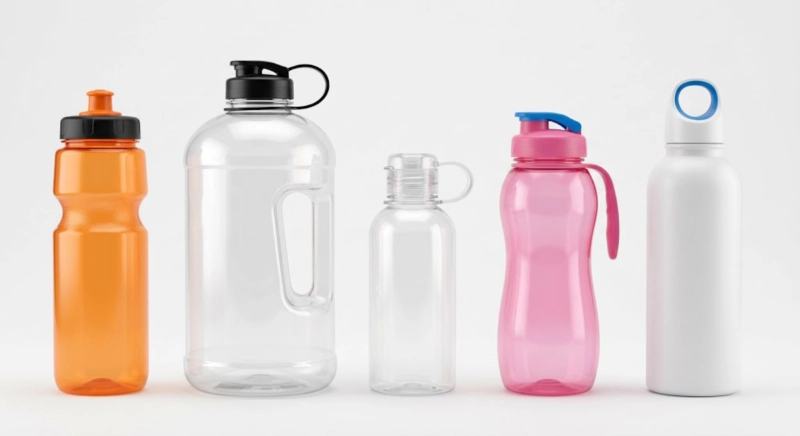
Finished PET bottles — two-step RSBM output at up to 60,000 BPH for standard round formats
Standard PET · Up to 60,000 BPH
Preform Purchase or Self-Injection — Both Supported
Not Sure Which Process Fits? We Calculate the Breakeven for You

What Is a Two-Step ISBM Machine?

Preform injection and bottle blowing are completely separated — run independently, at different speeds, even in different facilities. A cold preform inventory sits between the two steps. This decoupling is the source of both the two-step process's scale advantage and its operational complexity.
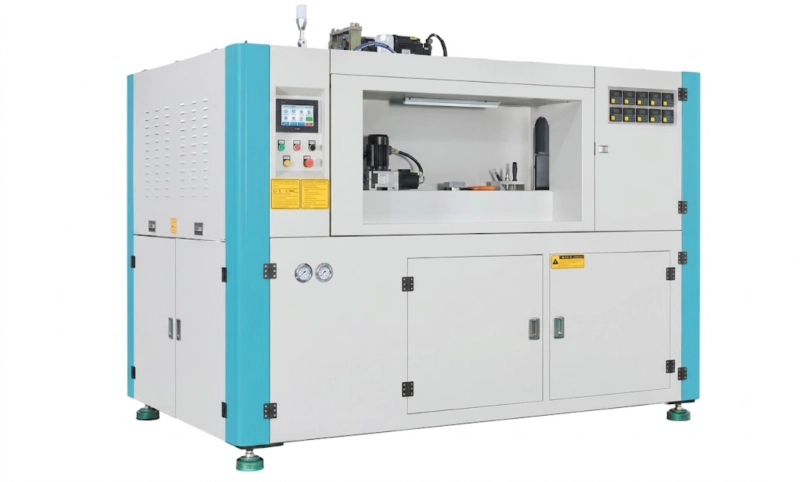
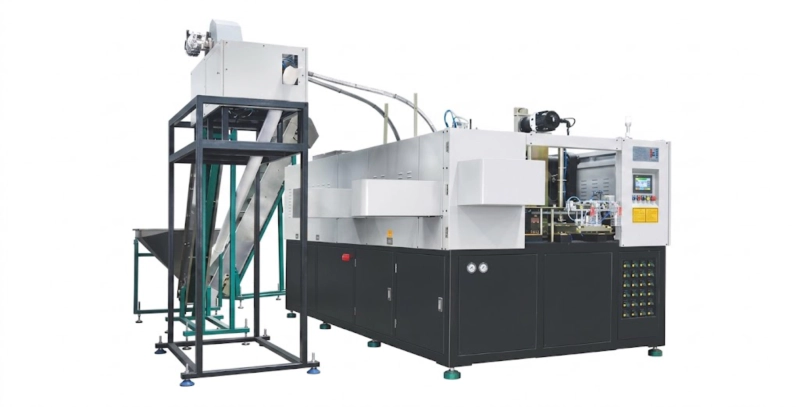
RSBM reheat stretch blow molding machine — Step 2 of the two-step ISBM process, IR oven reheating section and blow mold stations for high-volume PET bottle production

Reheat Stretch Blow Machine (RSBM) — IR oven at left, blow mold stations at right. Up to 18,000 BPH (linear) or 60,000 BPH (rotary).

Two-Step ISBM — Full Process Flow

Step 1
Preform Injection
Injection molding machine · Cold storage
PET Resin Drying
Dehumidified hopper removes moisture to <0.005% before injection.
165°C · 6 h
Injection Molding
8–96 cavity hot runner mold at 270–285°C. Preform geometry and neck finish are fixed permanently here.
270–285°C
Full Cooling & Ejection
Preforms cool completely to ambient — no residual heat retained. Cycle time 8–18 s.
Ambient
Inspection & Bulk Storage
Weight, wall thickness, neck OD, haze checked per batch. Stored at 15–25°C, RH <50%, up to 12 months.
≤ 12 mo
Step 2
Reheat Stretch Blow (RSBM)
Reheat blow machine · Continuous high-speed
Preform Feed & Orientation
Hopper + sorting system positions preforms neck-up onto the conveyor before the IR oven.
Continuous
IR Oven Reheating
Near-IR lamps reheat the preform body from ambient to 90–110°C. Multi-zone axial control + continuous rotation for uniform temperature.
90–110°C
Stretch Rod + Blow
Axial stretch rod (ASR 2.5–3.5×) extends simultaneously with pre-blow air. Main blow at 3.5–4.0 MPa forces the preform to full cavity shape.
3.5–4.0 MPa
Cooling & Ejection
Mold cooling (8–15°C) sets the bottle shape. Continuous output — up to 18,000 BPH linear, 60,000 BPH rotary.
≤ 60K BPH
Preform Storage Buffer — the defining feature of the two-step process
Steps 1 and 2 are decoupled by a cold preform inventory. The blow machine draws from stock — enabling maximum uptime — but requires warehouse space (15–25°C, RH <50%) and incoming quality inspection for externally sourced preforms.
01
Two Thermal Histories
The preform is heated twice. PET handles this well. PETG, Tritan and PC do not reheat uniformly from ambient — wall thickness variation hits 25–40%, making two-step impractical for premium packaging resins.
02
Decoupled Capacity
Injection and blowing run independently. One injection line can feed multiple blow machines. Or skip injection entirely — purchase preforms externally and run RSBM only.
03
Higher Blow Pressure
Two-step runs at 3.5–4.0 MPa vs 2.0–3.2 MPa on one-step ISBM. The reheated preform has a less uniform temperature profile, requiring higher pressure to fill the cavity completely.

One-Step vs Two-Step — Which Bottles Does Each Process Make Best?

The two processes serve different bottle types, volumes and quality requirements. Understanding where each excels makes the platform selection straightforward.

Russia Market Leader
One-Step ISBM
HGY Series · Resin to finished bottle in one continuous cycle
Volume
500K – 20M units / yr / SKU
Resins
PET · PETG · Tritan · PC · PP
Bottle shape
Round · Oval · Rectangular · Asymmetric
Wall type
Standard and thick-wall premium
Changeover
Under 2 h · No preform stock clearance
GMP
Native · Oil-free · Closed single process
Clarity
Glass-like premium (PETG / Tritan)
Entry cost
From USD 45K · Single machine
Max BPH
Up to 18,000 BPH (6-station)
Best-fit bottle types
Premium PETG cosmetic jars Tritan luxury perfume bottles Asymmetric serum bottles Pharma oral liquids (PP) Thick-wall lotion pumps Wide-mouth PET food jars Multi-SKU personal care ASB mold compatible formats Baby bottles (PP / PPSU) Small-batch specialty bottles
Two-Step RSBM
Separate injection + reheat blow · Preform buffer between steps
Volume
30M – 300M+ units / yr / SKU
Resins
Standard PET primarily
Bottle shape
Standard round and symmetric only
Wall type
Standard thin-wall PET formats
Changeover
4 – 8 h · Preform stock clearance required
GMP
Requires additional cleanroom measures
Clarity
Standard PET clarity only
Entry cost
From USD 80K (RSBM + purchased preforms)
Max BPH
Up to 60,000 BPH (40-cav rotary)
Best-fit bottle types
Standard water bottles (330ml–2L) CSD / carbonated drink PET Edible oil bottles (1L–5L) Mass-market shampoo / conditioner Soy sauce / vinegar PET Juice / dairy PET Bulk pharma oral liquids (fixed spec) Beer PET (high CO₂ barrier) Single-SKU national-scale brands High-volume agrochemical PET
Most Russian manufacturers need One-Step ISBM, not Two-Step
The typical Russian cosmetics, pharmaceutical or specialty food manufacturer operates at 500K to 15M units per year per SKU — the volume range where one-step ISBM delivers lower capital, lower unit cost and full resin flexibility. Two-step only makes sense above 30M units/yr with a fixed standard PET format.
Quick Selection Guide — Answer in Order
1
Is your resin PETG, Tritan or PC?
Yes → One-Step No → next
2
Is the bottle non-round or asymmetric?
Yes → One-Step No → next
3
Do you run 3+ SKUs or change over monthly?
Yes → One-Step No → next
4
Is annual volume above 30M units per SKU?
Yes → next No → One-Step
5
Fixed standard round PET, long-term stable SKU?
Yes → Two-Step No → One-Step

Blow Molding Machines by Application

Our machine lineup covers the full range of plastic bottle applications — from high-volume standard PET to precision pharmaceutical and irregularly shaped premium containers. Select your application to view machine specifications and compatible bottle formats.
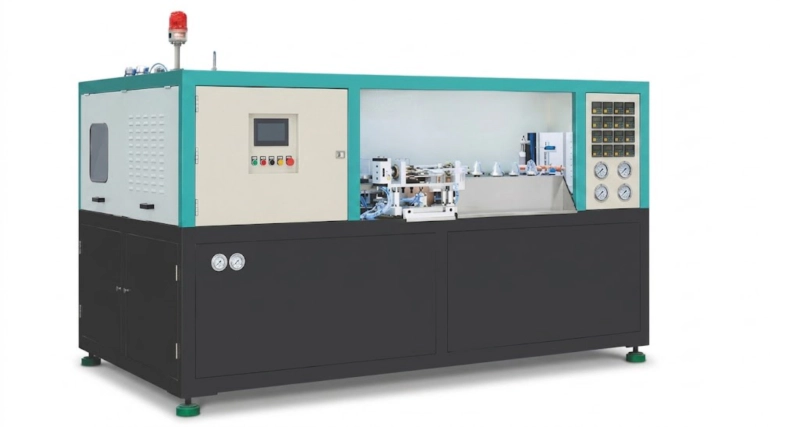
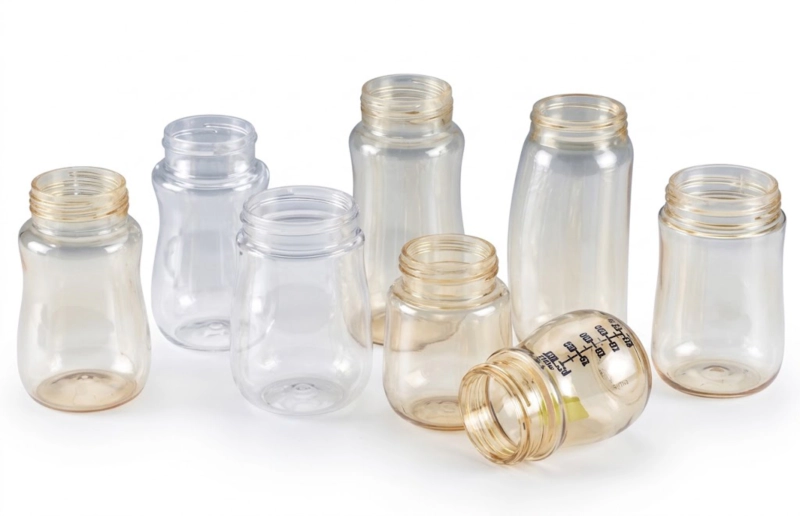
Baby bottle and PP bottle series blow molding machine — BPA-free PP processing, precise neck geometry for infant feeding bottles
PP · BPA-Free
Baby Bottle & PP Bottle Series
BPA-free PP and PPSU processing for infant feeding bottles, sippy cups and baby care containers. Zero hydraulic oil — meets infant product safety standards.
Daily chemicals and cosmetic bottle series blow molding machine — PETG and Tritan processing for premium lotion, serum and personal care bottles
PETG · Tritan · PET
Daily Chemicals & Cosmetic Bottle Series
Premium clarity PETG and Tritan for cosmetic jars, lotion pumps and serum bottles. 4-station conditioning station enables thick-wall asymmetric geometries.
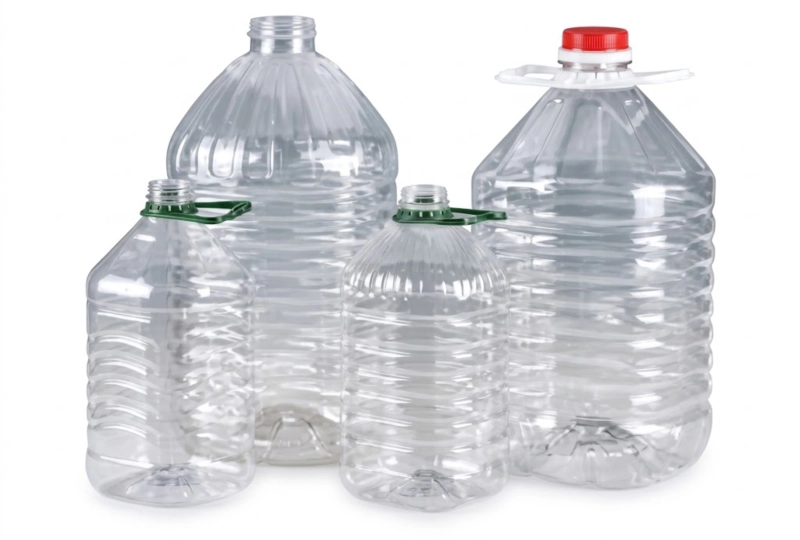
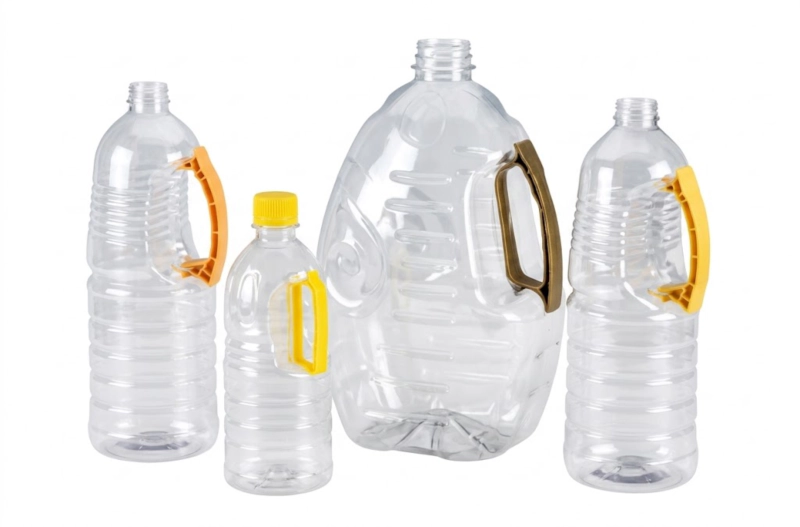
Edible oil and handle bottle series blow molding machine — large-format PET with integrated handle for 1L to 5L oil and sauce bottles
PET · Large Format
Edible Oil & Handle Bottle Series
1L–5L PET with integrated handle for edible oils, vinegar and liquid seasoning. High-IV resin compatible, food-grade certification ready.
Food jars and wide-mouth bottle series blow molding machine — large-neck PET jars for pickles, spreads and premium condiments replacing glass
PET · Wide-Mouth
Food Jars, Cans & Wide-Mouth Series
Wide-mouth PET jars up to 180mm neck diameter for pickles, spreads and premium condiments — replacing glass at lower weight and breakage risk.
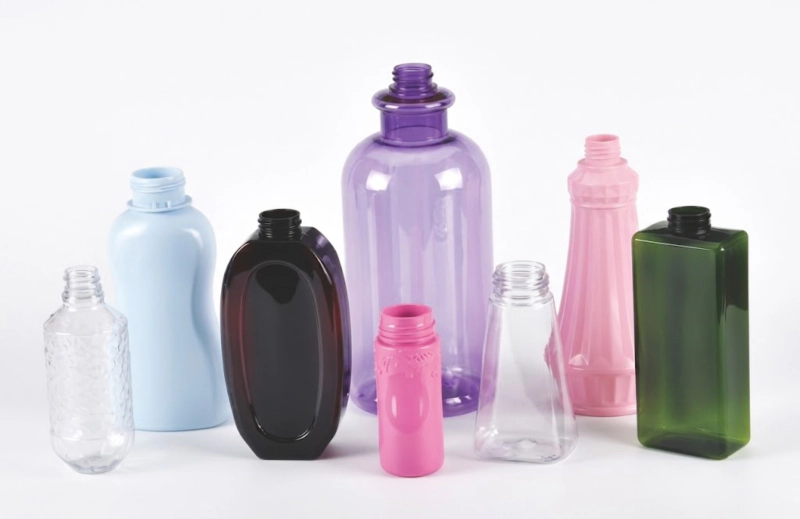
Irregularly shaped bottle series blow molding machine — asymmetric, oval, faceted and custom-geometry PET and PETG bottles for premium packaging
PETG · PET · Custom
Irregularly Shaped Bottle Series
Oval, rectangular, faceted and fully asymmetric bottle geometries in PETG or PET. 4-station conditioning station is the key enabler for uniform wall thickness.
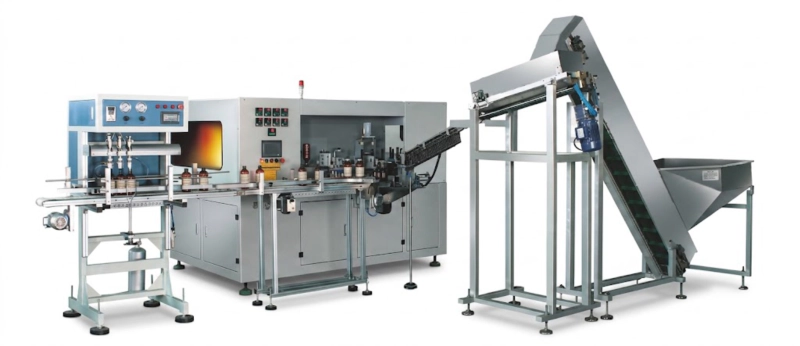
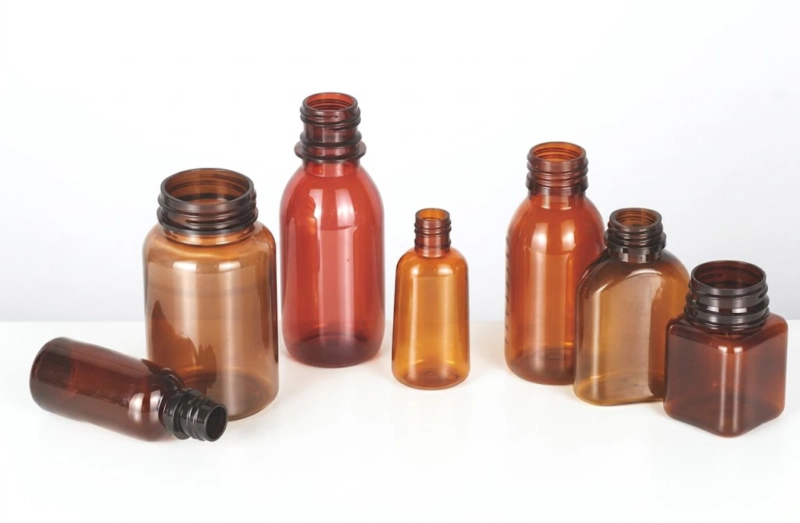
Medicine bottle series blow molding machine — GMP-adjacent production of pharmaceutical oral liquid, ophthalmic and nasal spray bottles in PET and PP
PET · PP · GMP-Adjacent
Medicine Bottle Series
Pharmaceutical-grade oral liquid, ophthalmic and topical solution bottles. Full-servo, oil-free drive meets GMP-adjacent cleanroom requirements without extra infrastructure.
Pesticide and chemical bottle series blow molding machine — chemical-resistant PET and HDPE bottles for agrochemicals, detergents and industrial liquids
PET · HDPE · Chemical-Resistant
Pesticide & Chemical Bottle Series
Chemical-resistant PET and HDPE bottles for agrochemicals, detergents and industrial liquids. Tamper-evident neck and child-resistant closure compatibility.
Water and beverage bottle series blow molding machine — high-speed PET production for 330ml to 2L standard water, CSD and juice bottles
PET · High Volume
Water & Beverage Bottle Series
330ml–2L standard PET for water, CSD, juice and dairy. PCO-1881 and PCO-1810 neck standards. Optimised for maximum BPH output at lowest per-bottle cost.

Air Compressor Requirements for Two-Step RSBM

Two-step RSBM runs at higher blow pressure than one-step ISBM — and air supply quality directly determines bottle wall uniformity, output stability and food-grade compliance. Getting the compressor specification wrong is one of the most common and costly commissioning errors on new RSBM lines.
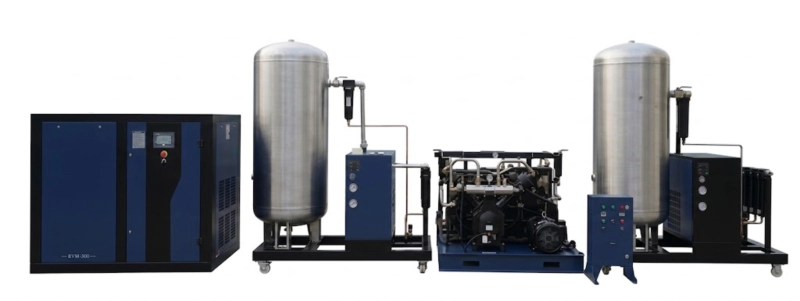
40-bar oil-free water-lubricated air compressor matched to two-step RSBM reheat stretch blow molding machine — high-pressure clean air supply for PET bottle production
Why Two-Step Needs Higher Pressure Than One-Step
One-step ISBM exits the conditioning station with a highly uniform preform temperature (±5–10°C). Two-step preforms exit the IR oven with a wider temperature spread (±8–15°C). To ensure complete cavity filling despite this variation, two-step RSBM requires 3.5–4.0 MPa main blow pressure — versus 2.0–3.2 MPa on one-step. Your compressor must deliver stable pressure at this level, with variation no greater than ±0.05 MPa at the blow valve.
Blow Pressure
40 bar
Minimum 42 bar at compressor outlet to hold 40 bar at blow valve under load
Oil Content
0 ppm
Oil-free mandatory — any oil contamination fails food/pharma grade and damages preform surface
Flow Rate
18–35 Nm³/h
Per 8–10 cavity linear RSBM. Scale proportionally for larger cavity count
Pressure Stability
±0.05 MPa
Pressure spikes above this tolerance cause over-blow and wall thinning at bottle base
Full Technical Guide: 40-Bar Oil-Free Compressors for RSBM
Never use oil-lubricated compressors
Even with downstream filters, oil-lubricated compressors carry residual hydrocarbon contamination risk. For food-grade and pharmaceutical PET bottles, oil-free water-lubricated screw compressors are the only compliant option. A single contaminated batch from an oil-lubricated supply can result in a full product recall.
Size the receiver tank correctly
RSBM blow cycles create sharp pressure demand spikes — each blow event draws a large volume of air in under 0.3 seconds. Without a correctly sized receiver tank (minimum 300L per 8-cavity machine), the compressor cannot sustain stable delivery pressure across consecutive cycles, causing inconsistent bottle wall thickness and short-blow rejects.
Match flow rate to cavity count precisely
An undersized compressor forces the machine to slow cycle speed to allow pressure recovery — directly reducing BPH output. An oversized compressor wastes energy and capital. Calculate required flow as: (bottle volume × blow pressure × cycles per hour × cavities) ÷ atmospheric pressure × 1.25 safety factor. We provide this calculation with every machine quotation.

Frequently Asked Questions

In one-step ISBM, the preform is injected and transferred — still hot — through conditioning, stretch blowing and ejection in a single continuous cycle. It never cools to room temperature. In two-step RSBM, the preform is injected, cooled fully, stored in bulk, then reheated in an IR oven before being stretch-blown. One-step retains heat energy and supports PETG, Tritan and complex geometries via its conditioning station. Two-step is limited to standard PET and round shapes, but enables much higher output speeds at scale.
Both produce stretch-blown bottles
Technically possible, commercially impractical. PETG and Tritan are amorphous resins that cannot be reheated uniformly from ambient temperature. The IR oven creates a surface-to-core temperature differential of 50–80°C — far greater than the ±5–10°C achievable in a one-step conditioning station. The result is wall thickness variation of 25–40% versus 8–12% on a 4-station one-step machine. For cosmetic or pharmaceutical bottles, two-step PETG is not viable.
One-Step only for PETG / Tritan
One-step preforms exit the conditioning station at ±5–10°C temperature uniformity. Two-step preforms exit the IR oven at ±8–15°C — the surface heats faster than the core. This less uniform temperature requires higher pressure to ensure complete cavity filling: 3.5–4.0 MPa versus 2.0–3.2 MPa on one-step. This is why 40-bar oil-free compressors are mandatory for RSBM lines.
Two-Step: 3.5–4.0 MPa main blow pressure
For standard round PET bottles at current Russian electricity rates (6.5–8.5 RUB/kWh), the total cost of ownership breakeven is approximately 25–35 million units per year per SKU. Below this, one-step has lower combined capital and operating cost. Above 50M/yr, two-step rotary RSBM delivers a decisive unit cost advantage. Between 20M and 50M we build a detailed model for your specific scenario at no cost.
We calculate the breakeven for your scenario
Yes — but only on the one-step platform. ASB molds are designed for the 4-station one-step workflow. The HGY150-V4-EV is 100% ASB-12M mold compatible — your existing tooling installs directly without modification. Two-step RSBM uses a completely different mold interface and cannot accept ASB molds in any configuration.
One-Step: ASB-12M compatible
Yes — the HGY150-V4-EV processes both PET and PETG on the same machine. Switching resins requires a barrel purge (30–45 minutes) and parameter adjustment. No mechanical modification needed. The same machine can run commodity PET water bottles in one shift and premium PETG cosmetic jars in the next. Two-step RSBM configured for PET cannot produce viable PETG bottles.
One-Step: PET and PETG on same machine
One-step HGY series: full mold change in under 2 hours with a trained 2-person crew. No preform inventory clearance required. Two-step RSBM: blow mold change alone takes 1.5–3 hours. If the preform specification changes, add preform stock clearance and IR oven profile reprogramming — total 4–8 hours minimum. For operations running more than 3–4 different SKUs per month, this changeover penalty makes two-step uncompetitive regardless of volume.
One-Step: under 2 h Two-Step: 4–8 h minimum
We provide Russian-language technical consultation, remote diagnostics via video call, and spare parts from local Moscow stock for critical wear components (neck rings, blow pins, seals, IR lamps). For commissioning, engineers travel to site for initial setup and operator training (3–5 days on-site). Every machine quotation includes a recommended 12-month spare parts kit for uninterrupted operation without external supply dependency.
Russia-based support available

Not sure which process fits?
Send us your bottle spec and volume — full cost comparison within 48 hours, at no charge.
Get a Free Analysis → WhatsApp Our Engineers